
If there was ever an interview to ruffle a few Irish feathers it was Thomas Piketty – a world-leading wealth distribution economist – speaking to this paper recently, calling Ireland’s tax model “a mediocre development strategy” which imposes fiscal and social costs on everybody else.
Brave is the man who dares to touch the goose that lays the foreign direct investment (FDI) eggs. The proponents of Ireland’s economic model – a model long acknowledged to belong to an era that is intellectually and morally over – fought back on three fronts: the harm our model does to other countries is in fact minimal; the Americans could close their loopholes if they so desired; and one of the world’s most celebrated economists was not, on reflection, worthy of our time.
As an economist my perspectives often violently disagree with Piketty’s analyses and certainly on his solutions, but facts remain facts regardless of how much we dislike the mirror that they put in front of us. And the fact at the centre of this discussion is the following: our tax model diverts tax bases from countries where there is real design and manufacturing and sales into ours – which does not do these activities.
One could – and in Ireland often does – argue that every country has policies which negatively impact other countries, and in any case the harms are comparatively minimal. But what is not acknowledged is that our model does not impose costs on others as a side effect, or some sort of byproduct. Our imposition is the entire point of our strategy. The size, in this light, is irrelevant. While Irish proponents of the FDI model critique Piketty for overemphasising the scale of the harm, Piketty is critiquing Ireland’s intentional pursuit of something that is knowingly harmful in the first place.
READ MORE


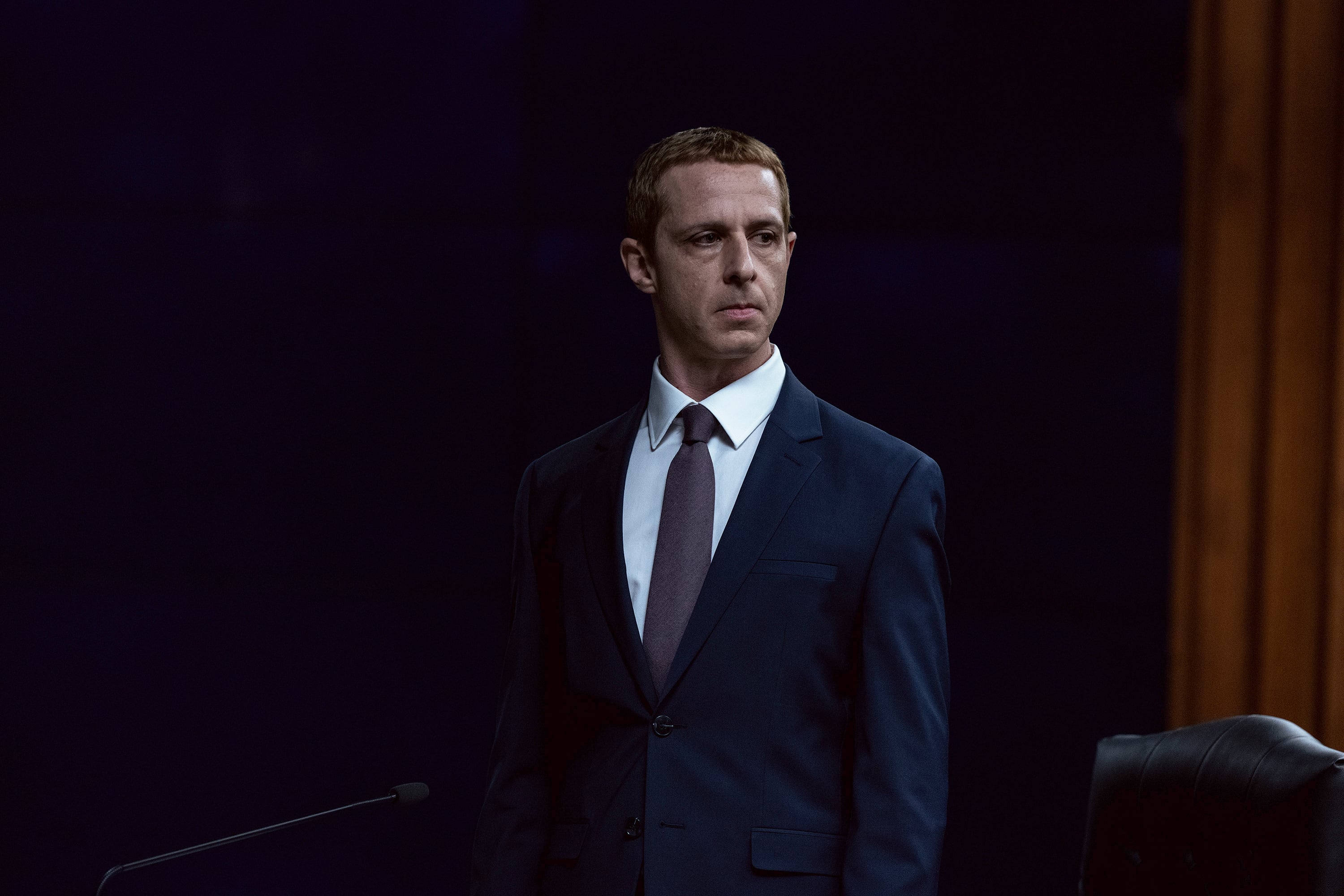
Step back, and this “sure look, it’s not that bad” approach can be seen as a national strategy of its own, regardless of political or financial agenda. Consider various shenanigans of the same nature happening, albeit at a smaller scale: A minister’s election campaign that accepted donations exceeding the legal limit, the defence of which was that it wasn’t by that much. TDs who pressed on the voting buttons of colleagues who were not there, defended by its supposed common practice. Eighty-one golf enthusiasts wining and dining when the rest of the country were under restrictions – sure the guidelines were always changing.
When phones in Leinster House were used to cast thousands of votes for the son of a TD on a TV show, it was called an “abuse of facilities” by the taoiseach at the time in a statement which placed the word “funny” before mentioning the word “serious”.
Property interests that went undeclared, defended by a lack of oversight. A bike shed that cost over a quarter of a million euro, defended by ... no, wait, there was no defence for that one.
Look, every one of our governance “oopsies” is forgotten about because of their supposed smallness. But to the people who subscribe to the “sure look it-ism” political economy: have you ever heard of the theory about dying at the hands of a thousand cuts?
At Harvard Business School, there is – for very obvious reasons and implemented post-2008 – rigorous teaching and research that looks at institutional failure. Going back to my work at Nasa, the Challenger disaster gave us a striking term for this philosophy that maintains a tight grip on Ireland: the normalisation of deviance. Which says that catastrophes are very rarely caused by large transgressions – and in fact overt acts of deception are even healthy for a system, because they force resignations, introspection and change.
[ Ireland’s budget plan has a name: ‘Sure it’ll be grand’Opens in new window ]
The small ones, on the other hand, get by without even being noticed. Until, that is, trust and respect has been rotted through a system to its core. “It’s only” lowers our collective standards and morals, meaning that future governance oversights are measured against the last instead of against our already-decided principles. This is the exact mechanism of the much-feared slippery slope.
Counter to what most people say, Ireland is not corroded by scandals but by non-scandals.
The red lines in our values exist so that the magnitude of our wrongdoing never has to be debated among ourselves, and advanced societies usually have proportionate penalties for such things even while holding absolutist right and wrong lines. On the other hand, we tend to have absolutist penalties, but always about matters that were never quite right nor quite wrong.
Unsurprisingly, our domestic outlook on moral and fiscal positioning mirrors the message we send the world with our economic model. If we tend to answer questions of fairness with numbers – how much and compared to whom? – we should not be surprised when our values become so easily corrupted. A principle that is justified by numbers, regardless of how small, is not a principle – it is a price.
It seems that we will tolerate any wrong, so long as it is small; just as we will uphold any principle, so long as it is cheap.


