

Is it possible to be both left-wing and serious about climate action? The evidence is mixed. In the last Dáil, the Green Party was torn apart by rival factions – one prioritising economic justice, the other environmental. In the current Dáil, divisions have opened up among parties of the left on how to deal with rising fuel costs.
Sinn Féin strongly opposes planned carbon tax increases, while the Labour Party says reneging on carbon tax commitments would be environmentally irresponsible – it calls instead for the Government to “do more to transition the economy away from fossil fuels”.
This is not the only environmental issue on which fault lines have developed in the non-governmental left. Sinn Féin loudly campaigned for retention of the nitrates derogation, while the Social Democrats described Ireland’s bid to extend it as “grossly irresponsible and hypocritical” given the extent of nitrates pollution of our water supplies.
Funding for active travel is another source of tension, with Sinn Féin cranking up the outrage over the spending of €127,000 on a bike storage facility for staff at University Hospital Kerry. “Pure waste,” fumed Pearse Doherty. Other Opposition parties were more muted about a project that may be pricey but is ultimately designed to take more cars off the road.
READ MORE


There is more to this division between parties than political pragmatism. There is a doubt as to whether socialism – and particularly a nationalistic or republican brand of socialism – is compatible with environmentalism.
Karl Marx didn’t have much to say about the environment. Despite his stinging critique of capitalism, both left and right have generally operated on the same productivist principle: whenever there is a choice between the interests of human and the interests of nature, it is the human who must win out.
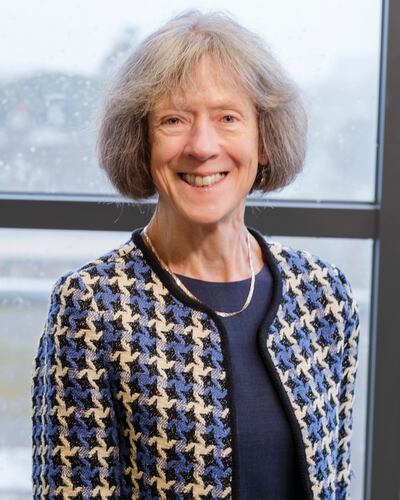
Can socialism be reimagined in the context of modern climate science? An important contribution to this debate comes from UCD philosopher Maeve Cooke who, in a new book published on Monday, maps out a socially progressive agenda that avoids the trap of anthropocentricism – the idea that humankind is separate from nature.
Cooke distinguishes between “relatively harmless” forms of anthropocentrism and “pernicious” ones. The latter contain “a belief in the superiority of human agency” and this view “tends to go hand in hand with pernicious Eurocentrism”. What is needed, she believes, is consideration for “other-than-human agencies”.
Cooke places herself in the Frankfurt School of critical theory, a movement that began just over 100 years ago in Europe and became an influential force in left-wing debate for decades. One of its leading figures, the German philosopher Jürgen Habermas (an “inspirational figure”, says Cooke), died last March. By reimagining Marx in an era of climate disruption, Cooke attempts to do for the Frankfurt School what Pope Francis did for the Catholic Church and raise in-group environmental awareness.
“I, by no means, reject core ethical values celebrated within Western modernity such as freedom, equality and solidarity,” Cooke explains. But we should “be open to exploring different ways of thinking about human connectedness”.
[ Italian philosophers rebel over plan to drop Marx from school curriculumOpens in new window ]
“In The Communist Manifesto, Marx and Engels call for an association beyond the antagonisms of class society in which the free development of each is the condition for the free development of all. I incorporate ethical learning from other-than-human agencies into this vision of freedom, proposing a conception of freedom as ethically oriented, self-determining, self-transforming, ecologically entangled human agency.”
Humans “can gain important insights into what it means to lead an ethically good life if we open ourselves to learning from the distinctive normativity of other-than-human agencies. By ‘normativity’ here I mean their characteristic life patterns – how they survive, flourish and, in a figurative sense, lead lives that are good for them,” Cooke continues.
“Anyone concerned with fundamental social transformation needs to break with the productivist paradigm of endless economic growth characteristic of capitalism – but also of traditional versions of Marxist socialism. Social transformation also requires a break with ‘exclusive humanism’” – a term she borrows from the Canadian philosopher Charles Taylor.
Even well-meaning campaigners can have “a functionalist, ultimately instrumentalising attitude towards nature”, Cooke says – for example, where environmental “stewardship” is all about protecting the Earth for us.
Advocating “a new eco-socialism”, Cooke calls for “political associations in which attentiveness to our ecological entanglements is important primarily because human freedom itself depends on communicative engagement with other-than-human as well as human agencies”. One might call it the David Attenborough principle: love nature on its own terms, a maxim the much-admired English broadcaster ably demonstrated over the years. Whether loving nature will win you enough votes for public office is another matter. But political leadership is key.
Some within the “left alliance” that rallied around Catherine Connolly’s successful presidential campaign were, a few short years ago, positively gleeful about the Green Party’s electoral demise at the last general election. But the challenge that party faced trying to hold the line on environmental policy, amid competing political demands, is now pertinent for the left as a whole.
In 2024, the question being asked was whether the Greens were leftish enough to remain united. Today, the real dilemma has revealed itself: is the left green enough to become a coherent political force?
- Transformations in Critical Theory: Decentrings, Openings, Futures by Maeve Cooke is published by Polity (€20.99)


