

Towards the back of McKee Barracks near Dublin’s Phoenix Park is the new headquarters of the Irish Military Intelligence Service (IMIS). It is surrounded by a new 4m-high fence and topped with a bank of antennas.
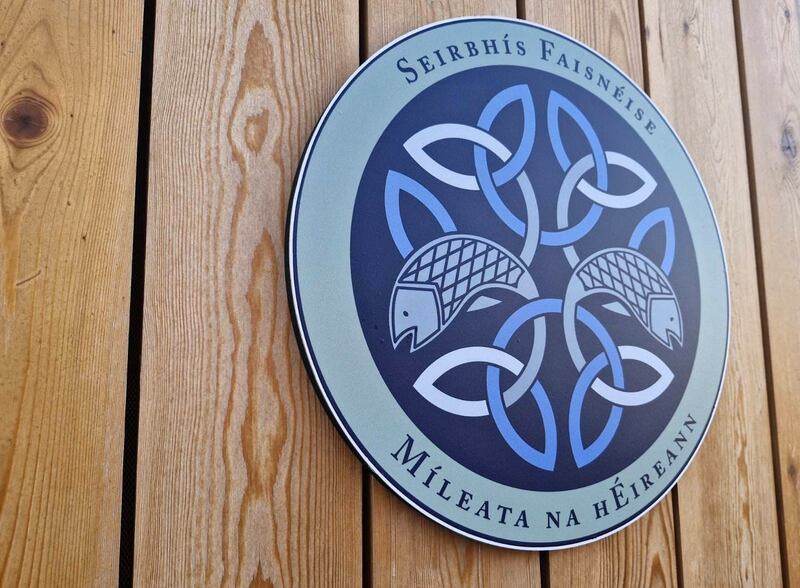
The location is not meant to be a secret. A sign by the entrance reads Seirbhís Faisnéise Míleata na hÉireann above an image of two fish that are meant to represent the salmon of knowledge. But entry is strictly controlled. Even the secretary general of the Department of Defence has yet to be invited inside.
For this reason, the IMIS officer meets The Irish Times across the parade ground in the officers’ mess at the Dublin 7 barracks. Though a senior Army officer, he wears a business suit instead of a uniform; helpful for staying unnoticed in the civilian world but conspicuous here inside the barracks walls.
The intelligence officer is friendly but to the point. He has little time for small talk and even less time for James Bond-related jokes about martinis and assassinations.
READ MORE


Interviews with Irish military intelligence officers are rare. Beyond this interview and one with The Sunday Times in December, few can remember another in the 100-year history of the Defence Forces.
Why all the recent publicity?
The goal, says the officer, is to “let people see that there is a managed, security-driven, Ireland-focused team” which is protecting the State, particularly during the upcoming EU presidency that the Republic holds for the second half of this year. (It last held the presidency in 2013.)
Irish military intelligence dates from before the foundation of the State, when Michael Collins and his “Squad” ran spy operations for the IRA during the War of Independence. It distinguished itself during the second World War when, under Colonel Dan Bryan, it broke German codes and captured Nazi spies.

The service has gone through various names over the years. First it was “G2″, then “J2″ and, since last year, the Irish Military Intelligence Service. It is now in the middle of a transformation that goes far beyond a name change and a new headquarters.
“We spent about a year and a half reviewing and visiting [other services],” says the intelligence officer. “You have a structure now that’s nothing like what would have been here before. We’ve turned it upside down, inside out, and we have made a structure that suits Ireland.”
[ Irish intelligence officers sent to train at US military facilitiesOpens in new window ]
This includes acquiring the latest intercept and monitoring technology. Legislation will soon be passed solidifying its role in national security.
The biggest change is in the area of training. The first class from the new Defence Forces intelligence school in the Curragh in Co Kildare graduated recently, greatly expanding the manpower and expertise available to IMIS. Teaching and training is “on a par with the best international practice”, says the officer.
“In some cases, it exceeds it. We have had other services come visit and ... they are now using elements of our training in their training.”
This transformation is ongoing. IMIS is helping to put together a training course for officers who will be sent to London, Paris and Washington as part of a pilot programme to assign defence attaches to foreign embassies.
It is also expanding its recruitment pool. Currently only existing members of the Defence Forces can join IMIS, although, in recent years, several civilian linguists have been brought in. Plans are in train to begin hiring operatives directly from the general public, much like the UK’s spy agencies MI5 (domestic) and MI6 (foreign) which regularly run recruitment campaigns.
Under law, primary responsibility for national security lies with An Garda Síochána, something repeatedly stressed by the officer. The role of IMIS is to complement this when requested. It is also responsible for protecting the State and the Defence Forces from military threats, countering hybrid activity and protecting Irish interests overseas.
It is an exceptionally varied mission. The officer characterises it as the “protection of Ireland Inc” and ensuring the safety of Irish men and women internationally, “be that troops, a guard, a diplomat, or an industrialist going to repair a crane in Burkina Faso”.
Along with the Defence Forces Chief of Staff, IMIS advises the Government on strategic threats to Irish interests overseas.
Much of the job is protecting the Defence Forces itself, on and off the island.
“In the good old days, that was the IRA looking to give 50 quid to a fellah to teach them how to strip and assemble a weapon,” he says.
Today, the threats are more complex, particularly against the 360 Irish troops stationed in Lebanon where hostilities have again broken out.
“We’re all over Lebanon,” the officer says. “We work on a strategic level, the length and breadth of the country.”
Some of the biggest threats comes from the Lebanese militant group Hizbullah, backed by the Tehran regime, and other Iranian proxies.
“There’s a lot of IRGC in the country,” he says, referring to the Islamic Revolutionary Guard Corps, the powerful Iranian military force that operates in various Middle Eastern countries. “And it’s something that is seriously undermining for best efforts.”
At home, IMIS monitors attempted infiltration of the military by hostile parties, including extremists. In this regard, the Defence Forces is “clean”, he says – “unless they’re really, really good at it.”
It also has a responsibility for counter-espionage. In general, the Garda deals with civilian spies and IMIS deals with military spies.
“It would be normally broken along those lines,” he says.
What about the often-discussed threat from Russian espionage in Ireland? “I can put it like this: I have a lot of teams doing a lot of work,” he says.
The intelligence officer does not like to use the phrase “hostile nations”; “if you talk about hostile nations, everyone gets excited,” he says.
Instead, he talks about “states of concern” and only those already mentioned by the Government.
“Russia would be a state that we would have a concern about, yes, for sure,” he says. “The Taoiseach has also spoken about Iran. They would be a state of concern. Whether it’s a direct threat or not, I’m not going to go into it.”
He refers specifically to the Russian shadow fleet, a collection of ageing ships used by Moscow to transport sanctioned oil. The primary risk they pose to Ireland is environmental, he says.
“If one of these single-skinned 19-year-old tankers hits a bag of crisps off the Aran Islands, you now have millions of tonnes of oil in the water and there’s no more Wild Atlantic Way. We don’t have the capacity to deal with an oil slick that size,” he says.
The potential for these ships to engage in more targeted activities against undersea infrastructure is also “of course” a concern, he says.
Your skill set is your ability to blend in, talk, and be a nobody, but yet have access to and be in a position to help with something that enables your country or empowers your country or alerts your country
— IMIS officer
“That is a task assigned to the Naval Service and the Air Corps and to us, and we do monitor it and we do look out for it. And if there are vessels of concern in the area, for sure we’re going to respond to it.”
Needless to say, the life of an Irish intelligence operative bears little resemblance to how the work is portrayed in the movies.
“People assume that you’re going to be talking into your watch and blowing up someone’s car. If you’ve got to that point, it means you’ve failed as an intelligence service,” he says.
Being an intelligence officer means just that: gathering and analysing intelligence, both from covert and public sources. It is a completely different skill set from that of the Army Ranger Wing, the Defence Forces special-operations unit, he says, by way of example.

“There’s horses for courses. The Ranger Wing guys do great stuff, but may not necessarily be the best crowd to ... get information out of somewhere.”
IMIS operates in the background of Defence Forces operations, out of the spotlight and definitely not mentioned in press releases. For example, its operatives accompanied the Department of Foreign Affairs teams sent to evacuate Irish citizens from Kabul during the Taliban’s takeover of Afghanistan in 2021 and Khartoum in 2023 during the Sudanese civil war.
They were present in Beirut during the trial of the killers of Irish peacekeeper Sean Rooney last year and on-board ships recently inspecting undersea cables for possible sabotage from Russian vessels.
[ Ireland signs agreement with France for joint military training and intel sharingOpens in new window ]
When selecting recruits, IMIS looks for “anything and everything”, the officer says.
“You don’t have to run 100m in 10 seconds because that doesn’t make a good analyst. Soft skills are really important.”
If IMIS is missing a required skill, it will find someone with that skill, he says. “The skills can be anything from languages to computers to cultural awareness to weapons.”
The ideal recruit could be someone with an in-depth knowledge of aircraft types or who has spent years living in an African or Arab country and knows the culture there, he says.
“We’re extremely picky, for want of a better word,” the officer says. “The flag, the Defence Forces and the country’s reputation are sacrosanct. You cannot mess around with them or take them lightly because you affect people’s lives, you affect the country’s life.”
Once in the door, new operatives will be assigned to a team. They could be an analyst, a linguist or a field operative, or serve in a liaison role. There are on-island (domestic) and off-island (overseas) teams, along with teams responsible for processing intelligence from EU allies, the officer says.
Generally people do not tell their families their exact job, he says. They certainly do not tell their friends or neighbours.
“But within the house, it’s very much down to people’s own security and safety. It depends what they’re working on,” he says.
Much of the work is desk-bound or involves operating interception and surveillance technology. “I’m not going to go into methods. But suffice to say, we have a lot of technology,” says the officer.
That said, it appears there is still room for some real-world spycraft, the kind that involves tailing targets and eavesdropping on conversations.
“We can do it. I’m not confirming if we do it or not,” the officer says. “When I started off and I was an operative, I followed people around the place here and abroad,” he says, naming posts in various African countries where Irish troops had a presence.
“Your skill set is your ability to blend in, talk, and be a nobody, but yet have access to and be in a position to help with something that enables your country or empowers your country or alerts your country.
“Nine out of 10 times, the spy is the boring guy in a suit, not the guy who’s got the [tactical] gear and has his hat on backwards.”


