The 110th anniversary of the Battle of the Somme has been remembered with a theme of common suffering across the island of Ireland.
The annual Islandbridge commemoration took place in hot weather and attracted hundreds of Irish and British army veterans to Dublin. Scouting volunteers handed out cups of water to invited guests.
The event, organised by the Royal British Legion in Ireland, remembers the Irish who died in both world wars.
The worst day of both wars was July 1st, 1916, when more than 2,000 men from the 36th (Ulster) Division were killed on the first day of the Battle of the Somme while another 400, who were from other Irish regiments, also perished on that day.
READ MORE


Royal British Legion Northern Ireland president Col Neil Salisbury said the battle was a reminder that “there was one island but many stories bound by a shared duty to remember those who came before us”.
The Somme was a place where “men from every part of Ireland served, suffered there and died there. Today we remember them not simply as a part of history, but as men with names, families, hopes and dreams that were never fulfilled.”
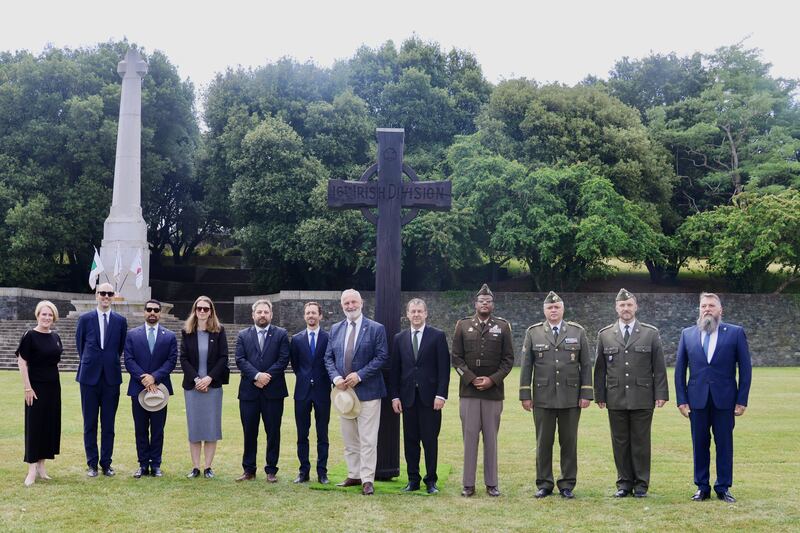
He recalled not only the suffering of the 36th (Ulster) Division, but also those from the 16th (Irish) Division who fought at Guillemont and Ginchy during the Battle of the Somme and also incurred huge casualties.
The Ginchy Cross, which was erected to remember the men from the 16th (Irish) Division who died in the Somme in September 1916, made a rare public appearance.
The cross, made from oak beams recovered from a destroyed farmhouse in the region, is put on display only a few times a year because of its fragile state.
Two volumes of the Ireland memorial records, which list 49,400 men from Ireland or Irish regiments, killed in the first World War were placed on the Stone of Sacrifice during the service.
Among those who laid wreaths at the ceremony were the Lord Mayors of Dublin and Belfast, Cllr Daryl Barron and Róis-Máire Donnelly respectively, the Deputy First Minister of Northern Ireland, Emily Little-Pengelly, the British ambassador to Ireland Kara Owen, the German ambassador to Ireland David Gill and junior minister Robert Troy on behalf of the Government.
Royal British Legion chaplain Rev Peter Rutherford noted that the Battle of the Somme was not just an Irish and British tragedy “but a wound shared across many nations, many of whom are represented here today”, he added.
There are hundreds of memorials across Ireland, all different but telling a similar story of “trying to come to terms with grief and loss,” he said.
“The memorials throughout this country, these memorial books and these memorial gardens all came into being in order that people might not forget the sacrifice made by so many from this land in the Great War.”


