
A key question surrounding the controversial Critical Infrastructure Bill, which was itself fast-tracked into committee stage over the last few weeks without any pre-legislative scrutiny, is why it should be needed at all. The Accelerating Infrastructure Task Force proposed a mechanism to designate projects as critical infrastructure, but did not recommend changes to the climate legislation.
The National Development Plan (NDP) is a set of projects deemed “critical” to the State’s future development. The NDP reflects the evidence base and the particular priorities for capital investment over the period covered by the plan. One might not agree with all the analysis or the investment priorities, but there is an undeniable degree of transparency about the process through which these investment priorities have been identified.
The Bill will give the Government the power to designate almost any project they fancy as critical infrastructure, since the definition is extraordinarily broad and is not limited to the priorities in the NDP. This is an open invitation for potential abuses of power and for lobbying by sectoral interests to seek to bypass climate obligations.
The big move of this Bill is the disapplication of section 15 of the amended climate Act to projects that are designated as critical infrastructure under the Bill.
READ MORE


Section 15, which was most recently litigated in the Coolglass case, as well as the Ennis data centre and Shannon LNG cases, requires public bodies, in so far as is practicable, to perform their functions in a manner consistent with the mitigation of greenhouse gas emissions, the most recent approved climate action plan, long-term climate action strategy and the furtherance of the national climate objective.
As a briefing from An Taisce and Friends of the Earth Ireland notes, this is the third Bill (or general scheme of a Bill) in the past four months that has sought to disapply, or automatically deem compliance with, the Climate Action and Low Carbon Development Act 2015, or parts of it. The disapplication of section 15 was also proposed in the Heads of the Strategic Gas Emergency Reserve Bill 2025 and the Dublin Airport (Passenger Capacity) Bill 2026.
My reading of the section 15 requirement is that public bodies are required to conduct an ex ante appraisal of their plans and projects to ensure they are aligned with the State’s climate policies and the objective of reaching net-zero emissions well before 2050. If their failure to do so leaves them open to judicial review, that would be because they did not legally carry out their functions in the first place.
This section of the Bill should, in my view, be interpreted not as a mechanism to block projects, but as the guiding principle for good policymaking and project delivery. If a State body is seriously proposing to impact on the environment, it should have the overriding public interest and net climate and biodiversity gains stitched into the design from the outset.
However, Minister for Public Expenditure Jack Chambers clearly believes section 15 is a Trojan horse exploited by ideologically motivated opponents of the State’s goals. He stated: “Disapplication of section 15 removes an unnecessary layer that is driving a wider increase and risk around judicial reviews.
“It is abundantly clear that some of these reviews are being taken for ideological reasons, often steeped in a degrowth agenda that seeks to frustrate the delivery of critical infrastructure, some of which can be connected to renewable projects.”

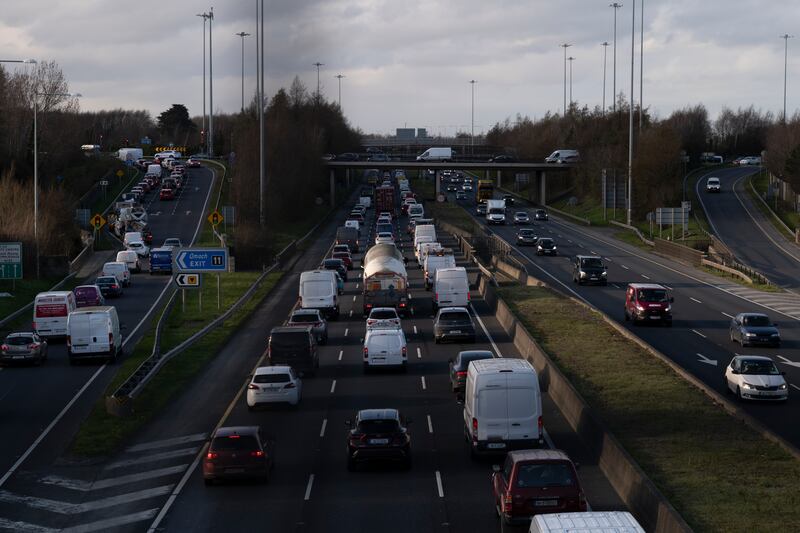
It is impossible to avoid the conclusion that the Government is attempting to dismantle the climate Act, piece by piece, without actually amending it, to facilitate emissions-intensive projects that are likely to contribute substantially to the State’s emissions profile. Such projects include the removal of the airport cap, and addition of LNG terminals and roads and whatever else is on the wishlist of parties that have no interest in sustainable development or good planning.
Note that there has been little focus on infrastructural deficits in terms of wastewater treatment, public transport, water quality and the healthy ecosystems upon which we all ultimately depend. The concept of critical infrastructure in an age of climate and biodiversity crisis needs to be much more thoroughly interrogated and debated before this Bill is adopted.
The concept of carbon lock-in is very important here: if the State builds infrastructure that shapes patterns of development or energy consumption that in turn generates new path dependencies, the impacts of such projects are almost impossible to reverse. Furthermore, should the State in future realise its error and try to undo its mistakes, there is the risk of stranded assets, since large-scale infrastructure projects tend to have long payback periods. But it seems that locking us into a high-carbon economic model is precisely what the Government wants.
Sadhbh O’Neill is a climate and environmental researcher


