The 29th edition of the International Literature Festival Dublin opens later this month, offering a wide-ranging programme that brings together some of the most exciting international and Irish writers of our time.
Transforming Merrion Square into a vibrant literary village and a dynamic hub of ideas, imagination and conversation, the 10-day celebration of words and stories features more than 215 events, including more than 50 dedicated to families and young readers - in a welcoming, open-air cultural space where audiences can spend the day moving between talks, performances and experiences.
With free and ticketed events and a lively festival atmosphere that includes food stalls and spaces to relax and gather. While tickets are required to access marquee events there is no ticket needed to access the festival village.
The programme spotlights the power of storytelling in all its forms, offering discussions, readings and experiences that reflect the richness and diversity of contemporary literature. There’s an impressive line-up of novelists, poets, essayists and thinkers, representing over 27 nationalities. These include Tayari Jones, Robin Stevens, Sally Hayden, Steve McCarthy, Helen Oyeyemi, Jay McInerney, Maria Stepanova, Oyinkan Braithwaite, Elif Shafak, Aoife Dooley and many more.
From talks to walks; poetry to yoga; queer literary tours, sound baths, songwriting, art and film screenings, ILFD 2026 promises a rich cultural experience that fosters meaningful dialogue, creativity and connection.
It takes place in Merrion Square Park, Dublin, from May 15th–24th. ilfdublin.com
*
Trinity College Dublin student Sahar Rabah has won the Australian Book Review’s 2026 Calibre Essay Prize, one of the world’s leading awards for an original essay, now in its 20th year. Gaza-born Rabah becomes the first Palestinian writer to claim the prize.
Judges André Dao, Diane Stubbings, and Kate Fullagar chose ‘Between Reality and Dreams from a field of 564 entries from 29 countries. This year’s runner-up is Tumbleweed: How the West was Lost’ by Victorian writer Maria Takolander. Takolander has now won or been shortlisted for all three of ABR’s prizes. Third prize goes to South Australia-based writer Elise Westin for The Architecture of Erasure.
Rabah, the judges said, “takes the reader behind what we have seen on our screens to the ‘small, undeclared wars that were not shown on television’. These are wars that are fought in the realm of the psyche – in dreams and in memories. The result is an essay that provides the reader, even those saturated with media coverage of the killing, with new vocabularies and new inventories of loss: from the massacre of displaced people during the fajr prayer, to the loss of trees – ‘orange, lemon, and olive’; from the transformation of every school and university the author ever attended to the loss, finally, of Gaza itself, that place the author says held ‘my identity, my humanity, and my self-knowledge’.
“This is an extraordinary act of bearing witness, written in prose that is at turns direct and poetic. The suppleness of the writing allows the author to bring a striking moral clarity while also dwelling in psychic complexity.”
Born and raised in Gaza, Sahar Rabah writes poetry, essays and short fiction in Arabic and English. Her poems have appeared on LitHub, The Massachusetts Review, World Literature Today, The Markaz Review, and Raseef22. She is currently enrolled in a MPhil in the Creative Writing Program at Trinity College in Dublin.
Rabah said: “I am deeply grateful and delighted to be winning the Calibre Essay Prize. I thank the judging panel for their words and for their appreciation, and I consider this an important step in my life and my journey. Although it is painful, I hope that this essay resonates with readers and leaves a positive impact, and that this recognition motivates me to continue writing.”
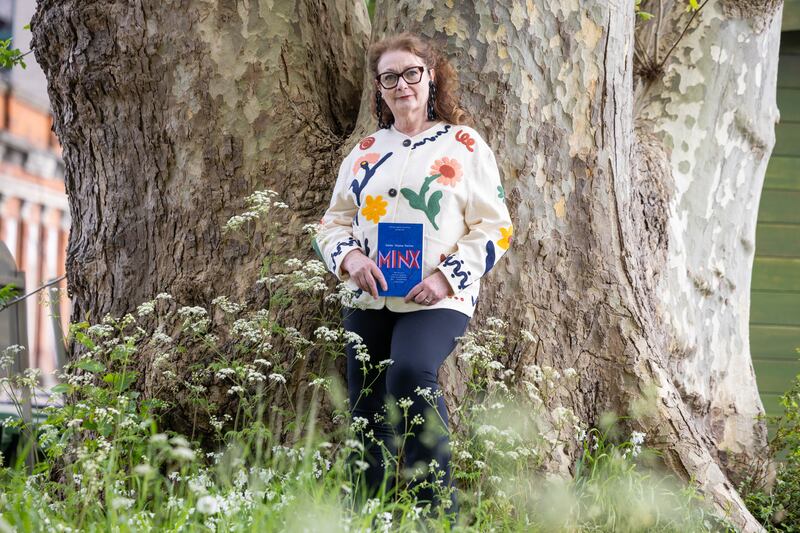
Karen Downs-Barton has been announced as the winner of the 2026 John Pollard Foundation International Poetry Prize for her debut poetry collection Minx. The prize is awarded annually for an outstanding debut collection of poetry in the English language. Valued at €10,000, it is sponsored by the John Pollard Foundation and administered by the Trinity Oscar Wilde Centre in the School of English at Trinity
*
In The Irish Times tomorrow, Elizabeth Strout tells Laura Slattery about her latest novel, Kathleen MacMahon writes about her latest work, Other People’s Lives, and there is a Q&A with Ruth McKee about her debut, Wild Iris.
Reviews are Sinéad Gibney on Hungry by Katriona O’Sullivan; Oliver Farry on Murder in Paris ’68 by Edward Chisholm; Rosita Sweetman on The Book That Taught the World to Orgasm and then Disappeared: Shere Hite and the Hite Report by Rosa Campbell; Declan Ryan on the best new poetry; Declan O’Driscoll on Kafkaesque: Ten Great Writers Translate the Twentieth Century by Maïa Hruska; Emily Goulding on Permanence by Sophie Mackintosh; Henrietta McKervey on The Bleeding Horse and Other Ghost Stories by Brian J. Showers; Peter Lonsdale on Getting the Electric by Louise Hegarty; Ben Barnes on Colin Murphy’s Political Plays: 100 Years of Irish History; Mei Chin on The Wilderness by Angela Flournoy; Sara Keating on children’s fiction; and Houman Barekat on Transcription by Ben Lerner.
*
There is a poetry evening in the United Arts Club on Friday, May 8th, at 7.30pm with award-winning poet Mary O’Malley.
*
From May 4th to 30th, at 1pm, Bewley’s Cafe Theatre presents a lunchtime revival of Elysium Nevada, Barry McKinley’s darkly comic, desert-set play first seen in 2010, when it was nominated for Best New Play at the Irish Times Theatre Awards. Set in a retirement community on the edge of the Mojave Desert, it follows three ageing souls staring out at the emptiness and the dust and the slow approach of the inevitable, armed only with memory, bad jokes and stubborn pride. Described in The Irish Times as “a study in wizened, impotent rage, measured out in wicked one-liners”, it returns under the direction of Liam Halligan, with performances by Michael James Ford, Bairbre Ní Chaoimh and Mark O’Regan. bewleyscafetheatre.com/elysiumnevada
*
The Theakston Old Peculier Crime Novel of the Year 2026 longlist has been announced and remarkably not a single Irish author has made the cut.
The list is: What Happens in the Dark by Kia Abdullah; The Midnight King by Tariq Ashkanani; The Impossible Thing by Belinda Bauer; What The Night Brings by Mark Billingham; Human Remains by Jo Callaghan; The Death of Us by Abigail Dean; The Chemist by A.A. Dhand; Beautiful Ugly by Alice Feeney; The Frozen People by Elly Griffiths; The Examiner by Janice Hallett; The Blue Hour by Paula Hawkins; Clown Town by Mick Herron; Quantum of Menace by Vaseem Khan; Paperboy by Callum McSorley; The Good Liar by Denise Mina; Gunner by Alan Parks; We Live Here Now by Sarah Pinborough; and A Schooling in Murder by Andrew Taylor.
Crime fiction fans are invited to help whittle 18 down to six by voting for their favourite novels to reach the shortlist, with the winner announced on the opening night of the Theakston Old Peculier Crime Writing Festival in Harrogate on July 23rd.
*
Chris Ricketts’s YA trans story You Don’t See Me, published by Little Island, has won the senior prize at the Great Reads Awards.
*
Anna Mays, an Irish student studying at The Royal College of Art has been shortlisted for the 2026 Batsford Prize in Fine Art, the UK’s leading award for British-based undergraduate and postgraduate art students, for her work Torso 28.08.25, a sculptural life-sized print of etched steel panels inspired by a CT scan Anna had after a bike accident, juxtaposing the tension between the soft vulnerability of the human body and the cold invulnerability of steel.
*
Author Joseph O’Connor returns to Francis Street in Dublin’s Liberties, where both sides of his family once lived in episode one of Come to Your Census on RTÉ One at 6.30pm on Sunday, May 3rd.
Using the 1926 census, he creates a snapshot of the neighbourhood as it stood a century ago: a dense and industrious quarter of the city where Irish families lived alongside international newcomers drawn by the possibility of work in nearby factories, breweries and workshops.
“My time in the archives on this project was like entering a companion-novel to James Plunkett’s brilliant Strumpet City,” he said, “teeming with life, loss and working people’s solidarity. I am so touched to have been allowed to read my family’s story in census returns and testimonies. And as ever, so deeply proud of my family’s Liberties heritage.”
*
Tickets are now available for the 2026 West Cork History Festival over the weekend of August 7th-9th on its website. It will take place at Inish Beg between Skibbereen and Baltimore. The main theme this year is Boundaries: setting them and crossing them. Speakers so far announced include Cormac Moore on the Irish Boundary Commission; Sam MacBride on For & Against a United Ireland, which he co-wrote with Fintan O’Toole; Alexander Morrison on Beyond the ‘Great Game’: boundaries and border-making in the Russian conquest of Central Asia; Beatrice Penati on ‘Divide and Rule? How the Soviet stans got their borders; Lewis Baston on his book Borderlines: A History of Europe in 29 Borders; Zoe Reid from the National Archives on the release of the 1926 census; Leanne Calvert on her recently published book Pious & Promiscuous: Love Life & the Family in Presbyterian Ulster; Elaine Farrell and Leanne McCormick on their bestselling book and podcast on Bad Bridgets, about the lives of Irish emigrant women in 19th-century North America; Sonja Tiernan on Eva Gore-Booth, to mark the 100th anniversary of Gore-Booth’s death; Iain Dale in conversation with three of the contributors to his book The Taoiseach: A Century of Political Leadership.
*
The George Moore Association celebrates the 13th International George Moore Conference on May 5th-7th in ATU, Castlebar – in Moore’s own county. These conferences started in UCC in 2005 and have been held biennially, alternately in Ireland and abroad. The interest has grown apace and speakers will travel from Japan and the US, France, Italy, Spain, UK and Czechia. Dr Fiona White is the host at ATU this time and an interesting programme is planned, helped by the munificence of the Sunflower Charitable Foundation. There is much local support and the memories of local people of Moore Hall and the Moores will feature.