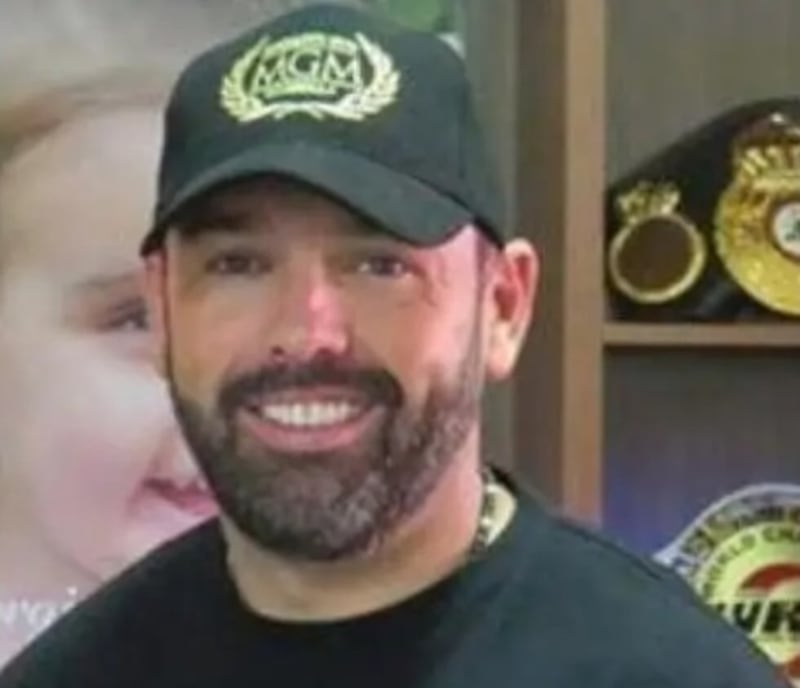
Alleged cartel leader Daniel Kinahan has been arrested and charged in relation to serious organised crime offences, after the Air Corps flight carrying him from Dubai landed in Dublin shortly after 6.30pm on Sunday.
A Garda statement, which did not name Kinahan but described him as a male in his late 40s, said he “was arrested in the United Arab Emirates on foot of an arrest warrant issued by the Irish courts. He was extradited following a judicial process there. His extradition was in accordance with the bi-lateral agreement on extradition between Ireland and United Arab Emirates. The extradition was facilitated by the logistical support of the Irish Air Corps”.
Garda Commissioner Justin Kelly said: “This arrest shows our determination, along with our international policing partners including Dubai Police, to target transnational organised crime groups”.
Kinahan was due to appear at the Special Criminal Court in Dublin on Sunday evening. A crowd gathered outside the Criminal Courts of Justice (CCJ) as convoys of Garda vehicles, understood to be carrying Kinahan, arrived.
READ MORE


A Garda Armed Support Unit vehicle closed Infirmary Road, and after a bus was hurriedly ushered to the side of the road, two convoys of three black SUVs each entered the gates, their arrival staggered by less than one minute. Armed gardaí stood along the road and in the crowd.
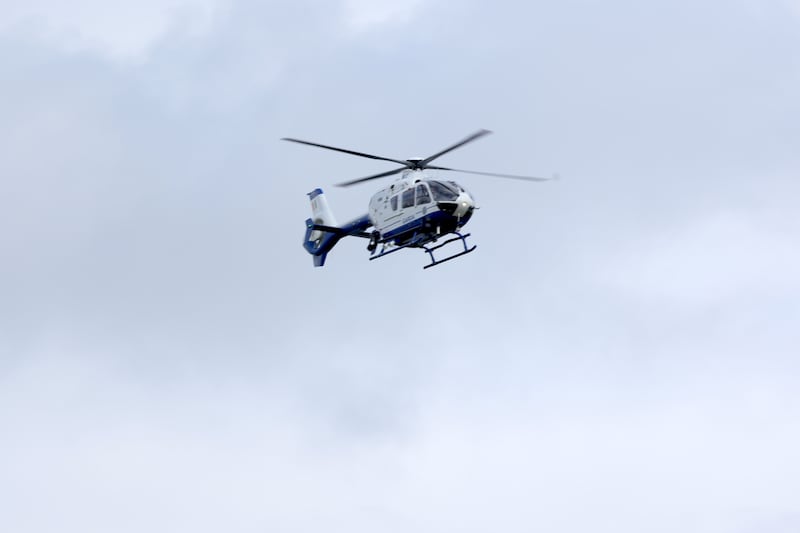
Several helicopters had followed the vehicles on their way to the courthouse.
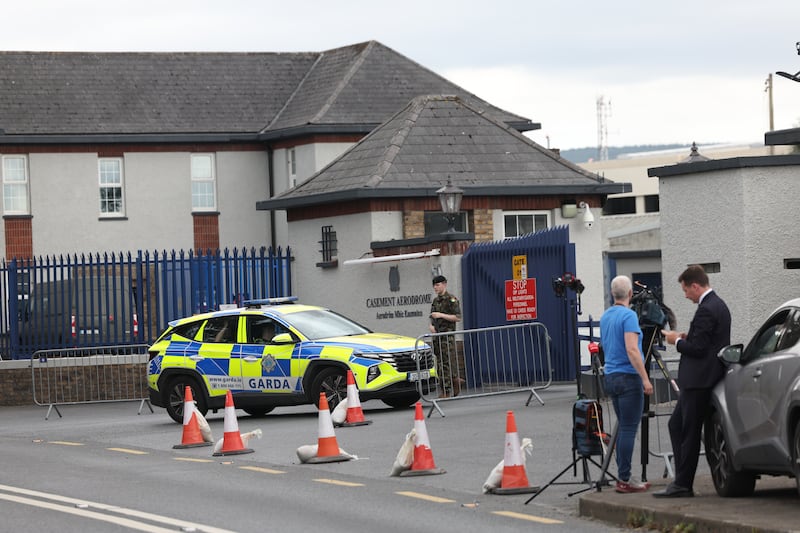
There was a heavy Garda presence at Casement Aerodrome earlier on Sunday evening for the arrival of Kinahan extradition flight. A number of Emergency Response Unit vehicles were seen entering Casement Aerodrome shortly before 6pm with Garda helicopters also flying overhead.
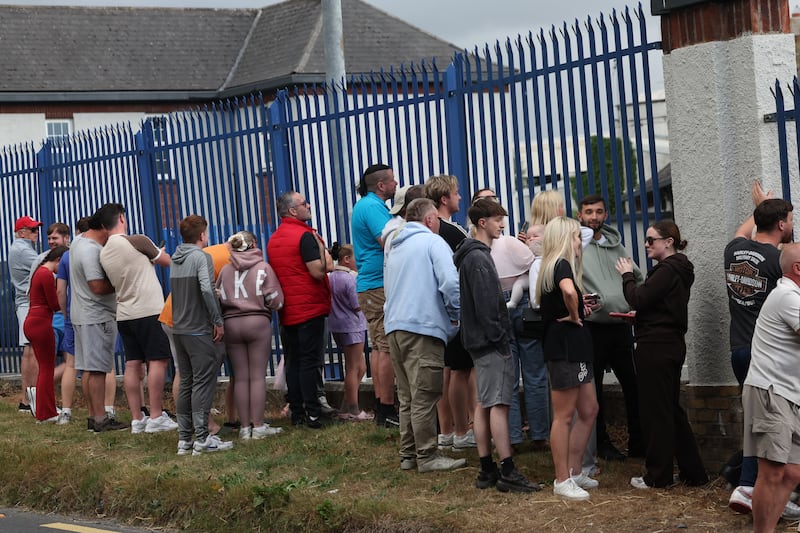
About 90 members of the public also gathered outside Casement Aerodrome to witness the arrival of the Government jet carrying Kinahan, which landed shortly after 6.30pm.
Two Garda convoy left Casement Aerodrome shortly before 7pm, along with the Garda helicopter, with Kinahan en route to the CCJ.
The extradition flight departed Al Maktoum International Airport at about 10.30am Irish time on Sunday.
The Defence Forces flight, with a team of gardaí on board, flew out to Dubai on Saturday morning.
The last leg of Kinahan’s extradition was under way on Sunday after years of investigations into his alleged activities by the Garda Drugs and Organised Crime Bureau.
Senior Garda members and Government Ministers had also engaged in a diplomatic process with their counterparts in the United Arab Emirates (UAE) to ensure an extradition treaty was put in place.
Dubliner Kinahan (49) is the first person to be extradited from UAE to the Republic under the new, permanent treaty, which came into force last year.
His close associate, Sean McGovern, was extradited from UAE last year under a special once-off arrangement. McGovern has since been sentenced to 24 years for directing the Kinahan cartel’s crimes.
Kinahan has lived openly in Dubai for 10 years with his wife and children..
After his court appearance, which is expected to be brief, he will be escorted to Portlaoise Prison by gardaí travelling in a convoy of vehicles.
Though the Irish Prison Service has acquired a bullet proof and blast proof prisoner escort van, which will be used for Kinahan and others in the future, it will not be used for him on Sunday.
The Garda will be responsible for his escort from the Dublin court to Portlaoise.
It is then expected that he will be remanded in custody at that jail, a maximum-security prison, until his trial next year.
The authorities in Ireland and the UAE earlier on Sunday issued a joint statement, welcoming the extradition.
Kinahan, who was named in the statement only as “an Irish national”, was described as “one of the most high-profile individuals sought for prosecution in connection with transnational organised crime and is accused of directing an organised crime organisation”.
Minister for Justice Jim O’Callaghan said: “I would like to express Ireland’s deep appreciation for the support of the United Arab Emirates in handling the extradition request, and commend the professionalism, efficiency and diligence demonstrated by the UAE judicial authorities throughout the extradition proceedings. This decision is another landmark of judicial co-operation between the two countries and reflects the strength of our partnership to address transnational organised crime.”
Abdullah bin Sultan bin Awad Al Nuaimi, the Minister of Justice of the United Arab Emirates, said he reaffirmed the UAE’s “commitment to further strengthening judicial co-operation with Irish authorities, and continuing to enhance our judicial partnerships with the international community”.
“This achievement reflects the UAE’s position as a trusted international partner in the field of international judicial cooperation and underscores the steadfast commitment we have to supporting global efforts to combat transnational organised crime, bring perpetrators of serious crimes to justice and prevent them from evading accountability, thereby contributing to regional and international security and stability and reinforcing the rule of law,” he said.
On Sunday, Taoiseach Micheál Martin paid “a very strong tribute” to An Garda Síochana, the Garda Commissioner and successive Ministers of Justice, in terms of the Garda’s success in tackling organised crime “in a very effective way”.
Speaking at Tullamore Show, where he was asked for his response to the Kinahan extradition, Martin said he could not comment on any individual case, but said the Garda deserved “real credit” for its consistent, determined focus on organised crime more generally.
“And also I pay tribute to the authorities in the United Arab Emirates for the strong co-operation with Ireland over recent years in this field more generally. Ireland has worked hard to develop strong partnerships at a global level, because international criminal activity is global, and the connections are global, so global partnerships are essential,” he said.
Martin also said: “We have dealt with threats to the State in the past, very serious threats over a long period of time, and our gardaí and security forces were resilient in the face of those threats.
“And likewise, in terms of the threats of modern gangland crime and the international dimension of that, we have strengthened our capacities, we strengthened our laws and our capacities to undermine such activity.”