

The advent of remote working has already led to big challenges for organisations trying to manage a hybrid workforce that includes both at-home and in-office staff.
Those challenges are set to grow exponentially with the addition to the mix of a human and AI-powered hybrid workforce.
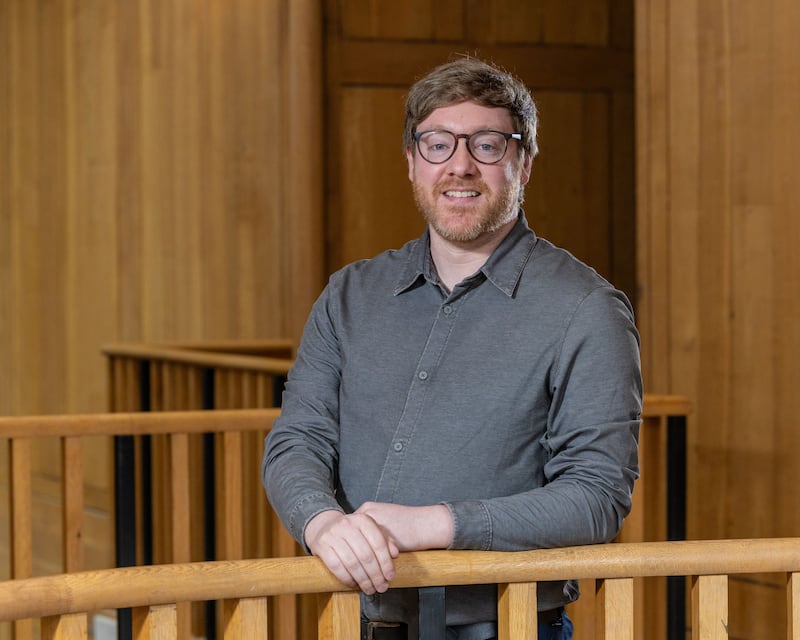
Human-AI collaboration, and particularly how human-resources professionals and AI can work together effectively, is an area of particular interest to Steven McCartney, assistant professor in human resources management and people analytics at UCD Smurfit Graduate Business School.
Futuristic as it sounds, humans and robots have already been working alongside one another for years due to the successful introduction of automation in sectors such as manufacturing, logistics and healthcare, he points out.
READ MORE


“What has changed more recently is the emergence of generative AI, such as ChatGPT, Claude and Gemini, which has popularised and, in many cases, enabled AI to help support or complete knowledge work,” he explains.
Conventional automation and robotics typically focus on repetitive, rule-based, and manual tasks. Now AI is augmenting cognitive work such as writing, coding, analysing information, summarising documents and supporting decision making.
From an employer’s perspective, the opportunity lies in harnessing the complementary strengths of humans and AI, rather than viewing AI purely as a replacement technology, he reckons.
McCartney’s research examines how different skills and capabilities complement one another to produce higher performance than either could achieve independently.
“Applying that logic to human-AI collaboration, AI brings strengths such as speed, the ability to process large amounts of information, pattern recognition and scalability, while humans contribute judgment, contextual understanding, creativity, ethical reasoning, empathy and relationship building,” he says.
“The organisations that are likely to benefit most, in my view, will be those that redesign work so these complementary strengths are combined effectively.”
There will be challenges, however. “Given how quickly the field is evolving, organisations will inevitably struggle to keep pace with legislation, governance requirements and organisational policies,” says McCartney.
“There could also be significant challenges around developing employees’ AI literacy – not just teaching people how to use these tools, but how to use them responsibly, ethically and critically.”
As organisations continue to adapt to “physically” hybrid, remote and office-based working, introducing AI agents and robotic co-workers adds a whole new layer of complexity, says Laoise Mullane, PwC Ireland director, workforce consulting, and AI adoption lead.
“The challenge will be ensuring effective collaboration between humans and machines, maintaining trust, accountability and fairness, while avoiding a two-tier workforce and preserving company culture,” she explains.
It means ensuring your people have both the digital skills and the tools to experiment with AI.

Yet PwC’s 2025 Workforce Hopes and Fears survey found that just 57 per cent of Irish workers have access to the learning and development resources they need at work.
“Success will depend on clear governance, strong communication, ongoing upskilling and a continued focus on uniquely human strengths such as judgment, creativity, empathy and leadership – that machines cannot easily replicate,” she says.
As with any significant change management, how the transition ahead is presented will be key to its success.
“Communication is critical, ensuring that your people know what is expected of them, how this new environment will work, and that there is a culture of collaboration with ‘teamwork time’ for people to learn from each other,” she says.
It’s an area that is of growing interest to Eurofound, the European research agency that supports social, employment and work-related policies.
A forthcoming report, Hybrid Work: A New Management Challenge, looks at the key issues.
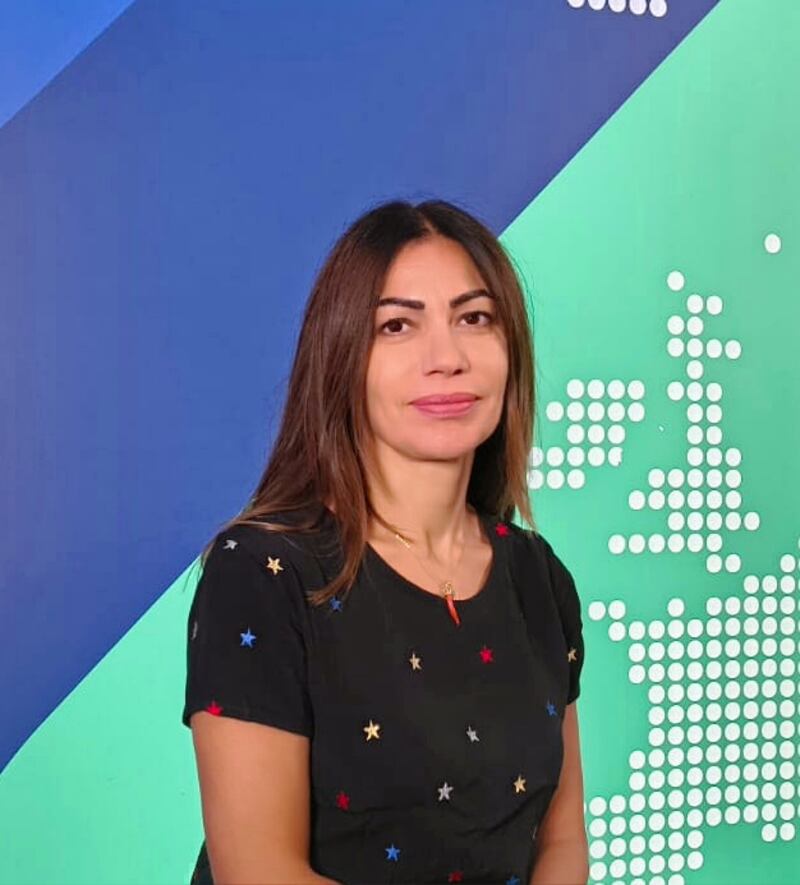
Technology has made remote and hybrid work possible, but it has also changed what it means to manage people, says Sara Riso, a senior research manager at Eurofound.
AI has arrived into a modern workplace that is already in a constant state of change. Today’s employees are expected to adapt to new digital tools, update their skills on an ongoing basis and keep pace with evolving ways of working, she explains.
Constant connectivity through digital devices has also blurred the boundaries between work and private life. “These pressures affect everyone, regardless of their role,” she says.
For managers, the challenge goes further. “Our research on hybrid work shows that managers are not only expected to adapt to these changes themselves, they are also responsible for creating the conditions in which people can perform effectively in an increasingly dispersed, connected and, at times, fragmented workplace. This requires a different set of skills and a different approach to leadership.”
It changes how managers develop talent too. “We often hear that artificial intelligence is affecting entry-level jobs but the impact of hybrid work on early-career employees has received far less attention,” says Riso.
Previous Eurofound research found one of the biggest challenges managers face is supporting the development of new recruits.
“Although hybrid workers generally report good access to formal training, much of the learning that takes place at the beginning of a career happens informally through observation, spontaneous feedback, day-to-day interactions and conversations with more experienced colleagues,” she says.
All of that was already hard to do with a physically dispersed workforce.
“Managers need to be far more intentional about creating opportunities for mentoring, coaching, knowledge sharing and regular face-to-face interaction, ensuring that less experienced employees receive the guidance, social connections and professional development they need to succeed,” she says.
It’s why, in an ever-changing world of increasingly AI-powered work, one thing holds true: “It has made good management more important than ever,” says Riso.


