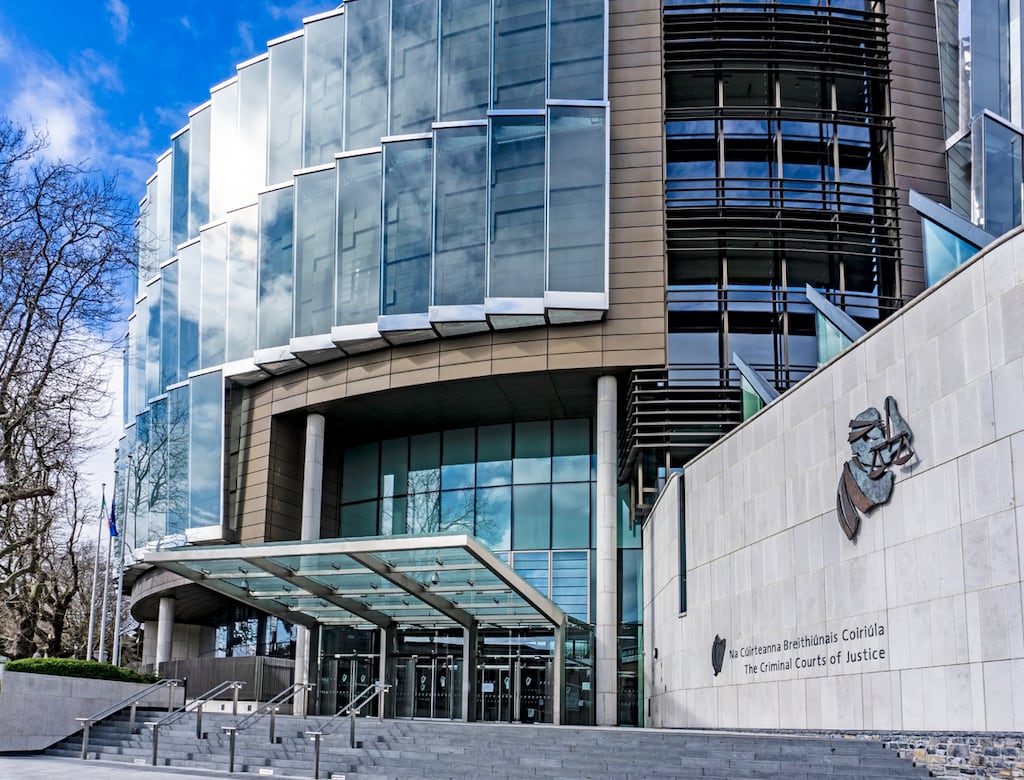
A woman faces a sentencing hearing on Monday after pleading guilty to the murder of her four-year-old stepson, who suffered injuries that would typically be associated with car crashes or serious assaults.
Murder carries a mandatory life sentence.
A statement from the child’s mother will form part of the sentencing hearing before Mr Justice Paul McDermott at the Central Criminal Court.
The stepmother, aged in her 30s, cannot be identified as a result of a court order imposed to protect the identity of a child witness in the case.
READ MORE


When her trial opened last month, the accused had pleaded not guilty to murder but guilty to manslaughter of the child at her home in March 2021.
On the fourth day of the trial, after evidence of a child witness was read into the record, the defence secured a brief adjournment, after which the accused was rearraigned and pleaded guilty to murder.
When opening the trial, Anne Rowland SC, prosecuting, said the defendant told gardaí about keeping her stepson in his room in the days before his death, where he had to sit on the floor and was only allowed out to go to the bathroom or for emergencies.
The boy was a “bold, cheeky child” and often had to be grounded, the defendant told gardaí.
On the day the boy suffered fatal injuries, she said she had “snapped” and recalled “shaking him and screaming at him to behave” before he fell on the floor.
State Pathologist Dr Heidi Okkers told the court the cause of death was a traumatic head injury in association with blunt force trauma to the abdomen.
The child’s father was jailed for seven years in November 2024 after pleading guilty to endangerment, neglect and impeding the apprehension or prosecution of the stepmother, knowing or believing she had murdered his son.
When sentencing him, the judge described his actions as “shameful” and said he bore a high level of criminal responsibility for failing to nurture and protect his son.
The father had called 999 on March 13th, 2021, claiming the boy had injured his head by falling off the top bunk of a bunk bed. He had put older injuries seen on the child down to falls and running into a door.
An advanced paramedic noted “yellowish” bruising, suggesting older injuries, and a bump or haematoma on the back of the child’s head and other indications of a significant head injury
Dr Stephen O’Riordan, who was asked to review the child’s case after he was taken to hospital, said the “whole theatre gasped” when they pulled back the drapes and saw the child covered in bruises.
He documented 17 areas of bruising or injury to both eyes, the ears, arms, legs and back. The “black eyes,” combined with bruises around both ears, are “classic signs of physical abuse”, he said. There were possible “grab marks” on one shoulder and to the left elbow, multiple bruises on the back and chest and a “hugely extensive injury” to the back of the head.
A laceration to the boy’s liver, said Dr O’Riordan, would have been caused by “extreme force” and would normally be associated with a car crash.
The number of unexplained injuries left him with a “significant concern” about physical or intentional abuse against the child.


