A recent trip to Paris brought me to a quaint cabaret in the Montmartre sector called Le Lapin Agile.
The experience felt like French folk music in its truest form. Yet I couldn’t help but feel like I was back home in Tralee.
Entering the small room basked in crimson light was like stepping through time, with centuries-old artwork on the walls and a charred sculpture of Christ on the cross.
The maître d’ set me down in direct line of musicians huddled around a saloon piano as they burst into a pre-first World War song about finding love on the Seine.
READ MORE


Four hours, accompanied by locally made wine, brought me on a tour of Paris and France’s history through song. There was humour, honour, melancholy and a general awe towards musicianship. Some songs are written hundreds of years ago, some written last week.
I had thought being from Ireland separated me from understanding French traditions. In this case their music. To my surprise, I felt as though I were back in the comforts of a Kerry snug listening to a session being played in the corner.
Where language might have segregated me from “getting it”, the expression of universal human emotions connected me to the music, the same way a session would.
[ How moving to France has drastically changed my Irish attitude to drinkingOpens in new window ]
Songs of national pride, sacrifices made by French resistance fighters on the streets of Paris; so many instances where I could recall parallel memories inside an Irish pub.
A year since I moved here and my French-language skills are still dismal. So lyrical translations tend to fall short, not helped by my lack of knowledge in French history. Yet I could find an appreciation for these songs, a connection.
This realisation came to me when listening to a song of a bohemian woman telling about a dragging life filled with humorous misfortune; a man who can’t keep a job due to accidents around the city. In the same vein as Sick Note, rendered famously by The Dubliners, I found myself laughing.
It takes some digging to find such French music sessions. This reminds me how common it is in Ireland to find a group of trad musicians in a pub and how revered they are by most.
But Le Lapin Agile, along with other cabarets that are hidden from the spotlight, show French folk musical traditions are in some ways more dormant than Ireland’s.
However, I found the rich abundance of France’s artistic endeavours on show at the Festival d’Avignon, three weeks of performing arts every summer in the southeastern French city.
Picture-perfect theatres stage avant-garde drama, classical plays and art films, buskers line the medieval streets, singers can be heard from every bar and acrobats create displays akin to Cirque du Soleil. Hundreds of performances, almost anything you can think of, where art is concerned, huddles in Avignon for this world-famous festival.
Yet, wandering through the cobbled streets during last summer’s festival, slowly going mad from the heat, I thought that a goat on a pile of scaffolding wouldn’t be so out of place.
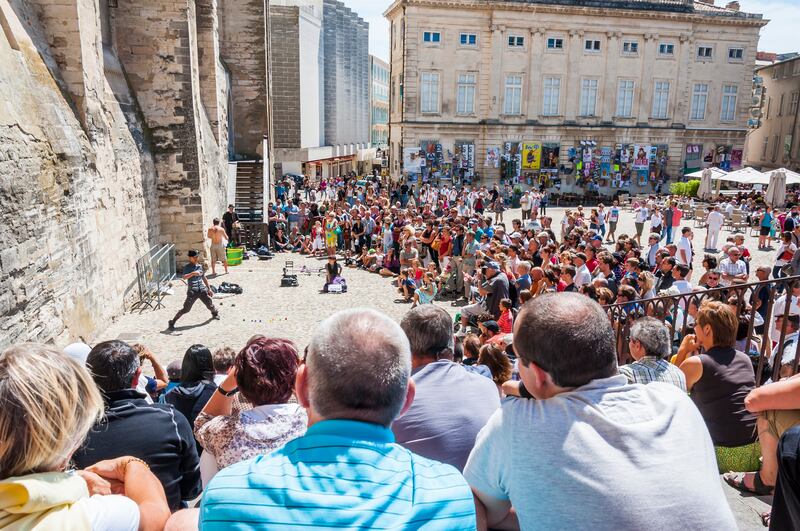
This city and its festival is a European cultural capital, so how was it that I never felt too far from Killorglin’s Puck Fair?
For at the heart of such events is the communities they bring together. Not just the artists and every stranger that calls themself a poet. Such moments are for everyone out there working to keep a roof above their head.
Thousands of people pack the streets every day and night of the festivities, drinking until the morning light, singing at the top of their lungs and starting again the next day. But from the French boulanger to the Kerry B&B owner both rising before dawn to make breakfast, none of these events would exist without the people on the ground floor.
Such experiences revealed to me, my misconception – that one nationality’s tradition wouldn’t be easily understood by the other. I now realise that surface differences between cultures appear bigger than they are at their root. Spanish flamenco can be seen as a spicier version of Irish dancing. Vocal intonations of traditional Arab singers sound akin to sean-nós singing. Each nationality has their own hearts attached to their practices, but the soul of it is what we all share.
I have come to understand that it isn’t the tradition itself that feels alien to me, but my lack of knowledge in the symbolism behind it.
Sitting in the green-shuttered Montmarte cabaret bar, I embraced the universal and looked beyond the barriers of language and nationality. I found the culture of this country I now call home a lot less strange and a lot more meaningful.
Odhrán Dowling is from Tralee, Co Kerry, and moved to a small town near Avignon, France, last year
- Are you Irish and living in another country? Would you like to share your experience in writing or by interview? You can use the form below, or email abroad@irishtimes.com. Irish Times Abroad submission guidelines here.
- Follow us on Instagram to keep up with the latest
- Sign up to The Irish Times Abroad newsletter for Irish-connected people around the world.