ROAD TEST: There was a time when car launches were more about wrenches than wifi, when phrases such as torque steer and the coefficiency of drag were spun through the air like confetti. But in the space of three years the lexicon has changed to "syncing" and "apps". The combustion-engined auto has collided head-on with the tech world.
Take the new Ford Kuga, a mid-range, relatively affordable crossover SUV that boasts the sort of technology once reserved for flagship luxury models. Before we get lost in the world of wifi, let’s deal with some of the established motoring fundamentals.
The Kuga feels like a premium car to drive. From the smooth transmission to the ease of power, this is not merely the blue oval’s answer to the crossover segment – it’s a statement that the brand is serous about improving its image.
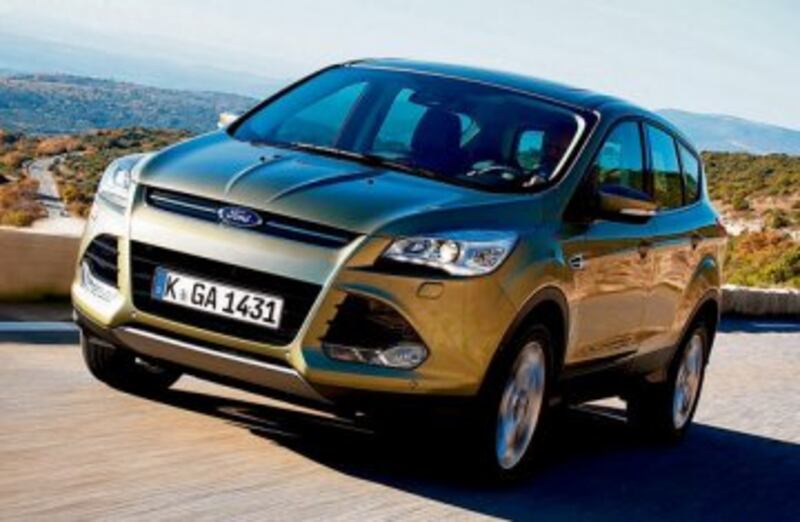
Despite it being a new model, you’d be forgiven for struggling to spot the differences between this and the outgoing version. It’s a smart, rugged look, surprisingly similar to the crossover models from Hyundai these days – and it works.
The engine range starts with a 1.6-litre 150bhp version with emissions of 154g/km in front-wheel drive and a 182bhp all-wheel drive version with emissions of 179g/km. The diesel offerings are powered by a 2-litre diesel with 140bhp with emissions of 139g/km and a 163bhp version with 154g/km.
Smooth transmission
The test car was the 140bhp diesel, and it delivered with aplomb, thanks to its smooth six-speed transmission. It was the first time in quite a while that I found a crossover I would actually opt for over a regular family saloon.
It also hosted a catalogue of new technology that showcases just how far the modern new car has come in the last three to four years. Keyless entry means you can leave your key in the pocket and once you pull the driver’s door handle the car unlocks. Once you touch the start button the car kicks to life, while your smartphone connects and the stereo starts to play whatever you were listening to on the phone.
Take to the road and engaging cruise control means you can maintain a set speed – but the car will brake if vehicles ahead are going slower than the set speed.
The front radar scans the road ahead, bouncing its signal off anything in front and detecting if a collision is imminent. Twice during our test taxis suddenly pulled up in front of us. In both cases the central console lights up and an alert sounds. It’s enough to make you react and prevent a collision.
Similarly, the system can detect pedestrians and will brake the car automatically to prevent a collision at low speeds, or at least limit the damage.
And if you are involved in a crash, Ford’s new Sync with emergency assistance kicks in. Upon detecting that an airbag has been deployed or the emergency fuel cut-off has been engaged, the system uses the on-board GPS locator and your Bluetooth-enabled phone to automatically set up an emergency call and provide GPS co-ordinates for the vehicle.
Blind-spot alert
Another feature increasingly common in many family cars these days is a blind-spot alert system that sets off a little light in the wing mirrors if there is a vehicle on either side that you may not have spotted. Finally, there is active park assist, whereby the car will steer itself into a tight parking spot, even one that you might have thought was just too tight.
There’s also a lane-keeping system that monitors the lines on the road and will alert you if you are straying out of lane. An advanced setting will even gently steer the car back into the centre if engaged. The system also reads the speed limit signs, using a mix of Sat-Nav information and the on-board camera. The dashboard constantly shows you what the limit is in any particular area.
We have reported on these systems on plenty of occasions before, but it was only when I had a friend over from Australia last week that I realised how far car technology had come in the eyes of many motorists. He had heard of things like blind-spot assistance and self-parking cars but thought they were the sort of wares you would only find in a €100,000 luxury car. The reality is that you can get features such as active city stop in cars such as the Fiat Panda these days.
Electronic drivers’ aids
These are not the frou-frou gadgets that are useful only in showing off to work colleagues and relatives. These are practical, intelligent electronic drivers’ aids that can save you money in prangs and speeding tickets.
The only downside to the Kuga test car was that it came in what Ford refers to as “burnished glow”, but the rest of us would call metallic brown. If cars are a reflection of their owner’s character and taste, what sort of statement does a large brown car make about you?
Aside from that, the Kuga was a real surprise: nice to drive and easy to live with. Even if you are not in the market for a €30,000 new car, anyone wishing to find out just how far motoring technology has come since they purchased their 2008 or earlier car should pop along and take a spin in a model such as the Kuga. It’s a window into the advances in terms of comfort and technology that’s on offer these days.
The lowdown: Ford Kuga 2.0 140bhp TDI
ENGINE:1.6-litre
150bhp petrol version with emissions of 154g/km in front-wheel drive and a 182bhp all-wheel drive petrol version with emissions of 179g/km.
The diesel offerings are powered by a 2-litre diesel with 140bhp with emissions of 139g/km and a 163bhp version with 154g/km.
PRICE:€33,450 (unofficial)


