
You went to a party, got drunk, hooked up with a guy and it went too far. You didn’t want sexual penetration, but he did it anyway. If you said you were raped, would anyone believe you? Or would they blame you? Who do you tell?
"Just tell someone," says Caroline Counihan, the legal director of Rape Crisis Network. If you are a victim, or even wonder whether you are, ring a local rape-crisis helpline or Dublin Rape Crisis's 24-hour line.
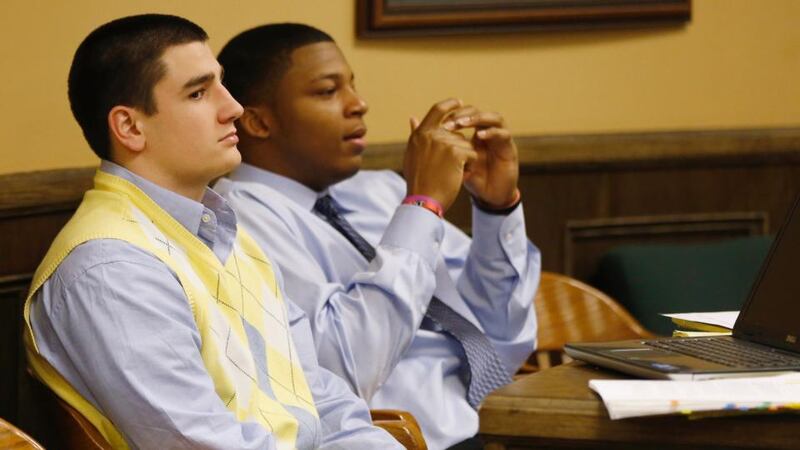
But would you dare? You’ve heard about the case of the Ohio footballers, in which the unconscious victim of two high-school football heroes, aged 16 and 17, convicted this week, was a drunk 16-year-old girl at a party. Her abuse was photographed, tweeted and given disgusting commentary on social media. She has been vilified and blamed by a community that does not see unconsciousness as a defence.

You've also heard about Nicola Furlong, the victim of sexual assault and murder, whose reputation was shredded by the defendant in a Japanese court. Closer to home, you might remember that in December 2009 a man convicted of sexual assault had a crowd of 50 supporters queuing to shake his hand on the steps of Tralee Circuit Criminal Court.
Cases such as these “discourage women from reporting”, says Counihan. “I have heard it said it’s better not to report rape; from male barristers, mostly.”
Only 20 per cent of victims report it. Of those who go to the Garda, only one-third see their cases prosecuted, although, of these, 75 per cent result in convictions. But what of the 80 per cent who are too afraid to report it?
Among the many rape victims Counihan has listened to, she says, “There is a huge preoccupation with how the community will react. Will the world find out? Will his family find out?”
Nine out of 10 women know and usually trust their assailants. “Women say, ‘I live in a small town and I’m afraid everyone will know.’ They’re afraid information will leak out unintentionally, or intentionally through the malevolence of his friends or family. The fear of being branded a slag is huge, ” says Counihan.
As shown by the social-media storm around the Ohio case, the belittling of rape is endemic. Porn normalises it, while reality TV depicts getting off your face and having spontaneous sex as “normal”, sending the message that intoxication is a signal that a person wants sex, making alcohol the ultimate date-rape drug.
Many victims are so shocked by the rape that, as a psychological defence, they go into denial about it. Days, weeks and even years may pass before they dare to tell a soul. They may be silent out of shame, or out of fear of reprisals by their assailant and his family. “In some parts of the country, people are right to be scared to report,” Counihan says.
But should this stop people reporting such crimes? If victims call a confidential rape-crisis line, a trained counsellor will listen and guide them through their choices, but the Garda will not be alerted unless the victims choose to report.
Likewise, only victims can decide whether to go to a hospital sexual-assault unit, and they can choose to be accompanied by a trained Rape Crisis Network volunteer.
For those who do take this course of action, the sooner it’s done the better. Useful forensic evidence can be gathered for up to seven days after the event. Even if a person doesn’t remember much of what happened, there is usually evidence from the scene and from witnesses that is worth collating, says Counihan. “You never know who might have heard the guy say, ‘I’m going to give her a seeing-to.’ ”
Victims can choose to be dealt with by a female garda, who can take a statement at the victim’s home (as long as it’s not also the crime scene).
Traumatic
The court process can be traumatic, says Counihan. She would never advise a victim to be cross-examined in front of a jury. They may be asked about drink or drug use, clothing and behaviour. "A thorough attempt will be made to discredit your evidence, which is traumatic," says Counihan.
Such humiliating ordeals occur in full view of the rapist, who sits a few metres away. In Austria and the UK, video evidence is allowed, sparing the victim this trauma, and in Austria the cross-examination is conducted by the judge in private session, and recorded. There are no plans to introduce these gentler methods here any time soon, Counihan says.
Whether the victim’s behaviour is raised in court is entirely up to the judge, and 70 per cent of applications to hear evidence of sexual history are granted. “Some judges have the view that cross-examination by the defence should be allowed, with few restraints; other judges – the majority – take the view that you don’t blacken character in evidence,” says Counihan.
In the victim’s favour, “this does not mean that if the evidence is let in, someone is pulled to shreds based on having slept with five people. The complainant may want her sexual history included, saying, ‘That’s the whole point: I connected six times with this guy, and the seventh time he raped me: and I know the difference.’ ”
The only way to be spared cross-examination is if the defendant pleads guilty. There is an “imbalance”, Counihan says, between the brutal disclosure required of the complainant and the defendant, who is almost protected from scrutiny in court, in that anything he has said is presented merely as a record of his Garda interview.
With all these negatives, why would a person report a rape? On the positive side, the conviction rate is 75 per cent in rape cases.
Counihan concludes: "Those who do feel a need for justice to be done are willing to do what they can for the system to do what it can. It could be a healing thing to do, to redress the balance and look for justice to be done."
If you have had to decide
whether to report a rape or a sexual assault and would like to share your experience, email kholmquist@irishtimes.com in
confidence. See also rcni.ie


