Who ate all the pies? More specifically, who ate all the trashy horse meat burgers? It wasn’t me, and I’m guessing it probably wasn’t you. It seems fairly safe to assume that those of us buying the cheapest of the cheap supermarket burgers – the ones made from fatty gloop power-hosed off animal bones, mixed with chemical additives and compressed into sad, skimpy little patties – are the very poorest in society.
These are the people who cannot afford to dine on real meat, but have to settle for the dregs and scrapings of the mass-market food industry. They are the true victims of the horse meat scandal, or so the popular story goes: exploited, outwitted and humiliated by a ruthless supermarket monopoly that feeds them rubbish, and treats them like rubbish.
There’s just one problem with this widely accepted narrative: it isn’t entirely true. Poorer people may indeed be the prime purchasers of cheap processed food, and supermarkets are certainly effective at disguising barely edible fodder as delicious, good-value meals – now with added horse. Yet no one is forcing less well-off people to buy and eat this guff. They have minds of their own, and it is entirely their choice how they spend the little money they have. It might be a bad, unhealthy choice to buy cheapo burgers – and I think it is – but it’s up to them.
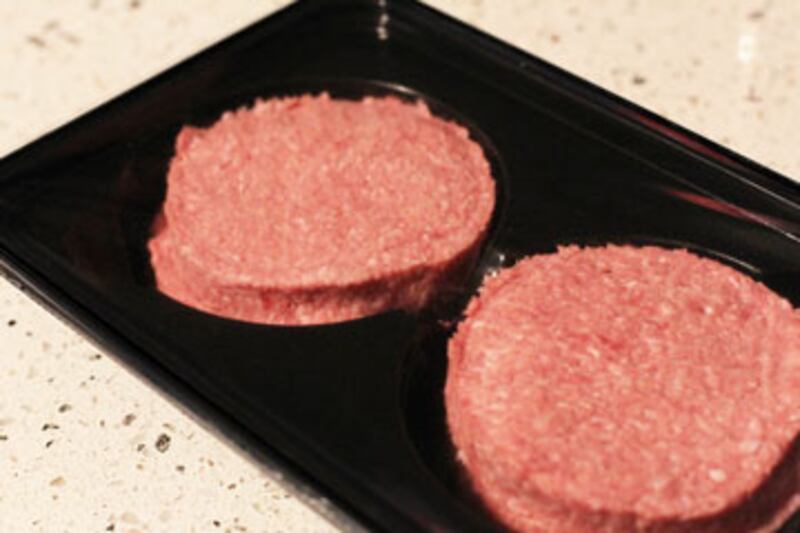
In making that point, I’ve already broken one of the cardinal tenets of the Great Middle-Class Rule Book. Many of us may secretly think that feeding your kids mechanically recovered meat is a terrible idea, but we must never say so, for fear of being labelled snobbish. Instead, poorer people are to be treated like victims, or like children: to be cheerily helped along because they don’t know any better, and their choices must never, ever, be condemned. Not aloud, anyway.
The recent remarks of well-known food writer Rose Prince, responding to the horse meat crisis, are typical of this mindset; it appears benign, caring even, but it’s actually a form of subtly inverted snobbery. She said: “Generally people who are interested in where their food originates can afford to be interested. The people who can’t afford to be deserve to be a little more protected.” Why protected? We protect people who we believe to be less capable than ourselves, less aware, less advanced. But it is highly offensive to assume that, simply by virtue of having less money in their pockets, certain people need particular protection or assistance in the decisions they make. And why assume that a lack of cash automatically confers a lack of interest in what they want to eat?
Some poorer parents feed their children well on very little, and some feed them cheap, adulterated pap. Conversely, some better-off parents feed their children poorly on very expensive food. It’s not poverty that is the real problem here (although it certainly doesn’t help), but ignorance, and that’s something that cuts across all social classes.
Of course, it is self-evidently true that if you have less to spend, your food choices will be curtailed. But that doesn’t mean you have no choices at all. It’s not a case of eat horse burgers or starve. When I was growing up, the family of one of my closest friends survived, and indeed flourished, on an absolute pittance.
Monetarily speaking, they existed below the breadline. But there was never a night when there wasn’t a tasty, nutritious, home-cooked meal on the table, sometimes involving ingredients that, to me, were strange and exotic, like wild puffball mushrooms or braised rabbit. They would have been outraged, and rightly so, at the notion that they required therapeutic, protective intervention from the state.
Here’s the crux of the matter: in absolving poor and disadvantaged people from responsibility for the choices they make, whether about food or anything else, we are infantilising them, denying them agency, autonomy and the basic respect that every individual deserves.
Besides, the middle classes have no right to feel superior, considering how much unhealthy food they put away themselves, often in the form of upscale supermarket ready-meals. Someone who regularly tucks into one of these expensive concoctions, laden with saturated fats, salt and sugar, is just as alienated from their food as the person who sits down to a Findus frozen lasagne, and may actually be more likely to get fat and sick.
The only difference is that the fancy ready-meal comes “topped with artisan goat’s cheese from our speciality dairy in Puglia” or other similarly seductive nonsense. Which makes the eater even more of a dupe, and certainly in no position to look down on the burger-munchers.
By all means, tighten the regulations on processed food, shorten the horrendously complex supermarket supply chains that leave the system wide open to abuse.
But neither of these measures will alter our fundamentally dysfunctional, denatured relationship with what we eat. The unpalatable truth is that many of us – whatever our socioeconomic status – have forgotten what real food tastes like. And until we all take personal responsibility for what we put in our mouths, nothing is going to change.


