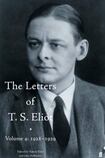
The first volume of TS Eliot's letters, published in 1988, represented the years from 1898 to 1922, the year of The Waste Land , but there were large gaps. Surprisingly, many recipients had not retained Eliot's letters, and Eliot himself destroyed bundles of them. The letters to Emily Hale, one of his muses, are under embargo at Princeton until 2020. A revised edition of the first volume, with 200 further letters, was published in 2009. The second volume, covering 1923 to 1925, was also published, after long delay, in 2009. The third, the letters of 1926 and 1927, appeared last year. The fourth, those of 1928 and 1929, is now out. I have not seen any estimate of the projected tally, but it must run to many volumes. Eliot, born on September 26th, 1888, died on January 4th, 1965.
The years 1928 and 1929 were not among the most dramatic of Eliot's life. No episode in them was as bold as Eliot's baptism into the Church of England, "the church as by Law established", on June 29th, 1927, and his confirmation the following day. His announcement, in the preface to For Lancelot Andrewes (1928), that his "general point of view" could be described as "classicist in literature, royalist in politics, and anglo-catholic in religion" was news only to inattentive readers. Eliot did not wait to be instructed by one of his sages, TE Hulme, that people are divisible into two groups: those who believe in original sin and those (with their master, Rousseau) who don't. Every other difference arises from that one. Eliot's most formidable essays during these years, those on Dante (1929), Baudelaire (1930) and Pascal (1931), explicate the terms of his new sense of life, notably his belief in original sin and the irresistible force of his conversion: "The Christian thinker finds the world to be so and so; he finds its character inexplicable by any non-religious theory; among religions he finds Christianity, and Catholic Christianity, to account most satisfactorily for the world and especially for the moral world within; and thus, by what Newman calls 'powerful and concurrent' reasons, he finds himself inexorably committed to the dogma of the Incarnation."
In the essay on Dante he wrote that "the love of man and woman (or for that matter of man and man) is only explained and made reasonable by the higher love, or else is simply the coupling of animals". The poems Eliot wrote immediately before and after his formal conversion were attempts to adumbrate for himself a Dantean "New Life", predicated on "the higher love". They begin with Journey of the Magi , A Song for Simeon , Animula , then the six poems that together make up Ash-Wednesday , and – my favourite poem of Eliot's – Marina . These poems are devotional, for want of a better word, but they are not versified religion; they exemplify the sensuousness of belief, the ecstasy of it, as much as its exactions, as in Journey of the Magi – "And the silken girls bringing sherbet" – and in Ash-Wednesday : "Blown hair is sweet, brown hair over the mouth blown, / Lilac and brown hair", as well as the Lady "withdrawn / In a white gown, to contemplation, in a white gown". He had put The Waste Land behind him as being "a little out of date, even with respect to my own composition".
Late in February 1928, Eliot brought his wife, Vivien, back to London from the Sanatorium de la Malmaison, the psychiatric clinic outside Paris where she had spent several months. She was still suffering from "nerves", hallucinations and suicidal depression, but there was no merit in keeping her in Malmaison forever. Back in London, husband and wife lived virtually separate lives under the same roof. When she appeared in public, she was often eccentric, drug-ridden, emaciated and smelling of ether. Eliot found relief in playing the great man in his white waistcoat, the author of The Waste Land drinking with his peers in Paris or London.
[CROSSHEAD]Vivien driven mad? [/CROSSHEAD]I recall being persuaded, for the duration of Michael Hastings 's play Tom and Viv , that living with Eliot had driven Vivien mad, but I gave up that prejudice after a few hours of research. I now think that she had the makings of mental and psychological distress long before her marriage, and that Eliot spent many burdened, dutiful years tending her. The marriage, on June 26th, 1915, had the marks of frivolity, something of a lark. Vivien was a flapper, though gifted beyond the range of that designation. Eliot was a brilliant young American, footloose in Europe and ready to fall for a merry English girl with a name he found amusing: Vivien Haigh-Wood. The marriage proved a sad mismatch, but it survived, or at least persisted, nominally. Back in London on February 28th, 1928, Vivien wrote to Ottoline Morrell: "I am very unhappy, & as you agreed with me quite defenceless. So there it is. If you hear of me being murdered, don't be surprised."
She was never at risk of being murdered. The question of consigning her to an asylum arose whenever she committed an egregious folly, but Eliot put it aside. He wrote to his brother Henry on August 30th, 1927: “There is no likelihood of getting Vivien into a Home at present. We must therefore wait until she either annoys people in the public street (which I am always expecting) or tries to take her own life, before I can do anything about it. Meanwhile I feel that I must not leave her, even for a night, as this sort of thing might happen at any time.”
But in 1932, when Eliot received an invitation from Harvard to give the Norton lectures and from the University of Virginia to give the Page-Barbour lectures, he accepted both, probably because they would keep him away from Vivien for seven months, beginning on September 17th. Worse still, in February 1933, he instructed his solicitor to draw up a deed of separation and present it to Vivien for her signature of agreement. She refused. When Eliot came back to England in the summer of 1933, he spent most of his energy avoiding Vivien, and she most of hers haunting him.
Financially, she could do whatever she wanted, living on an inheritance from her late father's estate, but she never knew what she wanted, except to shop, from one day to the next. Friends who liked her thought her behaviour daft; those who didn't thought it horrible, especially when she turned up at a performance of her husband's play Murder in the Cathedral dressed in full fascist uniform. On July 14th, 1938, she was found wandering in the streets and brought to Marylebone police station. A month later, two doctors signed a committal order and she was installed in Northumberland House, a private nursing home in Finsbury Park. Eliot did not sign the order. Vivien remained there – Eliot did not visit her – until she died, on January 22nd, 1947, aged 58, possibly from an overdose of drugs.
[CROSSHEAD]Humanism and religion [/CROSSHEAD]Most of the letters in the fourth volume arise from Eliot's duties as editor of the Criterion . Founded in 1922, "by the generosity of Viscountess Rothermere ", the journal limped along for a while and lost Lady Rothermere's funding, but by April 1928 it was secure as a quarterly, sustained by the publisher Faber and Gwyer, which was turned into Faber and Faber in April 1929.
In addition to editing the magazine, Eliot was a director of the firm. He already had a sturdy band of essayists and reviewers, notably Herbert Read, Bonamy Dobrée, IA Richards, HJC Grierson, AL Rowse, Orlo Williams and his friendly opponent, John Middleton Murry, " mon semblable, mon frère ", as he once addressed him. These men – and a very few women, including Virginia Woolf and, in the first years, Vivien Eliot – could be relied on to turn out a publishable review or an essay in short order. Vivien contributed one strong line to The Waste Land : "What you get married for if you don't want children?"
Eliot's big idea was to make the Criterion an international or at least a European literary journal, as high of brow as circumstances permitted. With this in mind, he sought out his choice Italian, German and French writers, notably Hermann Hesse, Max Scheler, Wilhelm Worringer, Paul Valéry, Ernst Robert Curtius, Ramon Fernandez, Henri Massis, Charles du Bos and Mario Praz.
In 1928 and 1929 he thought the main issue was humanism, and he worried it over several numbers. It now seems a minor distraction; the only question worth asking is GK Chesterton's "Is Humanism a Religion?" and the short answer is: no. The longer answer is in Eliot's The Humanism of Irving Babbitt (1928) and Second Thoughts about Humanism (1929), where he says that humanism is valuable "(a) by itself, in the 'pure humanist', who will not set up humanism as a substitute for philosophy and religion, and (b) as a mediating and corrective ingredient in a positive civilisation founded on definite belief." He might as well have called it culture, as in his Notes Towards the Definition of Culture (1948), a more ascertainable value, cut adrift from the complications of religion.
Early in 1928, the question was the far-right French movement L'Action Française, with Charles Maurras as the most contentious actor. Eliot defended him to the end. In July 1928, the new question was fascism. "What I am trying to do is to find out whether there is any idea in fascism at all; if not, it might be at least worthwhile to say so."
In November, there was the question of censorship in Ireland, touched off by Bernard Shaw 's intervention and the suppression of Norah James 's novel Sleeveless Errand . From time to time the big questions were thought to be communism, order, and value: they were always abstractions, and therefore deemed to be ideas. Meanwhile, in these years, Eliot wrote essays on Richard Crashaw, the dramatist John Webster, Baron von Hügel, Sherlock Holmes, Ovid and more and more.
And all these letters. Once, when he mislaid a poem, he wrote to the poet: “Your poem is on my conscience: I regret to say that at present that is the only place where it is to be found.”
His method, when he had to reject a poem or an essay, was to say to the victim: "I very much hope you will send me more of your work." When the Conservatives lost to Labour in the general election on May 30th, 1929, Eliot commented in the Criterion : "The Conservative Party has a great opportunity, in the fact that within the memory of no living man under 60 has it acknowledged any contact with intelligence. It has, what no other political party at present enjoys, a complete mental vacuum: a vacancy."
He brought the Criterion to an end in January 1939, not because of impending war but because of "the demoralisation of society" and "the grave dangers to this country which might result from the lack of any vital political philosophy, either explicit or implicit". "In the present state of public affairs," he wrote in Last Words , " – which has induced in myself a depression of spirits so different from any other experience of 50 years as to be a new emotion – I no longer feel the enthusiasm necessary to make a literary review what it should be."
Early symptoms of this condition may be found, by the wisdom of hindsight, in the volume under review.
Denis Donoghue is Henry James professor of English and American letters at New York University. His most recent book is Irish Essays , published by Cambridge University Press in 2011.