
How many Ikea items do you have in your home? For the 65 per cent of Irish adults who say they have at least one, the launch last week of a new second-hand online marketplace here by the Swedish giant will be good news.
Irish fans of the world’s biggest furniture retailer are legion. Its Ballymun shop was its best performing store globally in 2023, with some 3.2 million customers walking through the door. Total retail sales here reached €247.3 million last year, with Irish customers buying more of Ikea’s moving boxes and red wine glasses than any other country in the world.
Now, you will be able to flog your old Ikea furniture and buy preloved items on the cheap through the retailer too. So how will it work, can you make money, why is Ikea doing it – and during this Climate Action Week, is it really any good for the environment?
New marketplace
The launch of Ikea’s second-hand marketplace means customers who have signed up to the company’s Ikea Family membership scheme can connect to buy and sell pre-owned Ikea items locally. Think eBay, Vinted or Facebook Marketplace – but only for Ikea goods.
READ MORE


The new digital second-hand shop will make it easier for people to make some money from old Ikea furniture they no longer need, while helping others to find discounted, pre-owned items, including those no longer available in stores, says Ikea.
The only things you can’t resell are kitchen accessories, mattresses and food.
The launch here follows successful trials by the Swedish company of online second-hand marketplaces in Spain, Norway, Portugal, Poland, Sweden and Belgium.
In those countries, demand has been strongest for bedroom furniture, storage solutions and livingroom sofas and chairs. The company’s Kallax storage cubes and its Malm chest of drawers have emerged as two of the most popular items being traded second-hand to date.
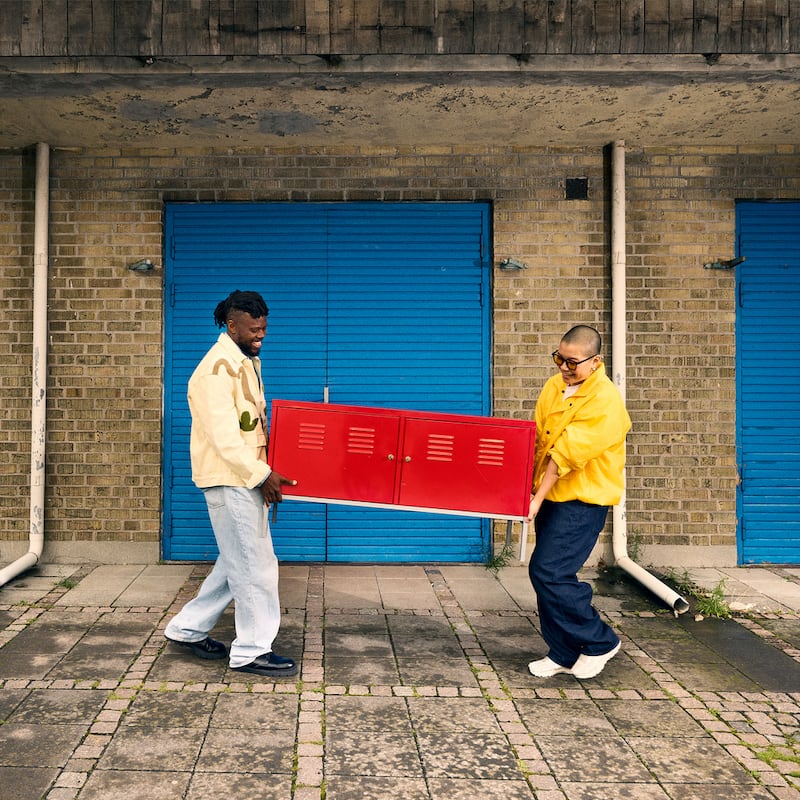
Items are being listed for less than half of their full retail price, says Ikea.
“When we look at the average reduction in price for items listed, it’s 60 per cent or less,” says Greg Lucas, sustainability manager, Ikea UK and Ireland.
Got your eye on the popular Malm Storklinta chest of six drawers? These had been retailing new this summer for €160; now you could nab a set second-hand and in good nick for just €96.
That Besta TV unit that was retailing for €255? If the retailer’s predictions are correct, you could now secure a preloved model from another Ikea Family member for about €100.
Ikea has already cut its prices on about 1,500 products by between 15 and 25 per cent in 20 European countries, including Ireland, since September 1st. The move was an attempt by the flat-pack furniture retailer to counter the cost-of-living crisis as consumer confidence continues to remain depressed.
So, if you are selling products second-hand that you bought before the price drop, you may not recoup quite so much of your original spend.
Selling and buying
Unlike some second-hand marketplaces, sellers on Ikea’s site can sell for free, at least for now. Selling through some competing third-party sites can attract fees.
For example, a second-hand Ikea Kallax for sale in Ireland on Vinted right now is priced at €25, but a fee of €1.95 is charged to “cover the cost of providing a safe smooth experience for our community”, says Vinted.
Posting a product for sale on the Ikea site is arguably easier too. Sellers simply tick the product they are selling from Ikea’s vast library, and their ad will pre-populate with the exact description and dimensions, with links to spare parts. Some small spare parts are free. Sellers can also post photos of the item they have taken themselves.
“It’s down to the buyer to highlight what condition it’s in today,” says Lucas.
Helpfully, buyers can post reviews of sellers too, which should help to keep community members honest.
You can choose to receive payment by bank transfer or opt for an Ikea digital refund card – which will give sellers a 15 per cent bonus.
Sellers accepting payment via the refund card can use the credit against new Ikea products. You can also use it to buy other second-hand products in store through the company’s Buyback and Resell service.
This service enables customers to sell eligible products back to Ikea in exchange for in-store credit. By enabling this, Ikea may be countering criticism that the 15 per cent bonus incentivises us back into the shop to buy yet more new stuff on a planet on which there is already too much stuff.
You can also use the card to buy food at Ikea.
When an item is purchased, payment is held securely by Ikea’s payment service provider until the buyer has collected or received the item and confirms acceptance through the marketplace. At that point, a 48-hour buyer protection period begins.
During this period, the buyer can raise an issue if the product does not match its listing. For example, buyers can contact support if there are missing parts, undisclosed damage, or if the item is not an authentic Ikea product.
If there are no issues, payment is automatically released to the seller.
If there is an issue, the payment remains on hold while a refund request is reviewed in line with the marketplace’s buyer protection policy. Ikea says it can support dispute resolution where needed.
While there are no fees on the Irish site for now, the company has introduced a “buyer protection fee” in Spain, which it says supports “safeguards”, like ensuring only authentic Ikea products in usable condition are advertised and only by Ikea Family members.
Delivery
Sellers and buyers will have to arrange delivery and/or pickup between themselves. But with Ikea products so ubiquitous in Irish homes, you probably won’t have a hard time finding a Billy bookcase or Kallax cube near you.
Indeed, after just 10 years in the State, some 65 per cent of Irish adults say they have at least one Ikea product in their home, according to research the company published in July 2019 to mark that 10th anniversary.
One in four people in Ireland surveyed said that Ikea was their go-to when moving into a new home, with another 21 per cent saying they visited the furniture giant when planning their first home with their partner. Some 70 per cent of Irish parents said they had Ikea products in their home.
Despite the lack of a delivery service, buying second-hand could prove more convenient than buying new. Finding a good-as-new Poang chair for sale in your own town will spare you the schlep to Ballymun, where a tour of the gargantuan shop has been known to test the most solid of relationships.
[ What Irish shoppers love to buy in IkeaOpens in new window ]
Ikea says it is “exploring” a “convenient, affordable and sustainable” delivery service for bulky items, says Lucas.
It piloted the use of TipTapp in Sweden and Lisbon this summer. This is a peer-to-peer mobile app that matches people who need help moving or delivering items with people who have a car and spare time.
“Once the Ikea online marketplace purchase is completed, the buyer can post a ‘delivery task’, set the price they are prepared to pay for delivery and receive offers from available ‘helpers’,” says Ikea.

They can compare helper ratings and reviews, choose a helper, track delivery in real time and pay securely once the item arrives. For those who just can’t wait for that Poang chair, collection and delivery may even be available on the same day.
Ikea’s timing in Ireland is something to behold. Maybe it’s not so much the Scandi-inspired aesthetic that resonates with us so much as its ability to meet the moment. And we’ve had our moments.
Ikea opened its big blue Lego-like superstore in Dublin 11 in 2009 at the height of Ireland’s financial crash. Yes, its furniture was mass-produced and everywhere, but it was also affordable at a time when roughly 150,000 mortgage borrowers had plunged into negative equity, according to estimates from the Economic and Social Research Institute think tank, with house prices dropping from their early-2007 peak.
The higher-end furniture retailer Habitat had shut up shop in Dublin and Galway in 2008 due, it said, to a “severe” deterioration in sales.
Now, almost 20 years on from the crash, we find ourselves punch-drunk from another cost-of-living crisis and an ongoing housing crisis, and with further economic clouds scrambling on the horizon. The launch of Ikea’s second-hand selling website here on the day Budget 2027 was unveiled is well timed, or portentous.
Being able to furnish your entire home and garden affordably and from one retailer, using new or second-hand products, is not to be sniffed at. Even if everyone in your estate has the same Billy bookcase.
Slice of the pie
Second-hand shopping has become big business, and Ikea knows it. It has emerged as a “quiet but significant shift” in Irish consumer behaviour, according to analysis by RedC.
It’s no longer a niche trend confined to charity shops, vintage enthusiasts or bargain hunters. Increasingly, it is becoming a normal part of everyday consumer behaviour in Ireland, says RedC.
It’s not just a way to save money but part of a broader move towards more sustainable and circular patterns of consumption. Second-hand shopping is becoming an established part of life here.
Brands are having to rethink how they compete in a world where new products increasingly sit alongside refurbished, reused and preloved alternatives.
More than nine in 10 adults in Ireland say they shop for second-hand goods, according to research commissioned by Ikea in September. Some 45 per cent of adults said they buy pre-owned furniture.
No doubt Ikea has been watching established second-hand marketplaces like eBay, Facebook Marketplace and Vinted steal its Swedish meatball lunch. Those platforms are full of listings of second-hand Ikea items, likely hitting sales of new Ikea products while returning nothing to the retailer.
So now, Ikea is getting in on the act. By launching its own second-hand marketplace here, it is harvesting something back from this thriving second-hand market of its own products. By incentivising payment through an Ikea digital refund card, money from transacting its products second-hand gets directed back to Ikea.
But is it green?
Buying second hand is great, says the Rediscovery Centre, the National Centre for the Circular Economy, but buying less overall, and repairing what you have, is better.
“The bigger challenge is that, in Ireland, we simply consume too much,” says Claire Downey, chief executive of the Rediscovery Centre, which is headquartered just over a kilometre from Ikea’s Ballymun outlet.
Irish homes contain an average of €531 worth of unused home and garden furniture, according to Ikea’s research, and unused home decor and accessories worth an average of €347. Yikes.
That baby changing table you bought new, and used only for a few short years, could have been borrowed.
“Many of the things we buy are not needed for long. Borrowing, sharing and renting are great alternatives to buying and they help to reduce the amount of stuff we accumulate in the first place, as well as saving money and space in our homes,” says Downey.
Circular.ie and Repairmystuff.ie are digital platforms that support communities to reduce consumption and waste by sharing, reusing and repairing, she says.
Many of the things we spend money replacing could easily be repaired, says Downey.
“We’d love to see a shift in mindset where people automatically consider repairing, renting and borrowing, or buying second-hand before buying new.”