Further evidence that some of the political sheen was coming off the briefly once-indomitable Green Party leader Zack Polanski came last month during a gathering of the London Assembly, of which he is a member.
London’s Labour mayor Sadiq Khan faced questions before assembly members. Polanski asked him about data centres and climate change. Khan, who is of Pakistani origin, answered him in fluent Urdu, leaving Polanski flummoxed and embarrassed.
Salford-born Polanski, who was soundly defeated by Labour overnight in the Holborn and St Pancras byelection, has a habit of recording campaign videos in pidgin Urdu as part of the Greens’ unabashed and hitherto-successful appeal to Muslim voters.
He didn’t have a clue what Khan was saying. It was a clinical skewering by the London mayor and peer of the Greens’ former it-boy of British politics.
READ MORE


Polanski had once mocked Labour as a party en route to irrelevancy: “We are here to replace you.” Now somewhat revitalised under Andy Burnham, Labour had the last laugh overnight against its main challenger on the left, left clinging to political survival.
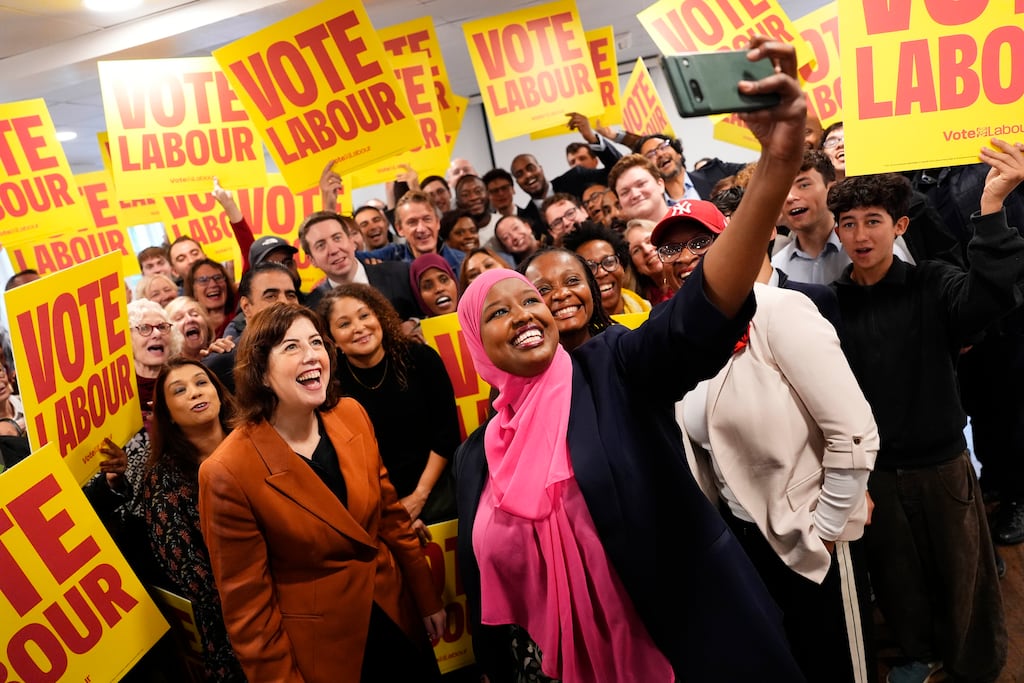
The Holborn and St Pancras byelection in inner north London was called after former prime minister Keir Starmer, ousted in July by Burnham, also quit as an MP. The seat was won by the local leader of Camden Council, Labour’s Sagal Abdi-Wali.
Her victory cements a narrative for Burnham. Having already shown he can beat Nigel Farage’s right-wingers in Reform UK, which he vanquished during his own Makerfield byelection victory, the Labour leader can now also creditably argue he has a recipe for protecting Labour’s left flank, which under Starmer was menaced by Polanski’s Greens.
It was always going to be a tall order for Polanski to win the Holborn and St Pancras seat. Firstly, it was outside his core political heartland. Although a northern Englander, Polanski’s stronghold is in and around the Hackney area of east London, with its mix of left-leaning, socially conscious hipsters and ethnically diverse communities – for whom the Greens’ mix of anti-Israel rhetoric and left-wing politics is catnip.

Holborn and St Pancras is a much different area, comprising some of London’s legal district, tourist areas around Bloomsbury and settled communities further north in Kentish Town and Camden. Despite Polanski’s widely mocked Urdu exploits, there were never going to be enough anti-Labour Muslims here to get the Greens over the line.
So why did Polanski go for it?
[ Labour retains Keir Starmer’s seat in London byelectionOpens in new window ]
He may have been trying to change the narrative for a party that has been on a rollercoaster for more than a year since he became leader. In the spring, the Greens threatened to overtake Starmer’s Labour as second biggest party on more than 20 per cent: the main left-wing challenger to then-leaders Reform.
But the Greens have been on the slide in polls since the summer, when Polanski became the target of intense media scrutiny. Burnham’s elevation compounded matters, and now the Greens, according to the latest YouGov poll, are 16 points behind newly reinvigorated leaders Labour on just 11 per cent.
As well as, potentially, heading back to the fringes, Polanski’s party is now also bitterly divided after its members passed a motion last week declaring that “Zionism is racism” and calling for the abolition of the state of Israel.
The party’s old guard, including former leader Caroline Lucas, have lambasted the divisive motion, which was backed by activist new entrants to the party, akin to the Corbynites who swarmed Labour and hauled it to the left from 2015.
Lucas also criticised Polanski for a lack of leadership on the matter; he is Jewish, but he prevaricated over the motion for fear of upsetting its new activists.
[ British Green Party votes to equate Zionism with racismOpens in new window ]
Polanski still managed to triple the Greens’ vote share in Holborn and St Pancras, so it wasn’t a completely wasted endeavour for the Green leader.
Abdi-Wali’s 45 per cent share for Labour was also ahead of her party’s vote share there in May’s local elections, underlining the existence of the “Burnham bounce”. But her majority is still less than a paltry 3,500, a third of Starmer’s.
Polanski is down, but not yet out. Given the dramatically mercurial nature of recent British politics, who knows what will be the next chapter of the Greens versus Labour.
[ Labour retains Keir Starmer's seat in London byelectionOpens in new window ]