

Three days into what US president Donald Trump claimed was an “energy ceasefire” between Moscow and Kyiv, 600,000 Ukrainians woke on Wednesday to blackouts after another wave of Russian missiles and drones pummelled power stations.
Ukraine fears it was only a taste of things to come during a fifth full winter of all-out war, with the enemy’s arsenal well stocked with ballistic missiles and new jet-powered drones, and its own air defences stretched thin as Trump cuts US assistance to pressure Kyiv to make a deal with Moscow.
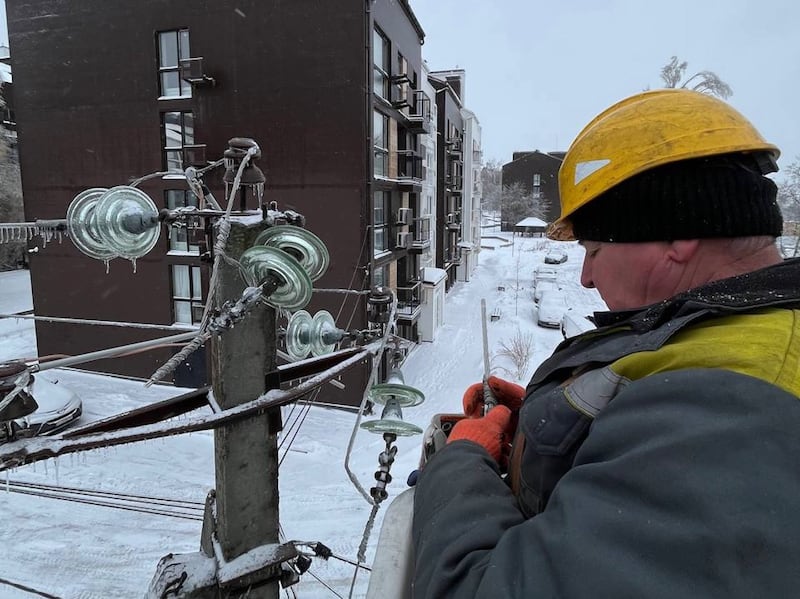
Russia has destroyed more than 60 per cent of Ukraine’s power-generating capacity since 2022, and Ukrainian cities and energy firms are now racing to prepare critical infrastructure for what could be one of the hardest periods of the war, amid daily air strikes, severe economic difficulties and collapsing relations with the White House.
In Lviv, a city of 700,000 people in western Ukraine, local authorities have repaired and strengthened existing infrastructure while making crucial systems more resistant to collapse in the case of attack.
READ MORE


“We have built additional physical protection for heat and water supply, we have worked on creating additional power-generating capacity, we have changed a record number of pipes, and we have introduced more programmes for energy efficiency,” says Andriy Moskalenko, Lviv’s deputy mayor for economy development.
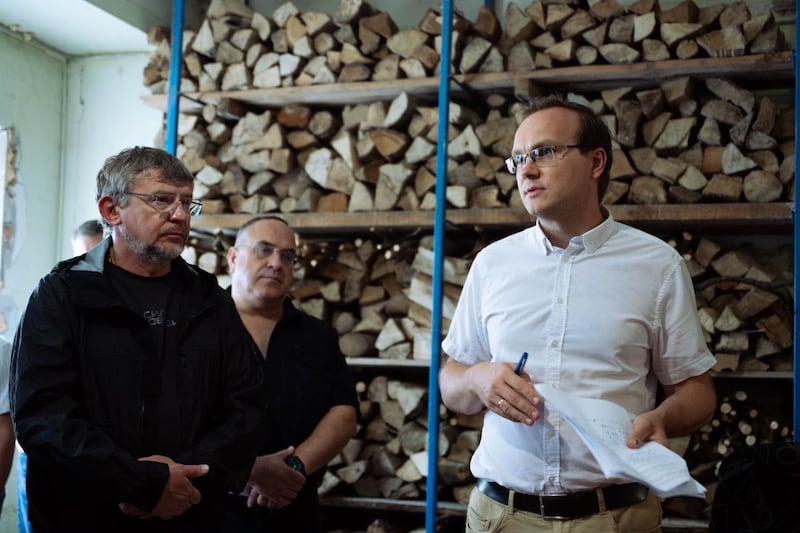
In line with national efforts to reduce reliance on huge, Soviet-era power stations that are easy targets for Russian strikes, Lviv is moving to a more decentralised electricity system, through investments in so-called modular and gas-piston power plants and large-scale battery storage.
At 70 sites around the city, including hospitals and schools, wood-powered boiler houses are being built to ensure heating continues even during blackouts in the coldest months. Emergency plans are also in place to maintain water supply to Lviv even if electricity to pumping stations is knocked out.
Old technology is also being put to good use – the authorities have installed hundreds of pot-belly stoves in shelters and basements around the city, to provide heat during air-raid alerts that can last for hours.
“People laughed at this initiative in 2022, but when we had blackouts they realised it was useful,” says Moskalenko, after returning to city hall from the site of a Russian drone strike that damaged several houses and cars on the outskirts of Lviv.
“We are working, but Russia is also changing its strategy, launching faster jet-powered drones in large numbers,” he adds
“All Ukrainian cities need more protection. At city hall, we can do some things with different brigades, and co-finance some things. We spend about 20 per cent of the city budget on supporting the military - mostly units on the eastern front, but we also give something to air defence, to buy things like pickup trucks and interceptor drones. But we can’t buy Patriots and all our big cities need them.”
A new Patriot battery costs more than €1 billion and each missile costs several million, and it is the only system in Ukraine’s armoury that can shoot down Russia’s most powerful ballistic missiles.
Ukraine is scrambling to source interceptor rockets from European and other states after Trump halted supplies to Kyiv and began a war on Iran, in which US forces have reportedly fired more than 1,700 Patriots, severely depleting their own stocks.
Ukraine has asked for 300 Patriots to help get it through the winter, but fresh deliveries from the US are unlikely amid another sharp souring of relations between Trump and Ukrainian president Volodymyr Zelenskiy.
Trump lifted sanctions on Russian diesel exports last week, in a move he claimed would bring down world fuel prices, and demanded that Kyiv halt its damaging strikes on Russian oil refineries, which are a major contributor to the Kremlin’s war chest.
He then offered no criticism of Russia’s latest attacks on Ukraine’s power stations – despite his own announcement of a supposed energy ceasefire – and Zelenskiy said the US had failed to warn his country about the missile strikes and had restricted its access to satellite internet services that are crucial for military operations.
“A targeted Russian ballistic missile strike specifically against energy infrastructure – the very infrastructure covered by the ceasefire announced by the American president,” Zelenskiy said of Wednesday’s attacks. “The strike was entirely deliberate and demonstrative in its scale – Russia has never before shown such ostentatious disrespect toward the United States.
“The American president has all the effective and necessary tools to bring peace closer through strength, justice, and pressure on the aggressor. We ask for additional packages of Patriot missile interceptors for Ukraine. It is entirely fair for us to tell the United States, Europe and all our partners that no country in the world should be left alone to face such a deranged and pro-war actor as Russia.”
In an interview published in the Financial Times on Thursday, Zelenskiy said Ukraine was “done” with its halt on attacks on Russian refineries, and would only consider renewing the pause if the US pledged to deliver more Patriots.
Ukrainians feel Trump is trying to boost Republican chances in November’s midterm elections and line up lucrative deals with Moscow – playing politics and business with their lives as they brace for dark and dangerous months.
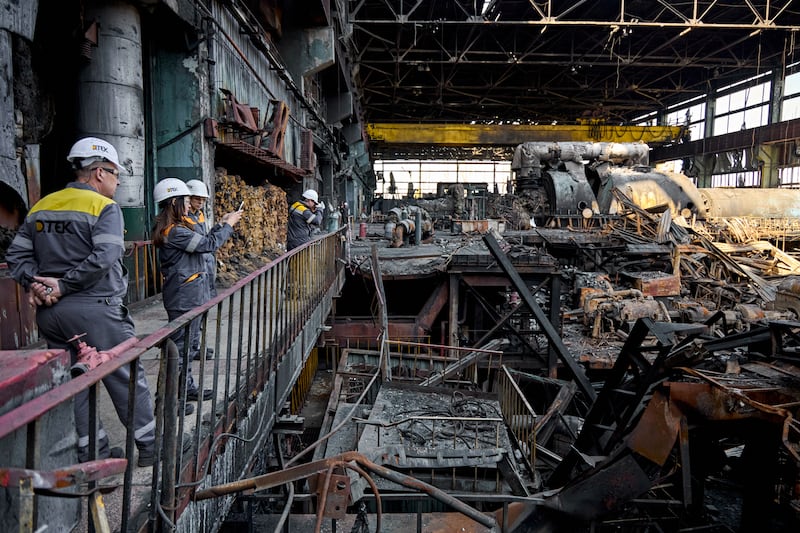
“From March until now we have done everything we can to rebuild what was destroyed last winter. We have invested €300 million in this work together with our governmental partners in the US and EU,” says Pavlo Bilodid, a spokesman for DTEK, Ukraine’s biggest private energy company.
“[But] true resilience requires new capacity and a different approach, which is why we are investing in solar and wind generation, as well as battery storage. A key part of our strategy, and the whole country’s, is to invest more in decentralised and distributed assets,” he adds.
“In the last year, we have opened huge battery storage facilities, and they will be particularly important this winter. We are also building wind power plants now and have more in the pipeline. At the other end of the scale, we are putting in smaller substations the size of a phone box to power one neighbourhood block.
“There is also a huge trend among Ukrainian companies and households to add more rooftop solar panels, wind power and battery storage. The war has really accelerated the energy transition in Ukraine.”
Ukraine is beginning to deploy a new generation of interceptor drones that can catch and destroy jet-powered Russian attack drones that can fly at 600km/h – three times faster than earlier, propeller-driven versions.
It is also part of a pan-European project called Freya to produce interceptor rockets to counter ballistic missiles – but delivery is years away.
For now, Ukrainians are bracing for winter under skies that they know are increasingly vulnerable.
“DTEK and other energy companies have repaired as much of the power system as possible. The key question now is how it is protected. So-called passive protection like concrete blocks and cages around assets helps, but can never fully protect against a direct strike by ballistic missiles or new jet-powered drones. That is why increasing our stocks of anti-ballistic ammunition is so important,” says Bilodid.
“We have taken every measure possible to prepare for winter. But the millions of euros invested, the months of work by our crews and the support of our partners could be undone by just one or two massive Russian ballistic missile strikes.”


