
The French government said on Wednesday it was pausing the use of stun grenades in its policing of student protests after a 15-year-old boy’s hand was blown off during a clash with riot police.
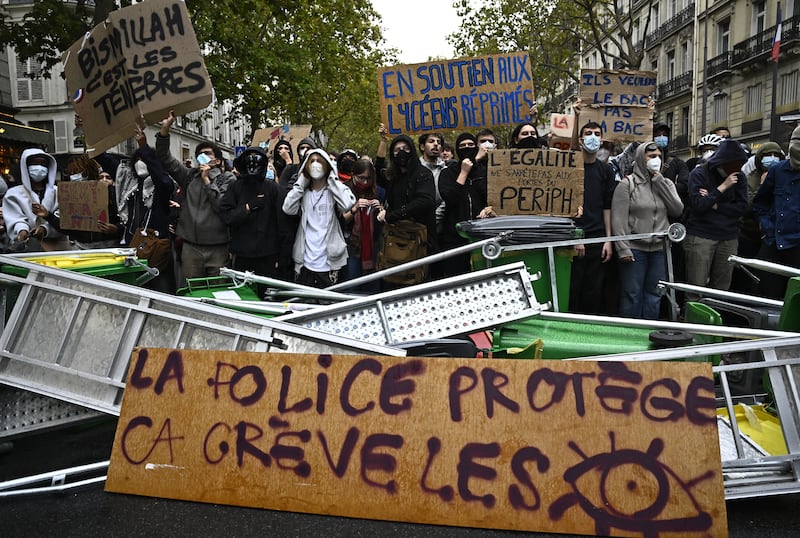
Rights groups, students and some political opponents have accused the French police of using disproportionate force during a more than two-week-old wave of student protests that has exposed deep-seated public anger in advance of elections next year.
French prime minister Sébastien Lecornu is to address the nation on Wednesday evening after hundreds of thousands of demonstrators took to the streets on Tuesday.
Emmanuel Macron, the French president, held emergency talks with Lecornu and the education and interior ministers at the Élysée Palace on Tuesday night. Few details have emerged, but Lecornu has promised discussions on increased school funding and possible changes to the university admissions system.
READ MORE


Lecornu has acknowledged the “legitimate” demands of France’s students but also described the unrest as the most violent student demonstrations in decades.
Interior minister Laurent Nunez, meanwhile, said he had ordered the stun grenade suspension until there was more clarity around the events that took place in the northern city of Lens on Monday. Nunez said there was a “strong possibility” the firing of a non-lethal stun grenade had caused the teenager to lose his hand.
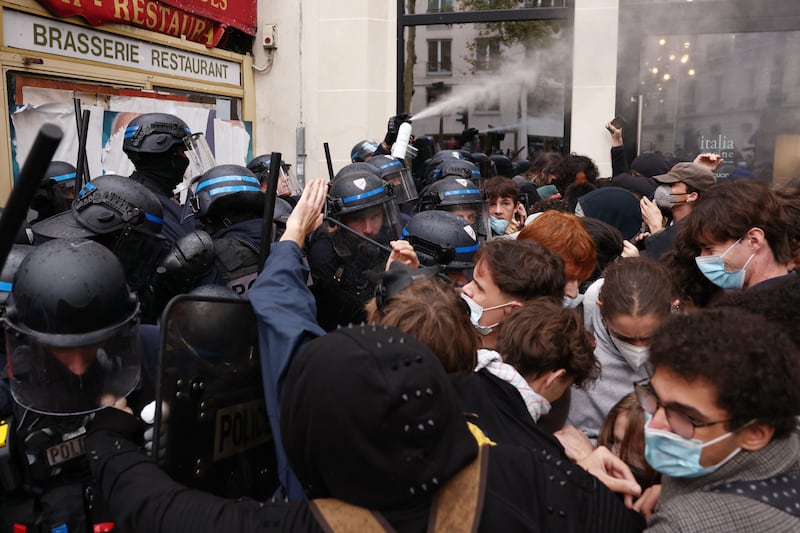
“I am suspending their use for the high school students’ movement until light has been shed on what happened in this case,” said the minister, who added that 18 investigations in total had been referred to the police inspectorate.
The high school students are angered over dilapidated infrastructure, teacher shortages, overloaded schedules and a lack of funding in education.
They blame the poor learning conditions for France’s worsening scores in the OECD’s Programme for International Student Assessment (Pisa), which have fallen faster than the OECD average since 2015, according to the rankings.
In reading, French 15-year-olds, the age when high school begins, scored 43 points lower in 2025 than a decade earlier, the biggest drop in the OECD. Their math scores also dropped the most.
Protests showed no sign of easing on Wednesday, with more than 500 schools closed a day after demonstrations swept across the country. Unions called for another day of street marches later in the week.
Far-right and hard-left parties are front-runners in the presidential race to replace Emmanuel Macron six months in advance of the election.
Under pressure to tame public debt amid weak growth, the government has little spare cash to address the students’ complaints of understaffing, a lack of investment in ageing school buildings and inequality between regions.
The left-wing CGT trade union, France’s second-largest, said it would rally behind the student union’s call for further street protests on Thursday.
“The CGT will continue to shoulder its responsibilities in supporting the young people who have mobilised and protecting them from violence and police repression,” a CGT statement said.
In a sign the protests in France might spur unrest elsewhere in Europe, where budgets have been under pressure as governments respond to successive cost-of-living and energy crises, students in parts of Belgium have launched copycat actions.
In the Belgian city of Liege in the southern French-speaking Wallonia region, at least 107 people have been arrested in connection with student protests this month, the Belga news agency reported.
Teachers are also on strike.
In Portugal, the main teachers’ union launched an indefinite strike in mid-September against overtime, with teachers refusing to do any unpaid work beyond 35 hours a week mandated by law.
“The underlying causes of the (French) protests reflect problems familiar to teachers and students in other countries: deteriorating school conditions, teacher shortages, excessive workloads, and widening inequalities in access to education,” the union said in a statement.
And in Spain, teachers’ unions have been protesting conditions in state schools. Teachers in Madrid plan a strike on October 14 to press demands including a reduction in hours, smaller class sizes and higher salaries. – Reuters


