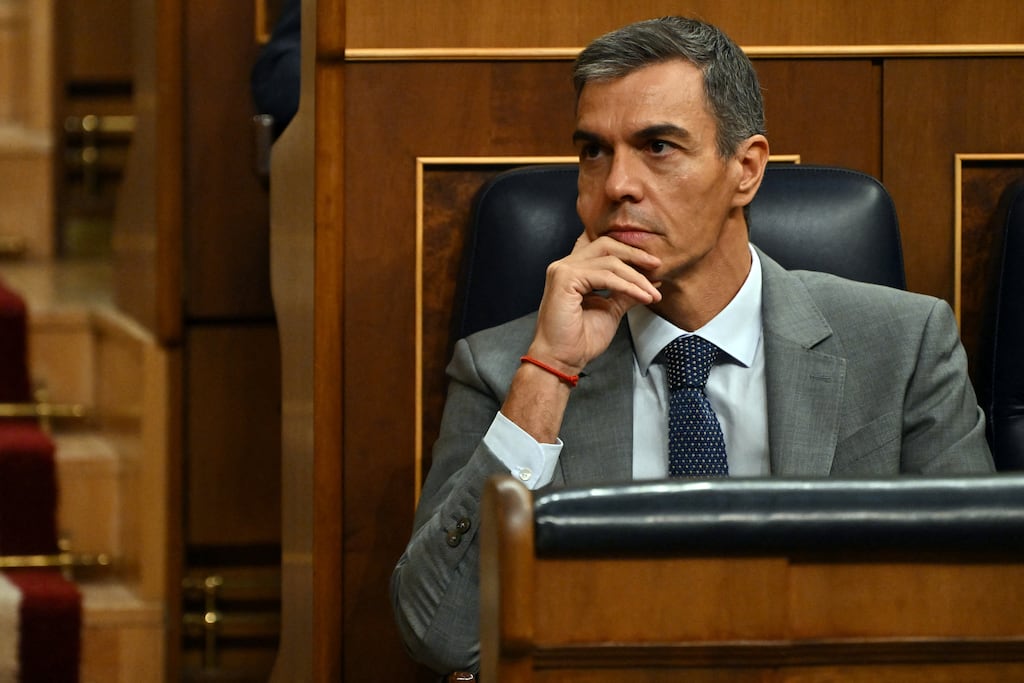
Spain’s prime minister, Pedro Sánchez, has called a snap election prompted by the housing crisis, which has seen a wave of protests and a resounding parliamentary defeat for his government in recent days.
Sánchez, a socialist who has been in power since 2018, has called the election for November 29th, the earliest date possible. The next general election had not been due until next summer.
“There remain many injustices to correct, many challenges in public services and housing,” Sánchez said in a live address as he announced his decision.
“What is true is that, in order to do more, we need the support of people; we need to ensure that parliament gives us a broader progressive majority.”
His coalition has been governing in minority, mainly with the support of an array of Basque and Catalan parties.
However, his lack of a parliamentary majority was underlined on Friday when Congress rejected a series of emergency measures his government presented aimed at tackling the housing crisis. The reforms sought to give tenants more rights, protecting them from eviction and ensuring their rental contracts were automatically renewed to prevent abuses by landlords.
The last-minute withdrawal of support for the legislation by Together for Catalonia (JxCat) was key in preventing its approval.
Sánchez had presented those measures in response to a sudden wave of social outrage on the housing issue, prompted by the eviction last month of Maricarmen Abascal, an 87-year-old wheelchair user, from her flat in central Madrid.
Hundreds of demonstrators turned out to oppose the eviction, which was followed by a nationwide series of protests, including people pitching tents in the squares of cities.
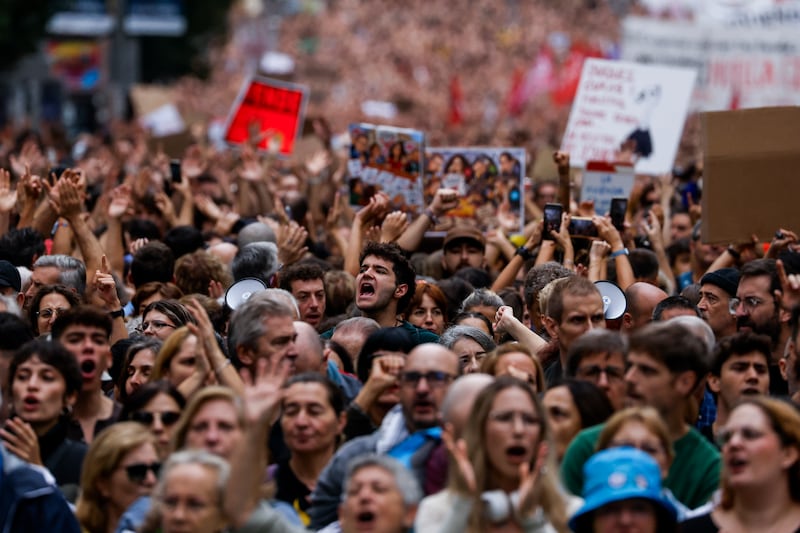
On Saturday, tens of thousands of protesters turned out in Madrid and other cities to protest the rental market, which has seen costs soar in recent years, and Congress’s refusal to approve the government’s reforms.
These elections come at a difficult time for the Sánchez government. His Socialist Party has been mired in scandals and his wife, Begona Goméz, is due to go on trial for influence peddling. Sánchez has defended her innocence against what he says is meddling by the political right in the judiciary.
His government has struggled to manage a crisis in the Spanish city of Ceuta, in North Africa, where more than 70,000 migrants arrived over two days in July. Most have returned to Morocco, but the city has become a logistical and political headache for Sánchez.
The opposition welcomed the prospect of elections, which they have been demanding for some time. The conservative People’s Party (PP) has been leading polls, which suggest it would need the support of the far-right Vox to govern.
“This is not about the PP beating the Socialist Party; these are not like previous elections,” said Alberto Núñez Feijóo. “This is about Spain defeating Sánchez.”