

The boom of protest bangers starts soon after 9am. The crowd is visible from streets away, spilling across the road. The students of the local high school have once again emptied out of their building in central Paris to protest.
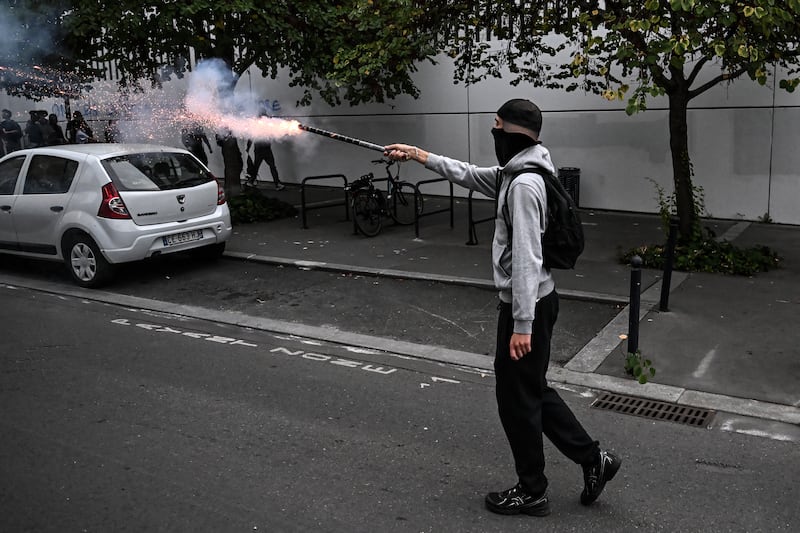
The blackened detritus of a burnt bin and a rental e-bike lie to one side. The teenagers are largely dressed like any 15- to 18-year-olds who went off to school that morning, carrying backpacks and wearing light autumn jackets. But moving among them are the daredevils and instigators, with their faces concealed by balaclavas.
Every now and again one of them tosses a banger and groups of girls in little tops and make-up surge shrieking away from the blast. Mostly, the young people stand around.
What’s the protest about? I ask one of the boys.
READ MORE


“Aucune idée,” he deadpans – no idea.
His friend steps in. “It’s for the teachers,” he begins. “Their salaries are too low.” He lists a series of complaints aired by student protesters across France: teacher absences, poor building conditions, long days that can stretch from 8am to 6pm.
The protests began at a school in a Paris suburb on September 17th and spread from there, developing into a nationwide movement from last Tuesday when they coincided with a strike of public sector workers that included many teachers.

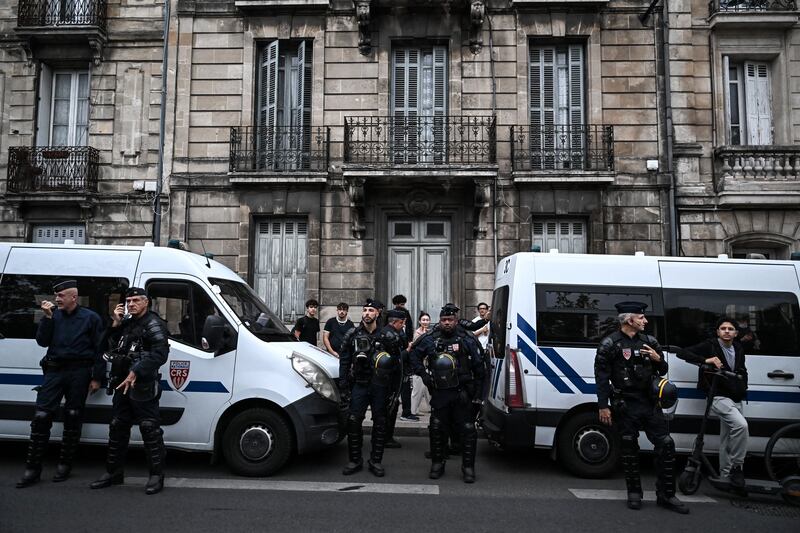

The disruption is widespread. Up to 500 schools were partially or fully shut in France on Monday due to the protests, including a third of high schools in the greater Paris region.
Blocked roads can make journeys torturous: last week, the protests turned a 25-minute trip through Paris into an hour and a half.
[ France closes up to 500 schools on Monday as more protests plannedOpens in new window ]
Protest is taken seriously in France as a civic act, and the involvement of young people can give it a sense of moral force.
However, the arson and violence that have accompanied some protests has soured the attitudes of some.
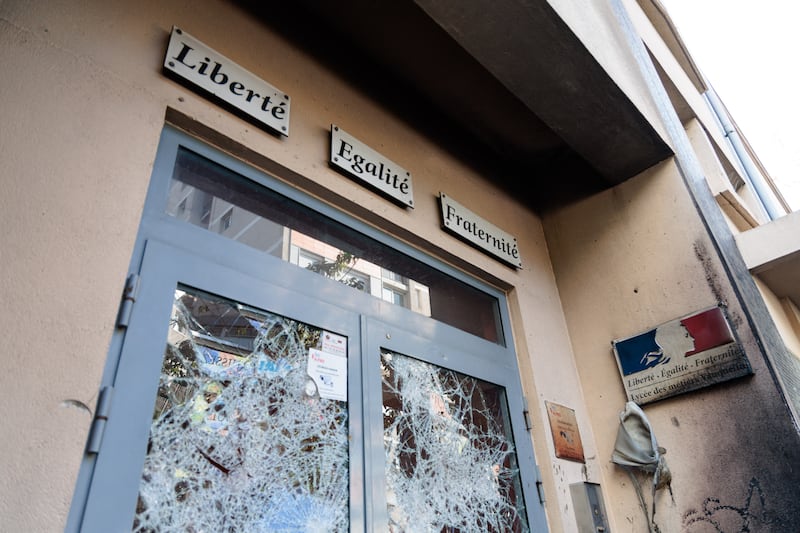
Across France, 24 schools have been “burned or ransacked” since the start of protests last month, according to the government.
Footage of some students attacking police has gone viral, and on Sunday a 16-year-old was arrested in southern France after a serious assault on a teacher.
For their part, riot police – never much known for their leniency in France – have stormed the protests with tear gas in a bid to get control and seriously wounded some students with rubber bullets and batons.
With France in election mode in advance of a presidential vote in the spring, response is polarised along political lines.
“Faced with chaos, re-establish order” read the call from the far-right National Rally party of Marine Le Pen this weekend, promising to increase teacher salaries, restore respect to the profession, and stand on the side of “authority” and “law and order”.
The party accuses the hard-left France Unbowed movement of orchestrating protests and of bearing “direct responsibility” for violence – a running theme.
The leader of France Unbowed, Jean-Luc Mélenchon, is the nearest challenger to Le Pen in polls.
The veteran left-winger has supported the student protests from the outset. He has led condemnations of the “sickening” police response, calling for supporters to form protective lines around the young people and demanding that the interior minister “rein in this gang that’s beating up our children”.
“The student protesters are harmless. The ... government has ordered repression. This brutality is irresponsible and has a clear racist undertone,” Mélenchon wrote – a reference to accusations that the police response was tougher in diverse neighbourhoods.
There are signs that the protest movement may develop into something larger.
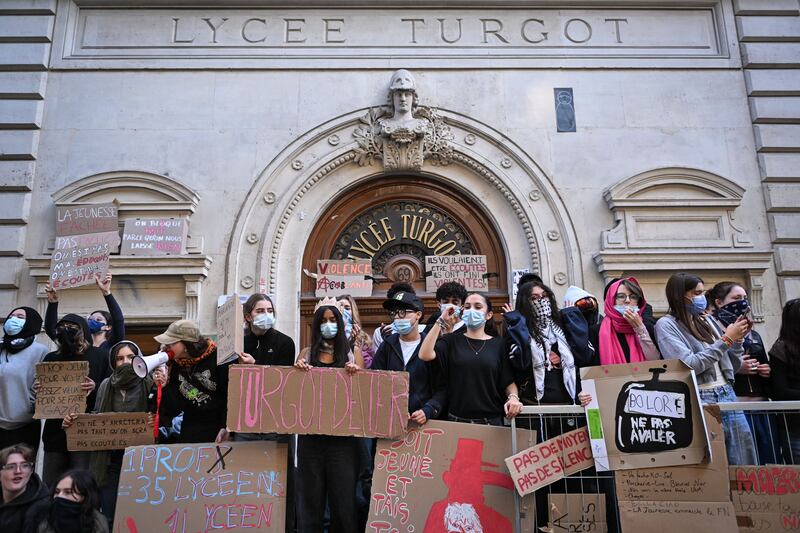
Over the weekend, the teachers’ unions issued a joint statement endorsing the student protests and declaring they would join them on Tuesday for a “day of mobilisation”.
The unions described students’ complaints as “legitimate” and said the problems were “the direct consequence of the education policy of the various governments of Emmanuel Macron”.
This is a negotiating move: the unions have their eye on the budget, which has a freeze on teacher salaries among its proposed belt-tightening measures and has just begun its torturous pathway through France’s hung parliament.
But there is a sense of momentum building around general discontent, with fuel prices soaring and France already on alert for a potential return of the Yellow Vests movement.
The stakes are high: the government collapsed while trying to pass a budget this time last year, and financial markets are on alert. As trading opened this week, concerns about France were blamed for causing a slide in the euro.
Their differences aside, both left and right agree that the underlying complaints of the students have merit, and that Macron’s policies are to blame.
When Macron came to power in 2017, he promised reform and to restore France as an economic powerhouse.
But efforts to rein in spending, while received as punishing austerity by the public in France, have nevertheless failed to get a handle on the country’s towering debt pile and stubbornly high deficit, which ran wild during the Covid-19 pandemic.
Macron is at the end of his term limits, but the situation looks unfavourable to the various “Macronist” candidates who had been vying to be his successor.
[ Students in France take to the barricades over conditionsOpens in new window ]
Teenager loses hand in protests
A teenager’s hand was blown off as high-school protesters clashed with riot police in northern France yesterday, a local official said, on the eve of a national demonstration by the pupils’ union against underfunding, overcrowding and dilapidation.
The regional newspaper La Voix du Nord said the 15-year-old lost his hand and part of his lower arm after picking up a police dispersal grenade that detonated in the town of Lens as the wave of school protests entered its third week.
François-Xavier Lauch, prefect of Pas-de-Calais, declined to comment on the exact circumstances, saying some 200 to 250 protesters had been hurling objects at police.
It was uncertain if the incident had involved a police stun grenade or how the injury happened. Lauch said an investigation had been opened. - Agencies


