He uncorked a generation’s anger at a broken college entrance exam system. Now the Gen Z movement that Abhijeet Dipke birthed five months ago and called the Cockroach Janta Party has become a formidable finger in the eye of the Indian government.
The cockroaches’ latest aim is the resignation of the country’s chief election commissioner, over what they say is a politically motivated purge of 130 million voters from the election rolls.
On Saturday, in perhaps their biggest challenge to prime minister Narendra Modi’s administration, supporters defied a police ban and staged a mass protest in New Delhi over they they said was a politically motivated revision of the nation’s voter roll.
Thousands of demonstrators met walls of security forces as they tried to protest. Leaders of the Cockroach party were detained when their flight landed in Delhi shortly before 11 am local time on Saturday.
“This is dictatorship,” said Abhijeet Dipke (31), as police officers approached him and the two other leaders before they could disembark, according to a video he shared on social media. Police officers were heard telling him that their protest had been refused permission.
In central Delhi, protesters were rounded up by the dozens starting early on Saturday morning and led, sometimes forcefully, into detention buses.
They were defying extraordinary measures taken by the authorities to prevent them from reaching the protest site, called Jantar Mantar.
The demonstration comes after a week of nationwide protests demanding the resignation of Gyanesh Kumar, the head of India’s election commission, a body that has recently come under intense public criticism because of the voter roll revision.
In fact, India’s youth have many more grievances: failing schools, insufficient jobs, violence against women, a lack of government accountability. Their frustrations have been boiling for years. There are so many of them – 367 million people between ages 15 and 29, the world’s largest Gen Z cohort.
Dipke said in advance of Saturday’s demonstrations that he felt intense pressure.
“It’s like someone has dropped a baby at my doorstep,” he said on a recent road trip to highlight the problem with state schools in the countryside. “It actually scares me, to be very honest.
“People have too many expectations, too many hopes,” he went on. “It’s like people are expecting me to resolve everything at once.”
Modi has not commented on the cockroach protests, though criticism has come from senior politicians of his Bharatiya Janata Party, including the chief minister of Maharashtra state, Devendra Fadnavis, who said their “fake narrative” over the voter roll revision would not succeed.
For Dipke – and the cockroaches – the risks are enormously high.
In a country where space for dissent has shrunk, they could be crushed as quickly as they appeared. Delhi police have detained hundreds of people who defied the ban and protested in Delhi this week.
The cockroaches’ four leaders are all younger than 32, with no political experience. Signs of friction have appeared with the main opposition party, the Indian National Congress. Its leader, Rahul Gandhi, is holding another rally across the country, in Chennai, on Saturday.
The cockroaches already have one win under their belt: the rare ouster of a government minister in connection to the entrance exams. They seem to have emboldened many more Indians to speak out against the government. Over the last week, a range of groups, from left-wing student activists to conservative regional politicians, have rallied in several cities.
“We are just frustrated by everything. Everything,” said Aayushi Gaikwad (18), who travelled three hours by train to attend a cockroach protest in Mumbai last Friday.
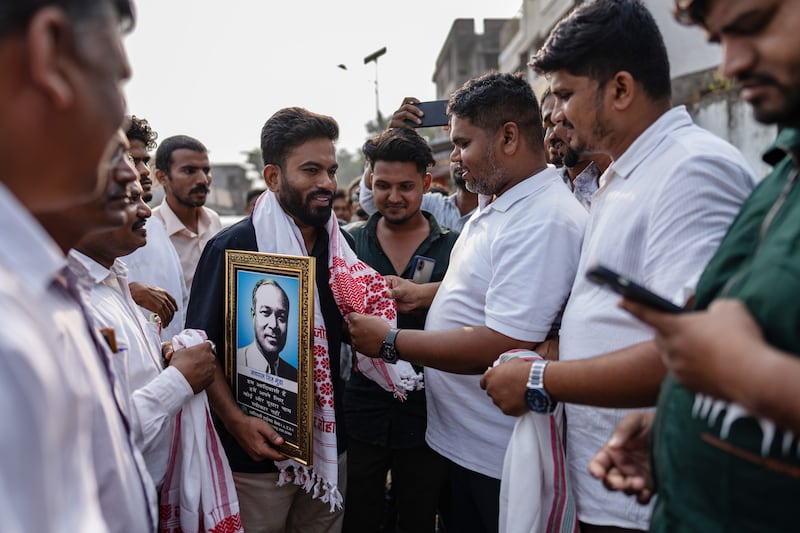
It was her first time at a protest. Around her, thousands of people waved Indian flags. As evening fell, Dipke led the crowd in singing the national anthem.
Ram Guha, a historian and outspoken critic of Modi, credited the cockroach leaders for puncturing the “invincibility of the Modi government”.
“They clearly have a raw courage,” he said.
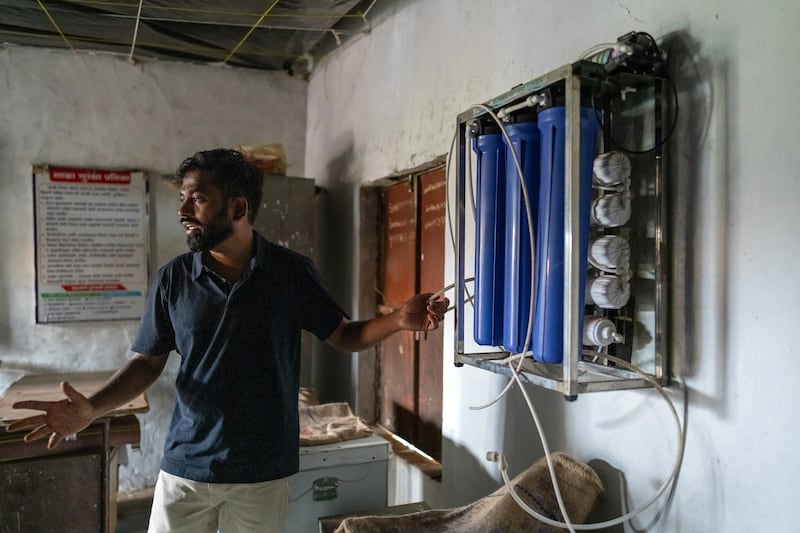
Not long after they forced the resignation of the education minister in July, the cockroaches turned to India’s rural schools. A range of Instagram-worthy horrors awaited them. Clogged toilets. Broken water taps. Overheated tin sheds for classrooms. Rotten onions in a school kitchen. Children wading through floodwaters to reach school.

Dipke visited a remote district in western Maharashtra state, called Nandurbar, where he had spent the first five years of his childhood before his family moved to a city.
For Dipke, fixing schools is personal.
He was born to a Dalit family, seen as low on the Hindu caste ladder, in Nandurbar, a remote district in western Maharashtra.
He attended private schools. But his cousins, whose parents were not as educated as his, attended rural government schools, and the contrast was obvious to him, even as a child. He sat at a desk; they sat on the floor. He drank filtered water; they sometimes had no water. He went on to Boston University for a master’s degree; they repaired cars or worked in construction.
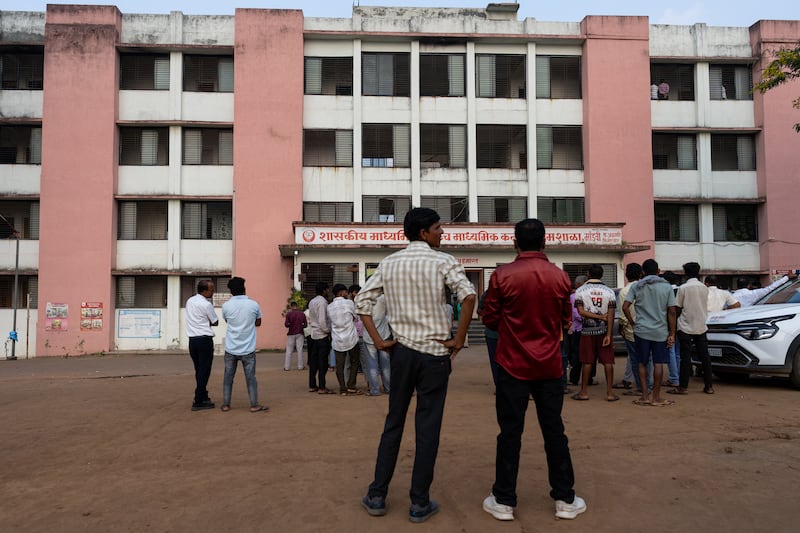
“That has been one of the most neglected things since independence. Government schools have never been given the attention they need,” he said.
At a residential girls’ school in a village called Sari, he learned there was no running water in the fourth-floor bathrooms. The girls hauled buckets of water up four flights of stairs.
At a primary school, he met the one teacher who taught a class of first through fourth graders. There was no electricity, and the girls had to fetch water for their bathroom from across a field. The boys had no toilet at all.
Vishwas Thakarey, the teacher, said he, like many teachers, had been diverted from the classroom because he had been told to work on the voter roll revision. (Teachers are often pulled away on other government duties.)
Education experts say they hope the cockroaches will continue their campaign on schools to shine a light on an issue politicians had long ignored.
“The kind of attention they’ve been able to bring to schools, no one I can think of has been able to do that for 20 years,” said Reetika Khera, an economist at the Indian Institute of Technology Delhi who has researched rural schools for decades.
This article originally appeared in The New York Times.