
Down a flight of steps from the street in Taipei’s Ximen neighbourhood, a heavy door opens into a small, dark basement bar called Commander D. The walls are painted black and steel grids and metal bars give the place the atmosphere of a high-security prison, slightly offset by a few bordello-style chandeliers clamped to the ceiling.
A handful of customers are gathered at the bar and seven young men are chatting sedately around a small table laden with trays of vodka shots. Two of them are wearing leather dog masks.
Last Saturday, police barged into Commander D, arrested the owner and detained more than 50 people, holding some of them for a number of hours. During the raid, police forced the bar’s patrons to squat on the floor and made derogatory remarks to one customer who was disabled.
Commander D is a gay cruising bar and it was crowded and hot. So many of the customers were shirtless, something the police viewed as evidence that they may have been violating Taiwan’s Social Order Maintenance Act, which bans “wantonly exposing one’s naked body or presenting a lascivious posture in a public place or publicly accessible place”.
READ MORE


Taipei police said later that four officers, the on-site supervising officer, and the local precinct chief received disciplinary penalties for their part in the conduct of the raid.
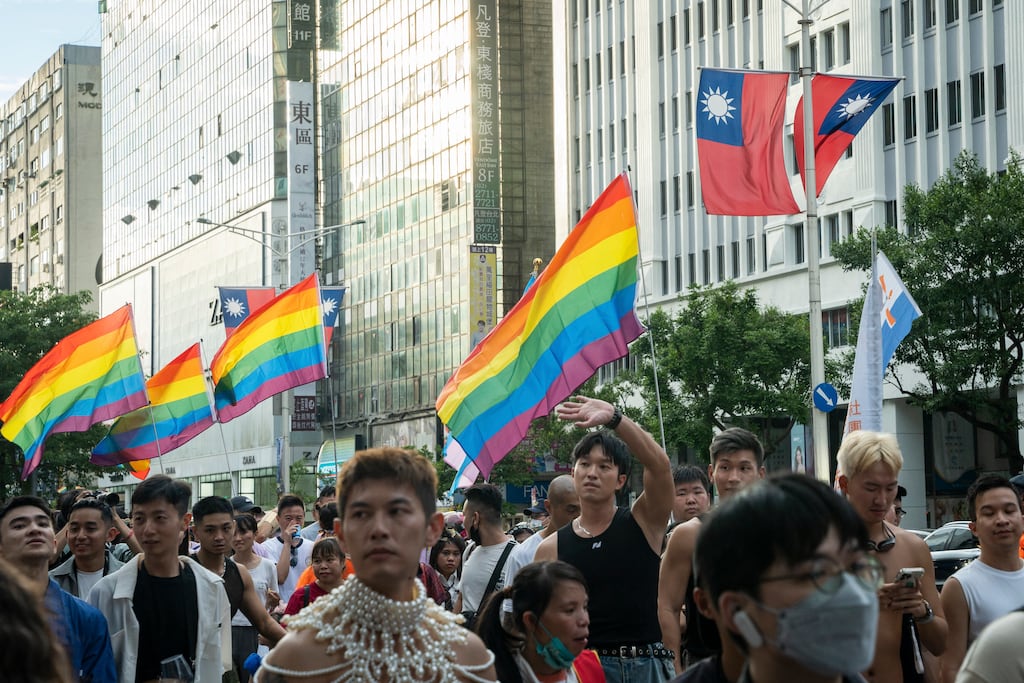
The city’s mayor Chiang Wan-an apologised to those affected but his statement did little to cushion the shock that such an action could take place in Taiwan, the most liberal jurisdiction in Asia for LGBTQ+ rights. The island legalised same-sex marriage in 2019, it has banned conversion therapy and allows people to change their gender identification and Taipei’s annual Pride parade at the end of October attracts queer people from all over Asia.
[ Europe wants to get tough on China. The risks could be enormousOpens in new window ]
“The LGBTQ+ community should never face heightened state surveillance or humiliation simply for gathering, socialising, expressing gender, practising intimacy, or exploring sexual cultures. The Taipei city government must demonstrate through concrete policy and verifiable action that, in a self-proclaimed diverse and progressive city, the dignity, freedom, and safety of LGBTQ+ individuals will not be arbitrarily sacrificed,” 10 Taiwanese LGBTQ+ rights groups said in a joint statement.
Police raids and mass detentions in gay bars are almost unknown in democratic societies, although they have become more common in Russia in recent years. More importantly for Taiwan, such incidents have not been reported in mainland China for many years, despite a recent crackdown on LGBTQ+ activism.
There are no longer any public Pride marches or parties in cities such as Beijing or Shanghai and when western embassies host such events, police routinely question Chinese citizens who attend. But the authorities generally leave LGBTQ+ people to pursue their private lives in peace and gay clubs, bars and dating sites continue to flourish.
The Chinese authorities take a 1950s Legion of Mary approach to obscenity so lewd behaviour is risky. But transgressions are usually dealt with discreetly and if venues close down because of excessive enthusiasm among the patrons, they often reopen a few weeks later.
In recent years, the Communist Party has been waging a covert war on Halloween, chiefly because the costumes offer an ungovernable opportunity for free expression. Last year, one big gay venue in Beijing closed on the night of the festival, ostensibly because of fire safety concerns due to the possibility of overcrowding, but it reopened the following day.
[ Bangkok Letter: Pink tiger roars as Thailand’s marriage equality law takes effectOpens in new window ]
Taiwanese LGBTQ+ groups are challenging the legal basis of the police raid on Commander D, arguing that “gay men dancing naked, BDSM performances, or other forms of bodily and erotic expression that differ from mainstream culture cannot be summarily classified as ‘violating public morals’ simply because law enforcement officers are unfamiliar with or disapprove of them”. A coalition of 10 rights groups called for an independent investigation into the raid and said it awakened memories of the oppression endured by LGBTQ+ people as late as the 1990s, as Taiwan was moving from a military dictatorship into democracy.
“Today, when a venue providing space for specific sexual cultures experiences another large-scale search, mass inspection of patrons, and police discrimination, humiliation, and intimidation, the community feels far more than a routine law enforcement action – it reawakens the collective memory of state intrusion and oppression,” they said.
“Taiwan has progressed through gender equity education, same-sex marriage legalization, and increasing LGBTQ+ visibility. However, institutional progress must not remain confined to laws and slogans. If law enforcement officers continue to view LGBTQ+ venues, sexual cultures, intimacy, and sexual autonomy through heteronormative, binary, and moral-panic frameworks, it demonstrates that equality has yet to reach the front lines of policing.”
[ Marriage equality a decade on: ‘Things have gone backwards’Opens in new window ]