
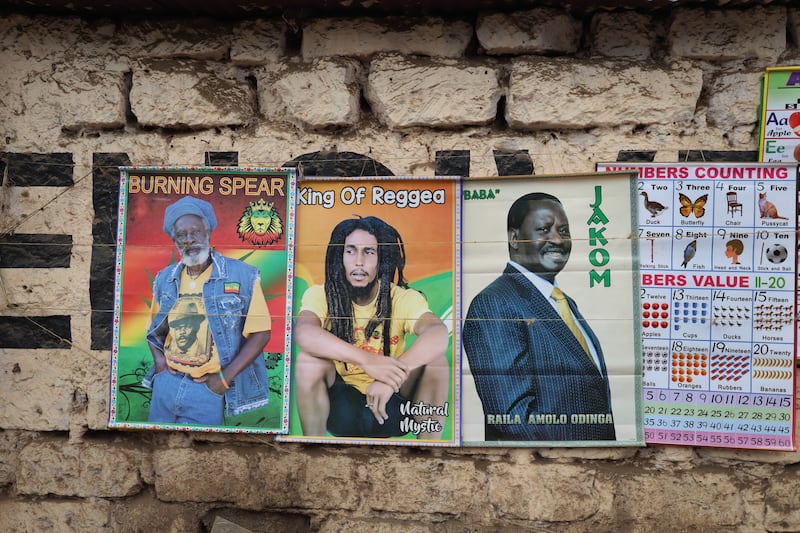
Off a busy thoroughfare in Kibera, an impoverished suburb of Nairobi in Kenya, is a small narrow room filled with artwork depicting Pan-African figures and drums. The modest meeting house serves as a gathering point or “temple” for local followers of Rastafari.
The Afrocentric movement which emerged in the 1930s sees black people as oppressed by “Babylon”, an umbrella term for unjust power which is often applied to western capitalism and colonialism. Rastafarians embrace mysticism and revere the former Ethiopian emperor Haile Selassie I as their messiah, with their movement named after his pre-coronation name, Ras Tafari Makonnen (although the emperor remained a devout Orthodox Christian).
Rastafari has been recognised as a protected religion in Kenya since 2019, when a court ruled the expulsion of a pupil from school for her dreadlocks was discriminatory.
Kenyan Rastafarians place a particular importance on dreadlocks due to their historical association with the Mau Mau, who often wore their hair matted and unkempt as they waged a guerrilla campaign against colonial British forces in the 1950s.
READ MORE


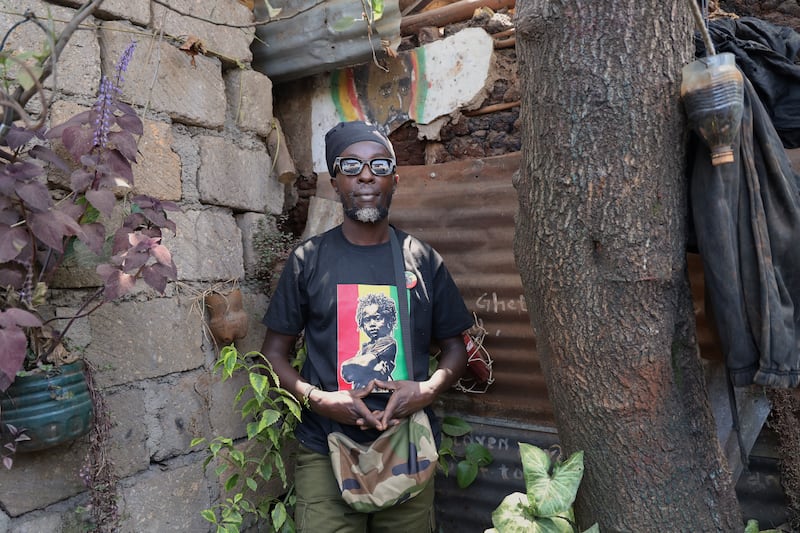
Gigi Spice (42) wears a badge of the leading Mau Mau leader, Dedan Kimathi, “who fought against the Babylon, the British”.
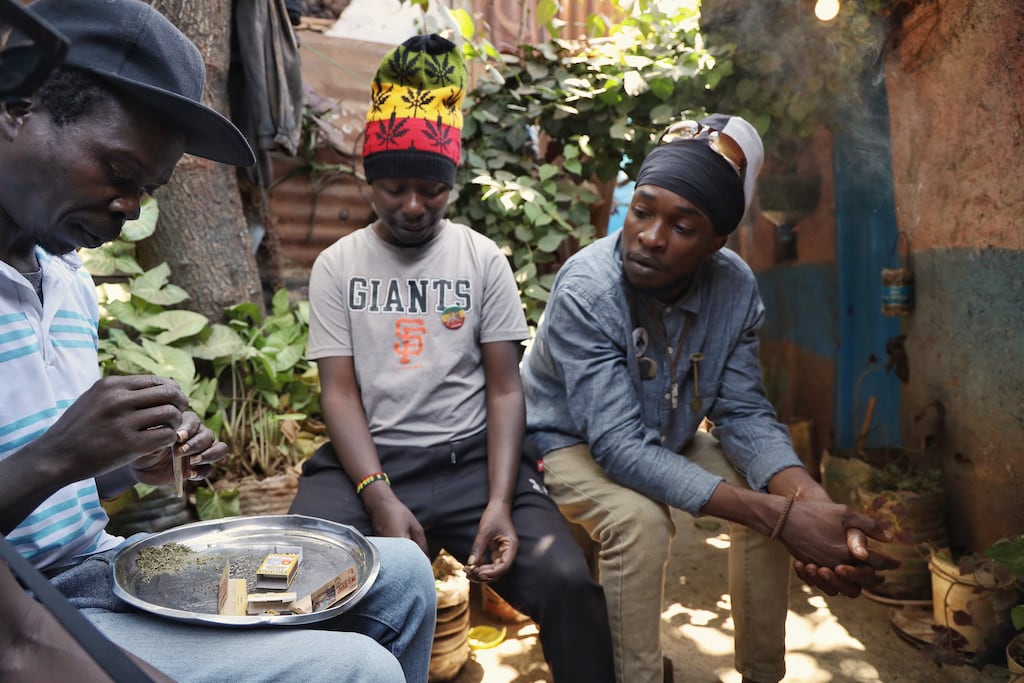
The consumption of marijuana, a cannabis derivative, is viewed in Rastafari as a sacrament which enables followers to connect more deeply with a higher power.
While many religious and ethnic communities in Kenya have been granted legal exemptions to brew small batches of alcoholic drinks like honey and palm wines for special ceremonies, Rastafarians face up to five years in jail or a €700 fine for possessing cannabis for personal use. Meanwhile, cultivating cannabis carries a hefty fine of at least €1,670 and up to 20 years in jail. “The wrong people are going to the Babylon,” says Boby Achoky (27).
In 2021, the Rastafari Society of Kenya filed a court petition seeking an exemption for Rastafarians who cultivate, possess and use the cannabis plant as part of a sacrament or ceremony, arguing that the lack of exemption violated the freedom of religion and right to equality.
In July, a Kenyan judge dismissed the petition, saying the community failed to demonstrate a violation of their constitutional rights but that a national debate on cannabis was warranted.
[ Recycling boom forces Kenya’s waste pickers to fight for their futureOpens in new window ]
This continuing legal ban on cannabis leaves many Kenyan Rastafarians, who are often unable to pay fines or bribes of up to several hundred euro, facing unpredictable sentences, depending on “the judge or the magistrate you meet”, says Spice. “If you meet the magistrate and that day he is in a bad mood, that day you are going to see fire.”
A few years ago, Spice served two years in jail for carrying 125g of cannabis. “It was too long,” says Spice, “Everything stopped in my life.” The Rastafarian says the police used a local informer in Kibera to bring the charges against him.
Human rights groups have routinely criticised the use of plain-clothes police officers, paid informants and physical force to police slum neighbourhoods like Kibera, which are home to large, economically vulnerable populations who often propel anti-government protests.
“My house has been visited with police several times,” says Jahill Olwenyi (37), a member of Kibera’s Rastafari community.
Rastafarians who find themselves in prison face overcrowded, unsanitary and often dangerous conditions. “Young people [are] being put in jail for nothing because of a small spliff,” says Spice.

The Rastafarian served his prison sentence in the Nairobi Remand and Allocation Maximum Security Prison, which in recent years has held around twice the number of inmates its capacity was designed for. “The situation there is tough,” he says. “You have to be strong, and you have to be a rude boy.”
In jail, Spice says inmates face the risk of violence and sexual assault at the hands of other inmates. “If you’re not serious, if you’re not hard, they’ll turn you into a woman,” says Spice. “There are many people suffering inside in these cells just because of marijuana.”
Spice sees the continuing legal ban on cannabis as “hypocrisy”, alleging that government officials are involved in trading the illicit substance.
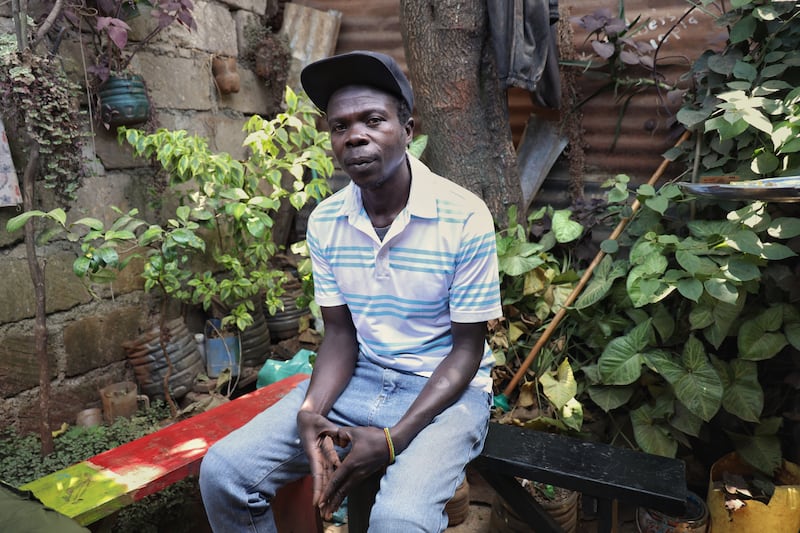
Sitting beside Spice is Ismael Jaffar (39), who is originally from Uganda, where the climate has made it a leading producer of cannabis in east Africa, despite recreational use of the substance remaining illegal. A joint venture between an Israeli and Ugandan firm has allowed the country to export medicinal cannabis in recent years.
Spice says the Kenyan government should be looking at cannabis in a constructive way: “Millions of young people can be employed through ganja, and that’s why we want the people and the religious sector to look at it in a different way.”
[ Who is poisoning Kenya’s elephants?Opens in new window ]

– Hannah McCarthy’s reporting was supported by the Simon Cumbers Media Fund