The Government unveiled an €8.5 billion budget package on Tuesday to bring public spending to a record level, and drew sharp criticism from the State’s budgetary watchdog for increasing the reliance on “high-risk corporation tax”.
The package will bring public spending to €125.6 billion next year despite tensions in Government over the insistence of Minister for Public Expenditure Jack Chambers to limit spending growth to 6 per cent next year.
One Minister, Patrick O’Donovan, suffered a very public rebuff when his widely touted plan for a €100 “culture card” voucher for 16-year-olds to attend cultural events was entirely absent from the budget.
“There won’t be a culture card in 2027 and it’s not funded in the allocation that’s set out,” Chambers said. O’Donovan and Chambers were said to have had tense exchanges during budget negotiations.
READ MORE


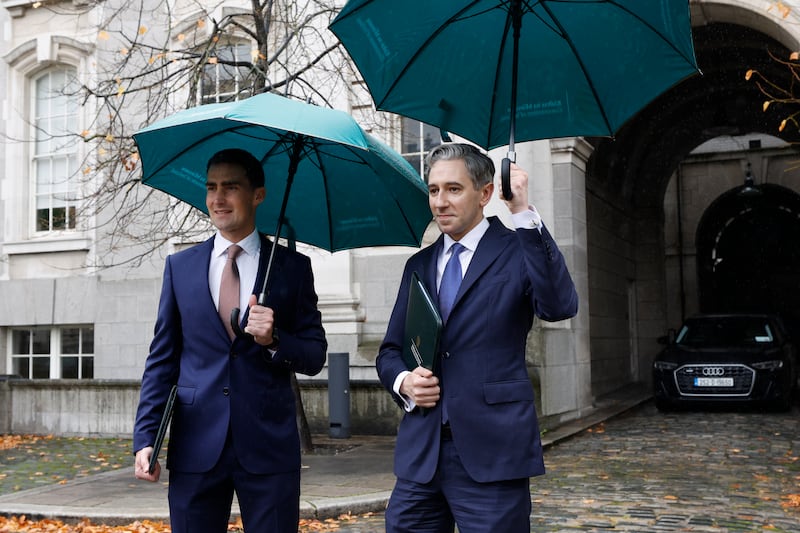
A package of tax reductions announced by Minister for Finance Simon Harris will see lower and middle income workers benefit. In addition, capital gains tax came down by two points to 31 per cent and capital acquisition tax changes will see people keep more of large inheritances.
The renters’ tax credit increased to €1,150 per individual, while the rent-a-room relief was increased to €16,000 and also extended to garden dwellings – the so-called “beds in sheds” structures. The maximum tax refund of the Help to Buy scheme was increased by €5,000 to €35,000.
As expected, scheduled carbon tax increases were cancelled and Harris promised they would not be increased during the lifetime of the Government.
He also announced reductions to carbon tax on kerosene and natural gas, while reductions in excise on petrol and diesel would remain in place until the end of February, when a phased restoration of the higher rates will begin, ending in June.
[ Budget Q&A: Submit your questions to our expert panel on budget dayOpens in new window ]
Despite the stated desire to moderate spending increases, the Department of Social Protection will see its budget grow by €2 billion. This will finance a €10 increase in weekly social welfare payments, a new cost-of-disability payment of €500 annually and a range of other benefit increases.
The Department of Health is to receive an extra €1.8 billion, bringing its total budget to €29.1 billion, the department’s highest ever.
The Government has made provision for an additional €1.2 billion for public sector pay next year to cover the costs of any new pay agreement, though unions are currently engaged in industrial action in the absence of talks on a new agreement.
The exchequer pay bill is due to rise to €31.8 billion next year, while the pensions bill will increase to €4.8 billion.
[ Budget Calculator: How this year’s budget will affect your incomeOpens in new window ]
The Fiscal Advisory Council, the State’s budgetary watchdog, strongly criticised the budget, warning it puts the public finances on “a worse trajectory”.
The watchdog said the package would increase the State’s reliance on “high-risk corporation tax”. It added spending increases net of tax measures have been running “at a blistering pace in recent years”.
Government TDs around Leinster House were largely pleased with the budget package, though the reaction elsewhere was mixed.
[ Who are the biggest losers in Budget 2027?Opens in new window ]
Many representative and interest groups welcomed aspects of the budget but said that it did not go far enough. Owen Reidy, general secretary of the Irish Congress of Trade Unions, said the budget was “a halfhearted apology for last year’s”.
“The Government has taken some bare minimum measures, but it is far from the workers’ budget the Government claimed, and does not make up the ground workers have lost,” he said.
Employers’ group Ibec welcomed aspects of the budget but said it was disappointed the Government had accepted recommendations to increase the national minimum wage.
Opposition spokespeople were fiercely critical throughout a lengthy Dáil debate, with Sinn Féin’s Pearse Doherty accusing the Government of being “detached” from the real life of ordinary workers and their families.

Budget 2027: what's in it for you?
People Before Profit-Solidarity TD Richard Boyd Barrett said people should “get their placards ready”, while Labour’s Ged Nash said it was not a budget for “those who get up in the morning” but one for those “who can afford a bloody good lie-in”.