Traditionally, the rentrée, when France returns to school and to work after the summer break, is a time to focus on the tasks ahead. Not this year.
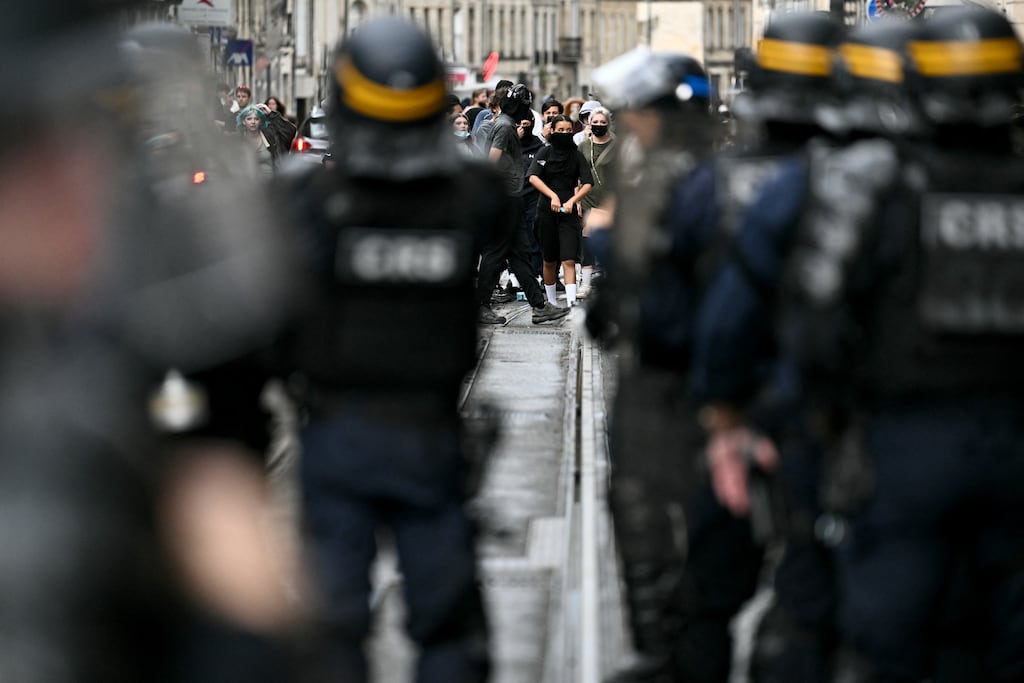
Public sector strikes, bond market turmoil and political paralysis have darkened the national mood. The most dramatic expression of the unease is protests by school students, which began in suburban Paris in mid-September and spread nationwide, reaching a crescendo with Tuesday’s day of action. Police have clashed with demonstrators in cities from Paris to Bordeaux. Two dozen schools have been torched or wrecked, a teacher has been seriously assaulted and a 15-year-old in Lens lost his hand.
The students point to teacher shortages and decaying buildings as evidence of the failure to invest in their education. They may be correct, but these are symptoms of a broader malaise, as France struggles to reconcile public demand for social services with insufficient revenues.
Public debt is about 119 per cent of national output, with interest payments rising. To contain the deficit, the budget now before the hung parliament proposes freezing teachers’ salaries. Unsurprisingly, teachers’ unions endorsed the students’ grievances and joined them on the streets.
READ MORE



Outsiders may see the current disturbances as simply the latest manifestation of France’s long tradition of vigorous street protest. The images of tear-gas-filled streets, baton charges and masked demonstrators hurling flares are certainly familiar from previous outbreaks of discontent.
But a political clock is ticking. After nine years in the Élysée, Emmanuel Macron is in the final months of his presidency. As yet, no ideological successor has emerged and polls consistently show Marine Le Pen of the far-right National Rally beating all potential opponents in next April’s election. That might change if centrists coalesce around a single candidate. Alternatively, the energy and anger unleashed by the protests could propel hard-left standard-bearer Jean-Luc Mélenchon into the second round of the election, where pollsters suggest he would lose to Le Pen.