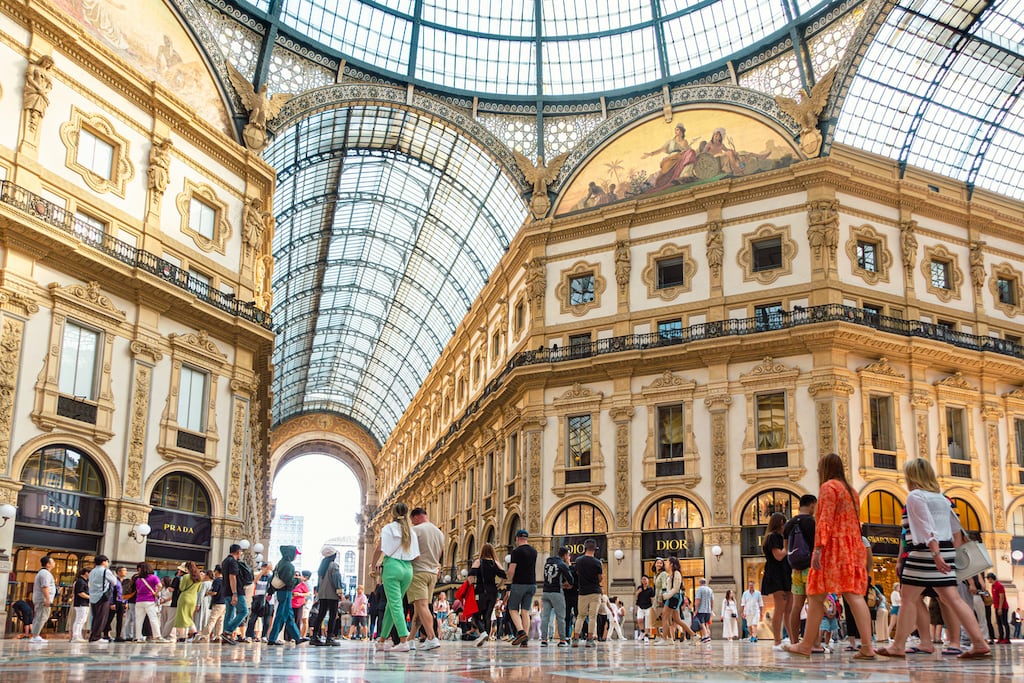

A city synonymous with fashion, Milan is the birthplace of major labels such as Prada, Versace, and Armani and home to the headquarters of many more. It hosts four fashion weeks a year, and during my time in the city, I see more than one runway model gliding through the crowds.
Milanese style is formal, with a focus on designer handbags and sleek tailoring. I’m here for a few days, and it’s difficult to ignore the allure of the fashion set. Sadly my hopes of discovering the perfect 1990s Versace slip dress or a Miu Miu co-ord in one of the city’s many vintage shops are quickly blocked by a frame unsuited to Italian sizing. After a changing room try-on ends in my calves getting stuck in a pair of psychedelic Dolce & Gabbana jeans for €90, I get chatting to Chiara Sodini, the owner of Hello Vintage.
A former fashion archivist, Chiara understands my desire to get involved in what she calls Milan’s second favourite pastime, shopping. (The first being the pre-dinner aperitivo.)
As a hobby sewist, for me fabric shopping is the way forward. While Milan is a mecca for the finished product, it is also a hub for the raw materials. Chiara thinks hard before giving me her recommendations, writing them out on a yellow Post-it. First on the list is the family-run Fonte Della Moda, on Via Marcello Malpighi in the elegant Porta Venezia area.
READ MORE


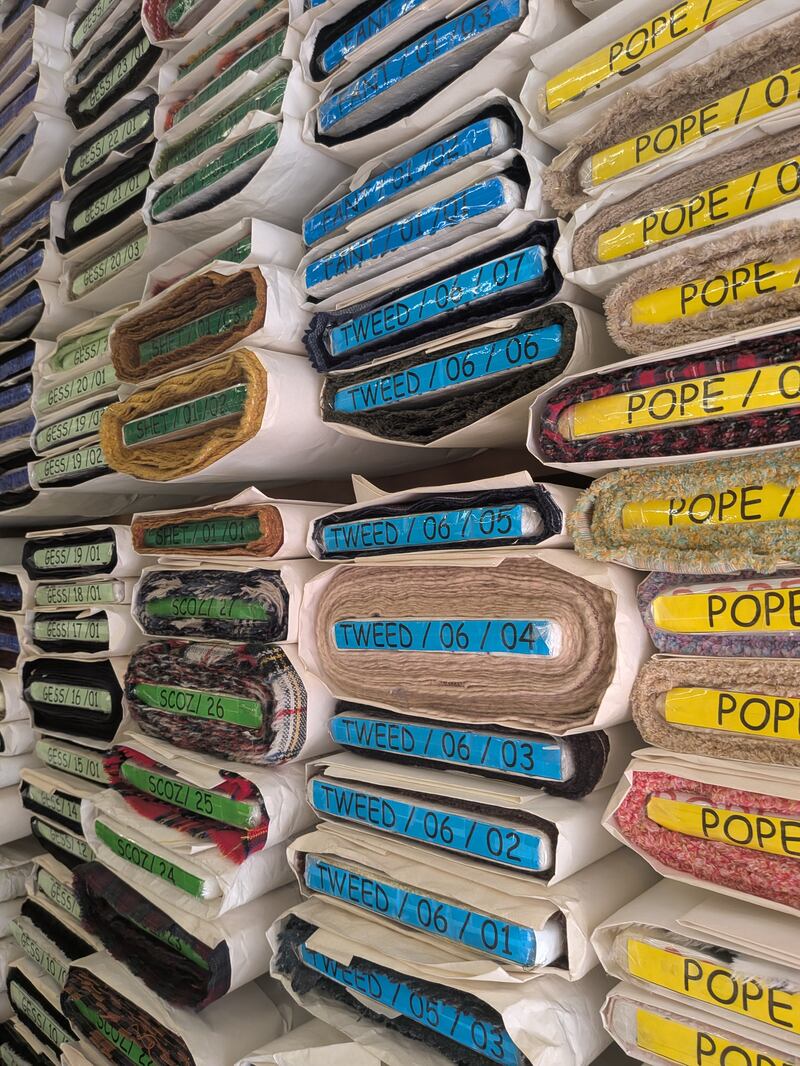
It’s a few kilometres away, so I walk there directly. A step inside this small shop is a step into Italian fashion history. There are hundreds of bolts of fabric neatly stacked on floor-to-ceiling shelves, thousands of trimmings and drawers and drawers of buttons, and everything is catalogued by hand. Gabrielle, who helps her daughter Monica run the shop, hands me three big binders of fabric swatches to go through.
My Italian is limited, but the language of fabric is visual and easily decoded. Lino for linen, cotone for cotton and seta for silk. As I leaf through the pages of linen gingham, chintzy cottons and floral poplin, Gabrielle sorts bags of pearly buttons, and Monica tells me about her grandfather, who first opened the shop in 1945.
“There are many more fabric shops in the past. But fast fashion and people not making their own clothes as much have changed things,” she says. “I couldn’t keep it going without the rent from the pop-up store we run next door, but it is important that I do. It is history for me and my family.”
Monica moves on to find a length of elastic for another customer, and unsure of what I want, I go to the restaurant next door, Pesa Pubblica, for a glass of white wine and the best panini of my life, toast with tomato, stracciatella cream and olive tapenade.
Buying fabric requires a different set of skills from buying clothes and, as a beginner, I still get confused when surrounded by so much choice. In need of inspiration, I walk to Bivio, a well-known second-hand designer shop with four outlets around the city; the closest is just a few minutes away on Via Lambro.


Picking out loose cotton dresses with bold prints and drawn to the row of silk Gucci scarves for €100, I realise I want to bring home bright patterns to work with rather than the solid colours that make up much of my wardrobe.
Emporio Tessile is my next fabric stop on Via Pier Lombardo in the Porta Romana area. I get there just before closing. The front of the shop is taken up with upholstery and oilcloths, so I head to the back rooms that are dedicated to dressmaking material. Here, hundreds of rolls of fabric are stacked 20 feet high.
The question of how anyone can choose anything, when I can only see a fraction of what’s available, is answered by Martino, a young shop assistant, who directs me to a wall of swatches on keyrings. We look through pretty cottons and striped linens before my eyes are pulled to the bolts of fabulous silks. Italy is famous for its silks, particularly the areas around Lake Como, an hour north of Milan.
Enthusiastic about one of his country’s most famous products, Martino unfurls a roll printed with lions and zebras prowling around in beds of ferns. It’s €45 a metre, and I imagine it as a full skirt, with a narrow waistband swishing with every step. Silk is slippery, and my skills aren’t there yet, so I land on a bold red and white striped cotton that reminds me of a 1930s swimming costume, buying three metres for €57.
The next morning, I head out to the Porta Nuova area, passing the Vertical Forest. A defining feature of contemporary architecture in Milan, the twin skyscrapers are designed by Stefano Boeri and are now home to more than 800 trees and thousands of shrubs and plants. It’s a beautiful reprieve in a busy city. I’m one of the first people in the door at Tessuti e Scampolii, which translates to Fabric and Scraps in English.
Spread over two floors, this is by far the largest fabric shop I’ve ever been in. There is every combination of colour and cloth here: natural fibres as well as rolls of vinyl, leatherette, organza, polyester, rayon and baskets of bargain-priced remnants sold by weight. It starts to get busy with locals, calling out Buongiorno as they arrive and greet their friends. There are deals to be found here, but my capacity for decision making is weakened, so I go for an iced coffee in nearby Café Gorille before my final shop.


This is one came recommended by Vittorio Giomo, the founder of Textile Design Group Milan, and an expert fabric buyer who has worked in the industry for decades. We chat on the phone, and he directs me to Tessuti Lagosta on Piazzale Lagosta, an upmarket place that opened in 1957.
In the window under a red awning is one of the most beautiful fabrics I’ve ever seen: an ochre-coloured linen with boldly embroidered flowers. It’s €85 a metre. I’m swooning as I come in the door. Paula, who has been working here for 10 years, shows me around. It’s mostly fashion students and tailors who come here, she tells me. The shop orders new material twice a year, often in small batches, so it’s possible to find fabrics here that are unique.
This is the best laid-out, most intuitive place to browse that I’ve been to in Milan. I buy a sliver of green silk with violet flowers as a souvenir and make a promise to return for the vintage Italian herringbone wools that catch my eye at €19 a metre.
In need of a refresh, I get the metro out to Terme De Montel, one of Europe’s largest thermal spas, near the San Siro football stadium. Built within the grounds of early 20th-century art nouveau stables, De Montel underwent years of renovation and opened last year.
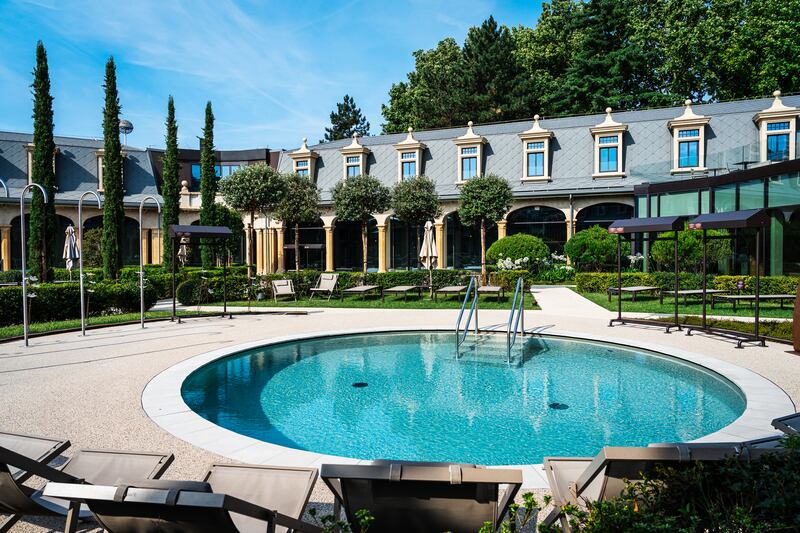
If the Milanese can’t go north to the lakes at the weekend, they come here. Thermal waters are pumped from 396m underground and flow into blue pools variously designed for floating, relaxing and a “cold shock” at 22 degrees.
On entry, I am handed a pair of beige sliders, a white robe and a white towel. Soon, I am one of the many uniformly clad people moving between the sun loungers, pools and saunas.
After days of kaleidoscopic colour, the sight of white cloth on bare skin feels like respite. It makes sense why some designers who have the finest fabrics at their disposal, like Jonathan Anderson, creative director of Dior, or Sarah Burton, who holds the same role at Givenchy, are rarely seen out of cotton shirts and denim jeans.
Rosanna Cooney was a guest of Terme De Montel