Since 2019, I’ve had many personal assistants (PAs), from educational PAs who would assist me in college to social PAs who tag along on all my adventures because I just love my independence and hate having to drag a family member with me (they’d do it in a heartbeat, but as a mid-20s young girl with a disability, I like my independence).
Amy had been my personal assistant for almost four years, and I struck gold when the Irish Wheelchair Association (IWA) matched her and me.
A PA is somebody who supports people with disabilities to live as independently as possible. It’s one thing finding a willing PA, but it’s another figuring out whether it would be a good and lasting working relationship. Amy and I are similar – we are both extroverts, we read and we can have a conversation about anything. So that really helped us bond.
Our working relationship had to end temporarily recently because Amy is pregnant (I am so happy and excited for her and her family).
READ MORE


I enlisted Amy in helping me find a new PA. “I think when people hear PA, they think of someone in a corporate office and that we’re better paid than we are,” she says. “People also think I say what you can and can’t do, but that’s not the job; it’s much more leader-led and about what you want from the service. It’s about helping to get you out into your community, to work and just supporting the person to be more independent.”
Back when this was a brand-new experience for me, I was wary about finding a PA and building a connection, because I’m an Irish Traveller and was afraid they might be biased in their opinions towards me. Thankfully, with the two social personal assistants I’ve had, that was never an issue. They saw me as a person first, not as an Irish Traveller or a disabled person, which really helped my confidence.
“It’s about making sure that the person is comfortable,” says Amy. “At the start, you get some information from the office. This could be about some of the service users’ interests, and this is what they would like from the service. When you meet the service user in person, it’s about being really relaxed, open, friendly and finding out what the service user wants from the service. I think that’s the most you can do.”
It’s all about the personal relationship, she says. “You won’t gel with every person you meet. You might meet a service user and after an hour, they’d be like, ‘I don’t want her’, and you have to learn not to take it personally. I am lucky to have a good support network from the IWA.”
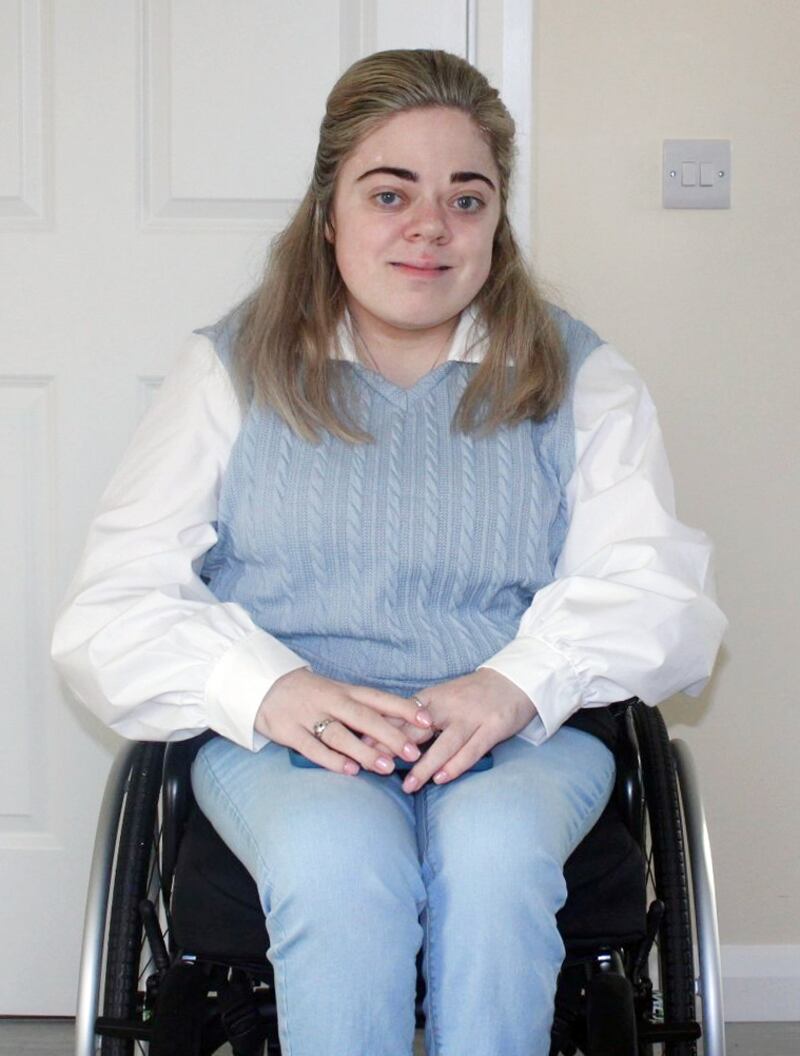
Independence is very important to me. As a disabled person, I like knowing I have control when making basic decisions and I love not having to rely on my family. I can plan my days around the hours I have my personal assistant and I can confidently accept opportunities to do things outside my home town. This year, I went to Dublin five times within six weeks.
“It’s one of those jobs where you want to become obsolete,” says Amy. “In an ideal world, if the world were totally accessible to you as a wheelchair user, you wouldn’t need me. PAs are very important for those reasons.
“Independence is living your life the way you want to live it despite your limitations. We all have limitations, and to be able to reach your goals with PA support – which is why I think PAs are very important – because we can help service users to do that.”
I ask Amy if she realises the impact her work has on me?
“I’ve had many service users over the years achieve a goal or do something, but it’s not like other jobs where I can go home, and someone could say: ‘How’s work?’ I cannot chat about it because you’re bound by confidentiality, but a moment that really stuck with me was the first time you spoke in Dáil Éireann. To see how much your confidence had built from the first time I met you to being able to do that really showed me how much my work impacts a person.”
One day, we were in a cafe, and the waiter looked at me, then at Amy, and said: “What would she like?”
Amy just looked at me and said: “Oh, I don’t know, what would you like, Emma?”
The waiter just looked at both of us in surprise and said sorry. That simple act showed I was well able to speak for myself. There are still people who treat disabled people like children.
I’ve had educational PAs who were quieter, so as someone who loves to chat, I really wanted someone I could chat with, and thankfully Amy is very similar to me.
How would she describe me?
“In those early days, I could tell you were nervous to go out without a family member, which was understandable because you were essentially putting a lot of trust into a stranger, and you could tell your mam was quite nervous, so my main goal was to have both of you at ease.
“At the start, you can be very quiet and shy, but once you get comfortable, you don’t shut up, hah! You really love your independence and are a great advocate for people with disabilities. You have a great personality, are fun, and have a great sense of humour. We could chat about anything. It’s definitely an adventure with you, Emma; no two weeks would look the same.”
How does Amy think we could improve the PA system in Ireland?
“They need to look at the structure of the funding because one of the things we face that is difficult is the lack of wage stability. Our wages can go up and down very easily and if you’re applying for a loan or a mortgage, it’s very difficult. If the funding model, coming down from the HSE to your not-for-profit organisation, allowed us to have better wage stability and better hours, it would also positively impact service users because they would get better hours.”
What does Amy hope the future of PAs will look like?
“A better funding model and funding for not-for-profit organisations. The Irish Government needs to recognise how important PAs are and how important it is to give a person the right to live in their own home for as long as possible or until they die. That’s what the future of PA and homecare services should look like. Better accessibility. When they’re designing towns, engineers should bring disabled people and their lived experiences into the conversations about whether their plans would work for disabled people.”
What would Amy say to somebody who was considering this career path?
“I would say, do it. It is a very rewarding job even with the challenges. All jobs have their challenges. Somebody with kids would love the flexibility in the hours; it might take you a while to get hours perfectly suited to what you need, but that flexibility suits me perfectly. I can work my hours around childcare. I enjoy my job, I get to experience many things, meet many people, and, to me, it’s just a rewarding job. I would say to others, don’t knock it until you’ve tried it.
“I first became a PA because of the flexible working hours and because I like helping people, the job just suited me. Twelve years later, I’m still here.”
And I’m glad she is. I wouldn’t have done half as much without her support.