Of all the monsters in the Monster Mash – the werewolf, Frankenstein’s, the vampire, the mummy – I think the most terrifying is the Carrie.
It may be because when I saw the film Carrie and read Stephen King’s novel I was at an impressionable age, but the moral of that story – “bullying is bad, because the person you’re bullying might be telekinetic and might kill you with their mind” – really landed for me.
“Don’t bully that noodly nerdlinger, Biffo” I would say to my friend Biffo, a bully by trade. “They might be a Carrie.
“Unhand that primping Poindexter. Stop administering sick burns to that doddery dorkmeister. Desist from whaling on that weedy Walter. Potential Carries all.
READ MORE


“We must be vigilant. Yes, any one of these goodie goofballs could have terrifying unearthly powers – this might all end with the school on fire.
“And it’s Ireland in the 1980s, so that would put a lot of pressure on the Department of Education and add to the fiscal deficit. Lest I need to remind you, economic recovery is a good 10 years away.” (Me and the rest of the bullies were in Young Fine Gael.)
It was very clear to me, thanks to Carrie, that bullying was wrong because it might end in my violent death by burning, which would totally suck. It’s something that to this very day I teach my most thuggish nephew. (He knows who he is.)
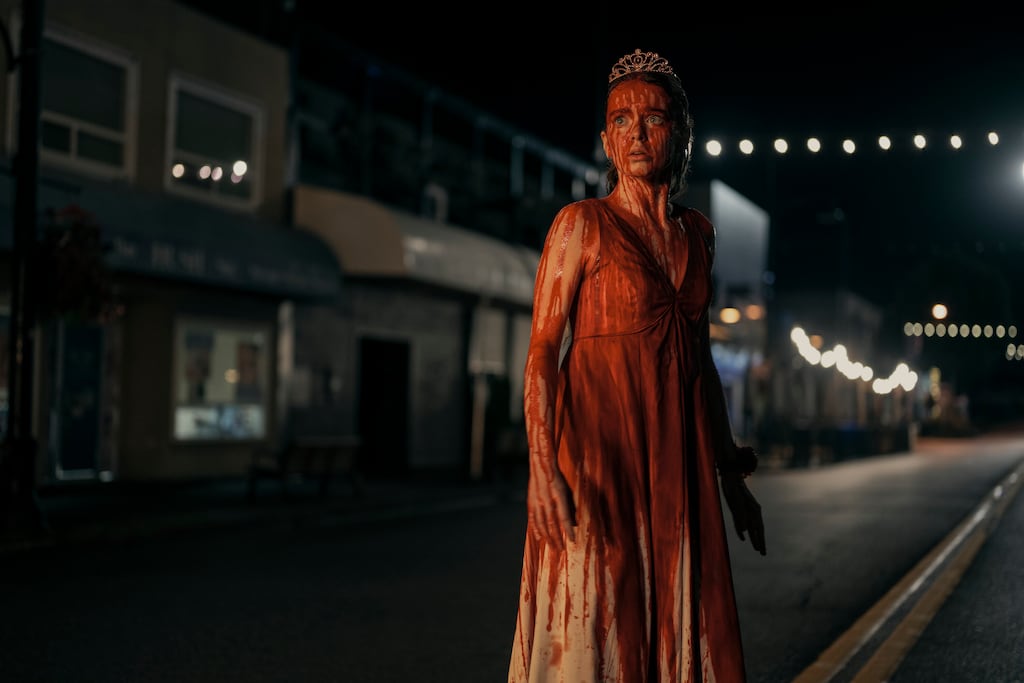
It was a shame, really, because that whole “pouring a bucket of blood on to the head of the girl that’s been tricked into feeling like she belonged” is a pretty excellent prank, and I would definitely have done it if the movie Carrie had ended with all the hot people high-fiving in a freeze-frame and a girl saying: “That was some pretty cool bullying you did there, Patrick Freyne, you hunk.” Instead, Carrie burned everyone to ash.
The story had such an effect on me that sometimes, indeed, I’d even wonder if I was a Carrie. “Why are you frowning at me like that?” Biffo would say when he had me in an affectionate headlock. “Are you trying to make me go on fire? Do you think you might be a Carrie? Are you trying to make my head explode or is that a different film?”

(Once, while concentrating on making Biffo’s head explode, I thought the lights flickered a little bit. Sadly, I think it was just because the wiring was very old. Poor wiring might also have caused the fire in Carrie, on reflection.)
Anyway, forgetting my aborted bullying career for a moment, both Carrie the book and Carrie the film are excellent works of melancholy horror where the source of terror, as in Frankenstein, is a heartbreaking outcast, not an avatar of evil.
Mike Flanagan’s retelling of the Carrie story on Prime Video seems quite different from the source material. I guess it has to be, because the Carrie story is iconically well known.
The first big difference is that Carrie and her mother are discovered in a sort of cultlike shut-in situation, so Carrie is new to the school. This changes the dynamic somewhat, making Carrie almost exotic rather than simply one of the routine bullyable classes. (That’s anyone who’s different, if you can recall your own bullying days.)
The second difference is that, unlike Sissy Spacek, who plays Carrie in the film as otherworldly and timid, or Carrie in the book, who is overweight and unhappy, Carrie as played by the very charismatic Summer H Howell is chirpy and enthusiastic and well read and clever and surprisingly well balanced for someone who has basically been imprisoned at home and secretly has the power to destroy everything.
There is a sense that with some good career guidance Carrie could, in fact, make a great life for herself. (Perhaps she could become an electrician and fix the wiring in the school.) This does, unfortunately, remove some of the deep sadness from the story.
The third difference is that Carrie’s mother, while filled with righteous rage at the modern world, is not mentally unwell and sex-obsessed like Carrie’s mother in the book or the film. Indeed, it often feels as if Carrie’s mother has some good points to make given the state of the world. (Refusing to leave the house feels like a reasonable response to reality right now.)
The fourth difference is the idea that there’s a wider world of supernatural conspiracy to contend with. I guess you have to do that if you want a recurring series. This already tends towards overexplanation, whereas some of what’s beautiful about the original film is that gaps are not filled in.
I’m giving it the benefit of the doubt. This is helped by the very good cast – not just Howell but also Alison Thornton, Siena Agudong, Amber Midthunder (who was excellent in Prey) and Tim Bagley (who was also excellent in Somebody Somewhere). Every character so far is depicted as nuanced and flawed and capable of carrying their own story.
It’s also another show about cathartic female rage, hot on the heels of the excellent crime drama Furious (Disney+) and coexisting with Zoe Kazan’s Steinbeck adaptation, East of Eden (Netflix), which features a terrifying Florence Pugh as a manipulative avenging femme fatale. The female-rage quotient feels necessary. It’s almost as though there are lots of reasons to be angry right now.
The highfalutin notions in the last paragraph make me want to bully myself. And why not? I’d argue that self-bullying is a core part of Irish identity. So much so that while watching the Netflix drama Below, a horror series set in Newfoundland, I just assumed the whole project of Newfoundland was designed to mock the Irish accent.
I know the Newfoundland people are largely descended from Irish immigrants, but it really does feel as if they’re just taking the piss out of us. “Taoiseach asks Newfoundland to just knock it off” feels like the appropriate Waterford Whispers headline.
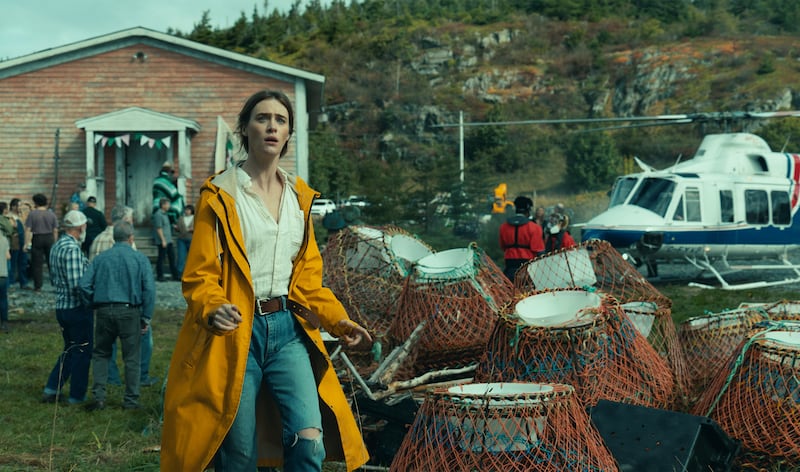
Nonetheless, Below, which stars Josh Hartnett and Mackenzie Davis, is an excellent slice of humane, thoughtful Canadian horror about a many-tentacled, big-eyed monster lurking beneath the sea.
As in all the best scary stories, more is going on than just a beastie lurking in the deep. There’s subtext. There’s a backdrop of rural depopulation and a frontdrop of disenfranchised men (specifically Hartnett’s character) seeking a new role for themselves in the face of increasing obsolescence.
By the end of the first episode we haven’t quite seen our googly-eyed monster yet, but I’m pretty sure from all the context cues that it’s being bullied into violence by climate change. I feel as if we should introduce him to Carrie. Together they could do the Monster Mash (the Monster Mash). I suspect it would be a graveyard smash.